FLAGSTAFF, Ariz.—The late-afternoon sun was sinking beneath the tree line of ponderosa pines as the monsoon rains gave way to a cool, damp evening.
Along the northern slope inside the Coconino National Forest near Flagstaff in northern Arizona, the forest floor was rich with moisture and decay.
Conditions were ideal for harvesting delicious morels, boletes, Sun Caesars, and highly coveted lobster mushrooms.
Then, about a dozen vehicles carrying roughly 17 people came rumbling down the dirt road and parked near a campsite.
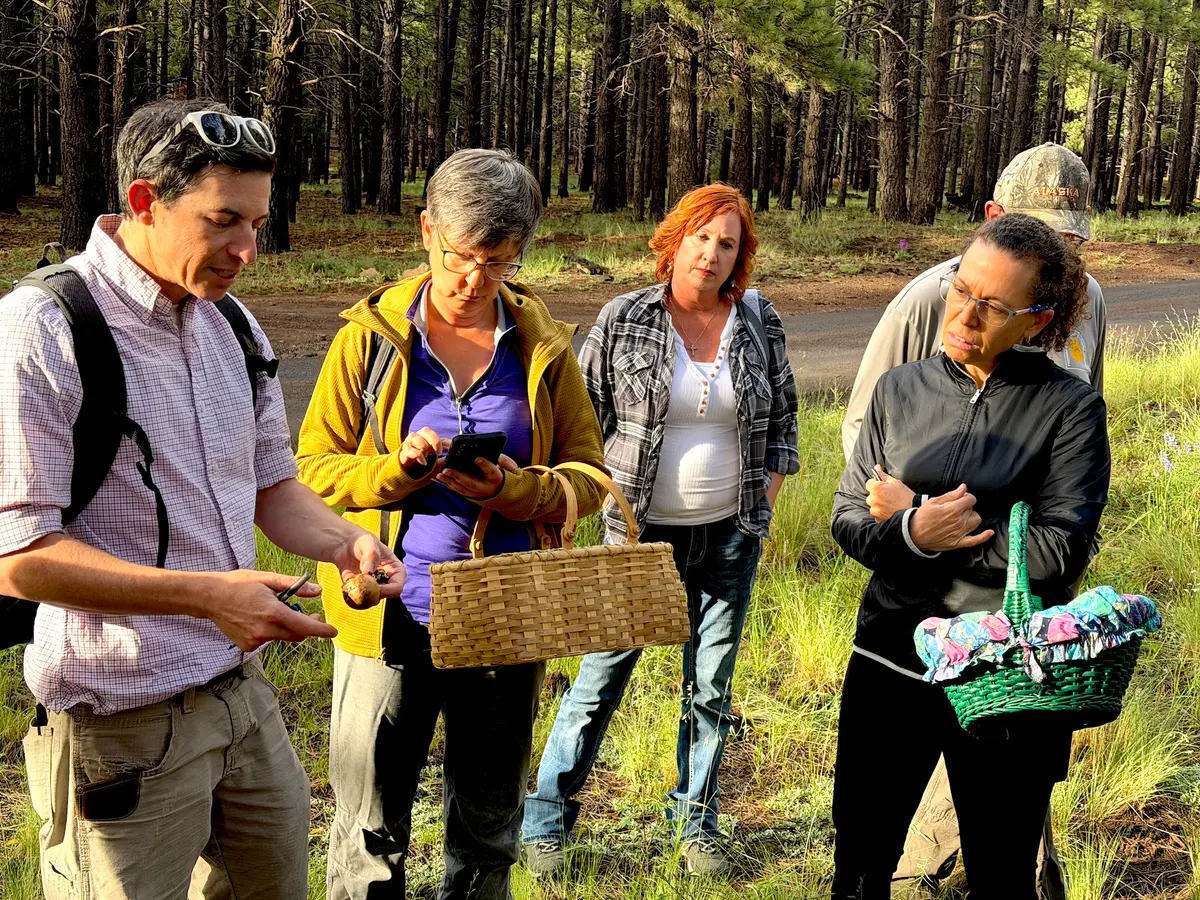
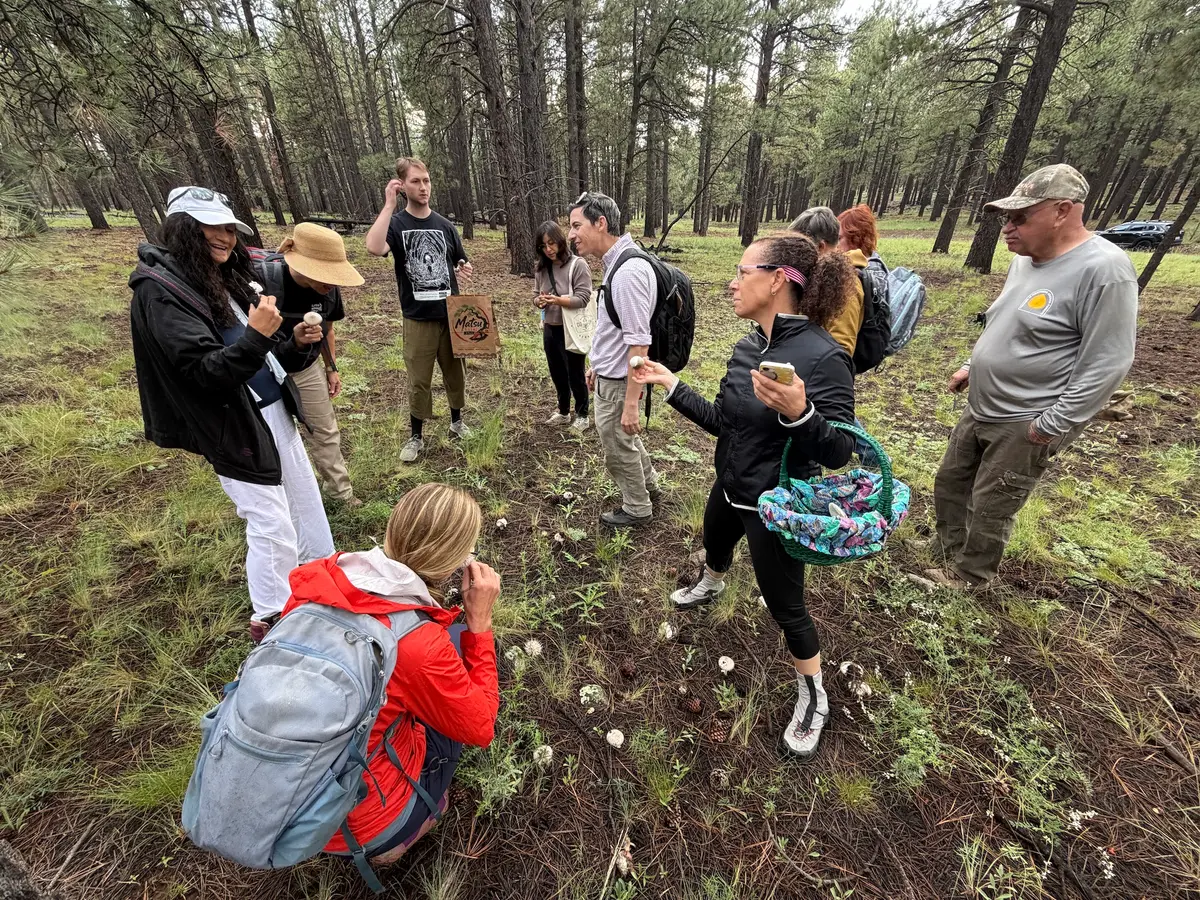
Occupants climbed out, signed in, listened to brief instructions from mushroom expert Mike Dechter, and fanned out into the forest in search of fungi.
The message was safety. Safety in numbers. Safety in navigating the forest floor. And safety in knowing the difference between edible and toxic mushrooms.

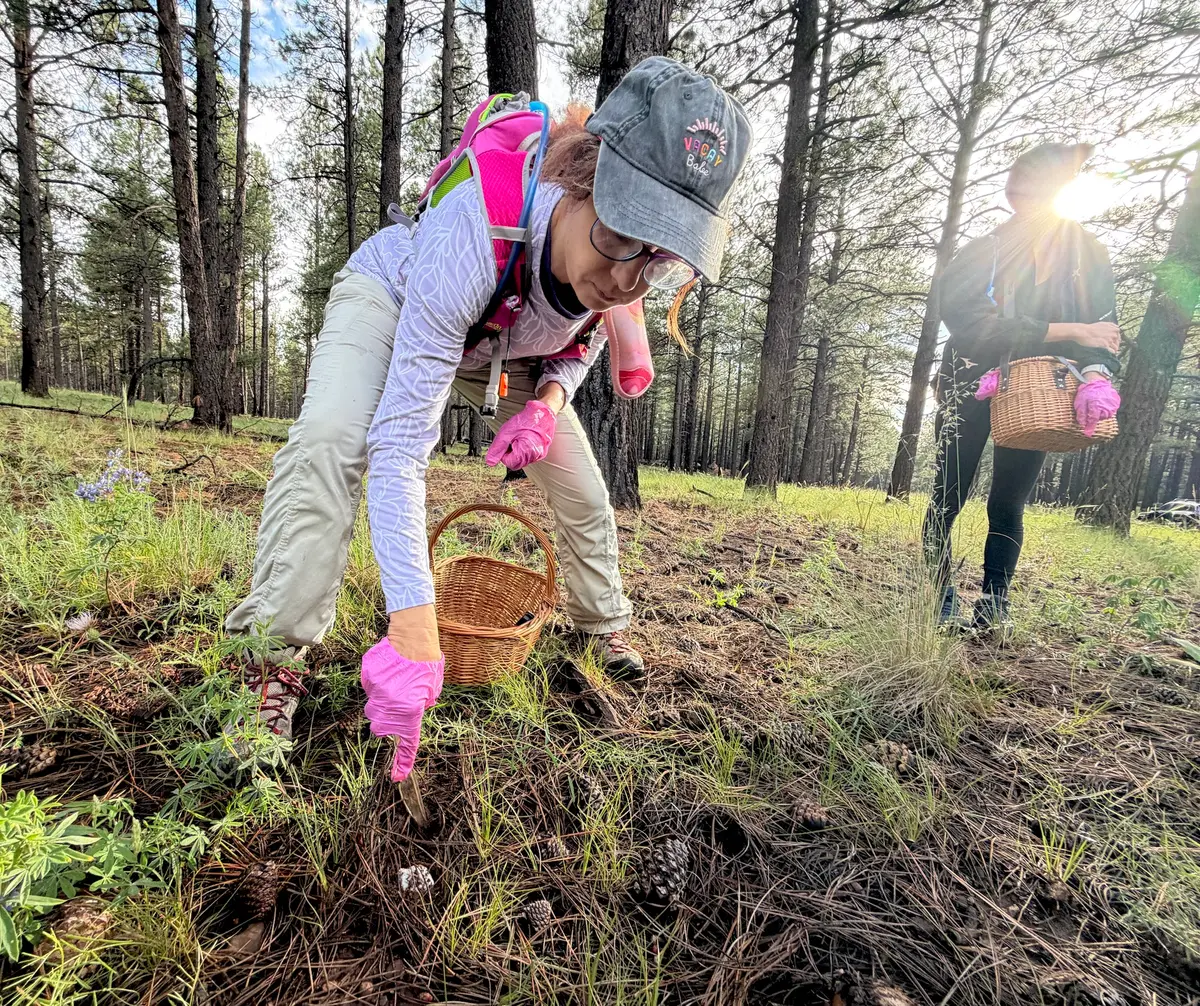
The amateur mushroom hunters arrived carrying woven baskets, gloves, and digging tools for the Arizona Mushroom Society’s Aug. 14 journey into the forest.
“I think most people are really into the wild mushroom forays. That’s the best way to learn about our local fungi,” said Dechter, the society’s executive director.
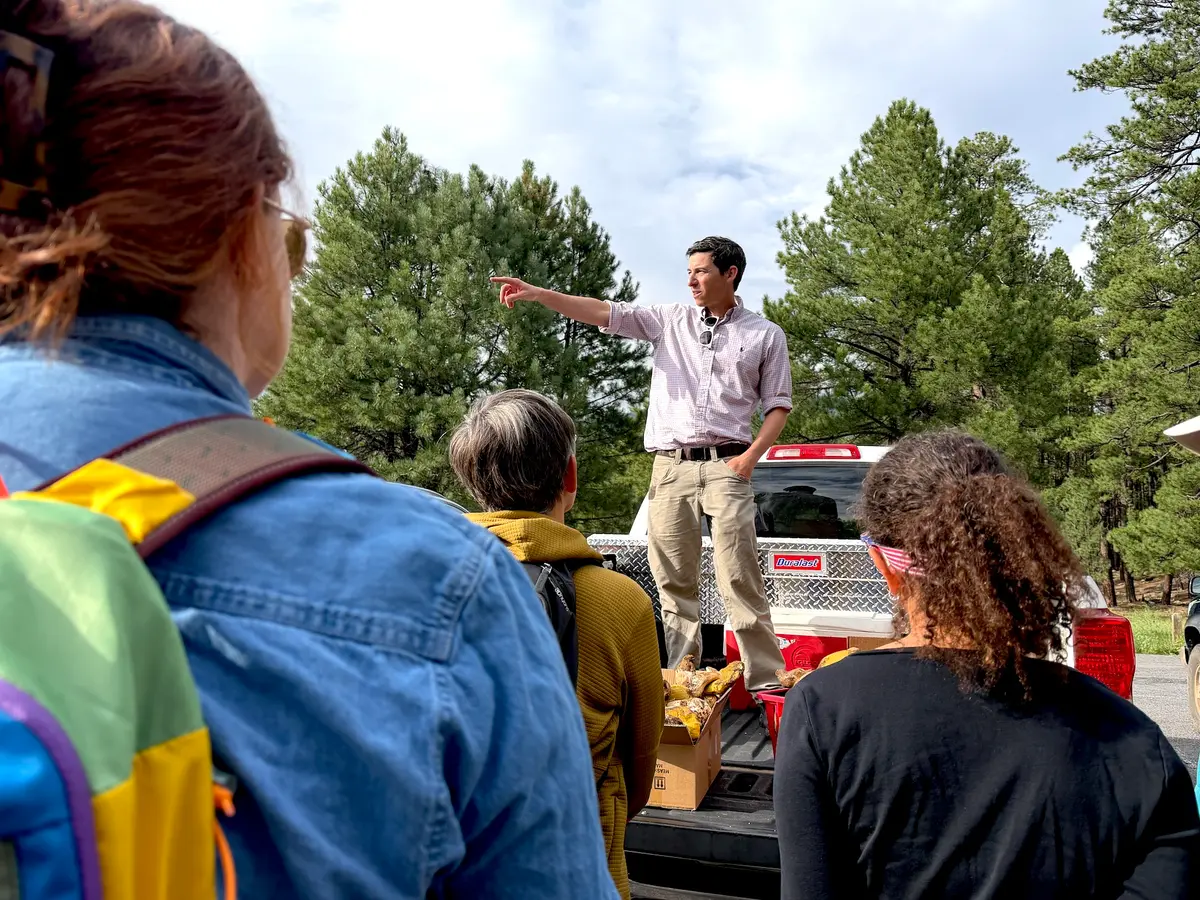
“Learning where they grow, seeing them, touching them, smelling them—all that really is a great experience.”
Education and advancing the science of mycology—the study of fungi—have been central to the society’s nonprofit mission since its incorporation in 2015.
Part of that effort has included DNA sequencing, coordinating with members, and supporting budding botanists through college scholarships.
Mycology as a hobby has a “low barrier to entry as far as discovering new fungi,” Dechter said.
The annual forays make the learning fun.
“A lot of people say it’s like an adult scavenger hunt or Easter egg hunt. You’re walking around the woods, and then you see a mushroom,” Dechter said.
Know the Difference
With its simmering high and low deserts, parched valleys, and rocky landscapes, Arizona seems the least likely place to find mushrooms growing in abundance.
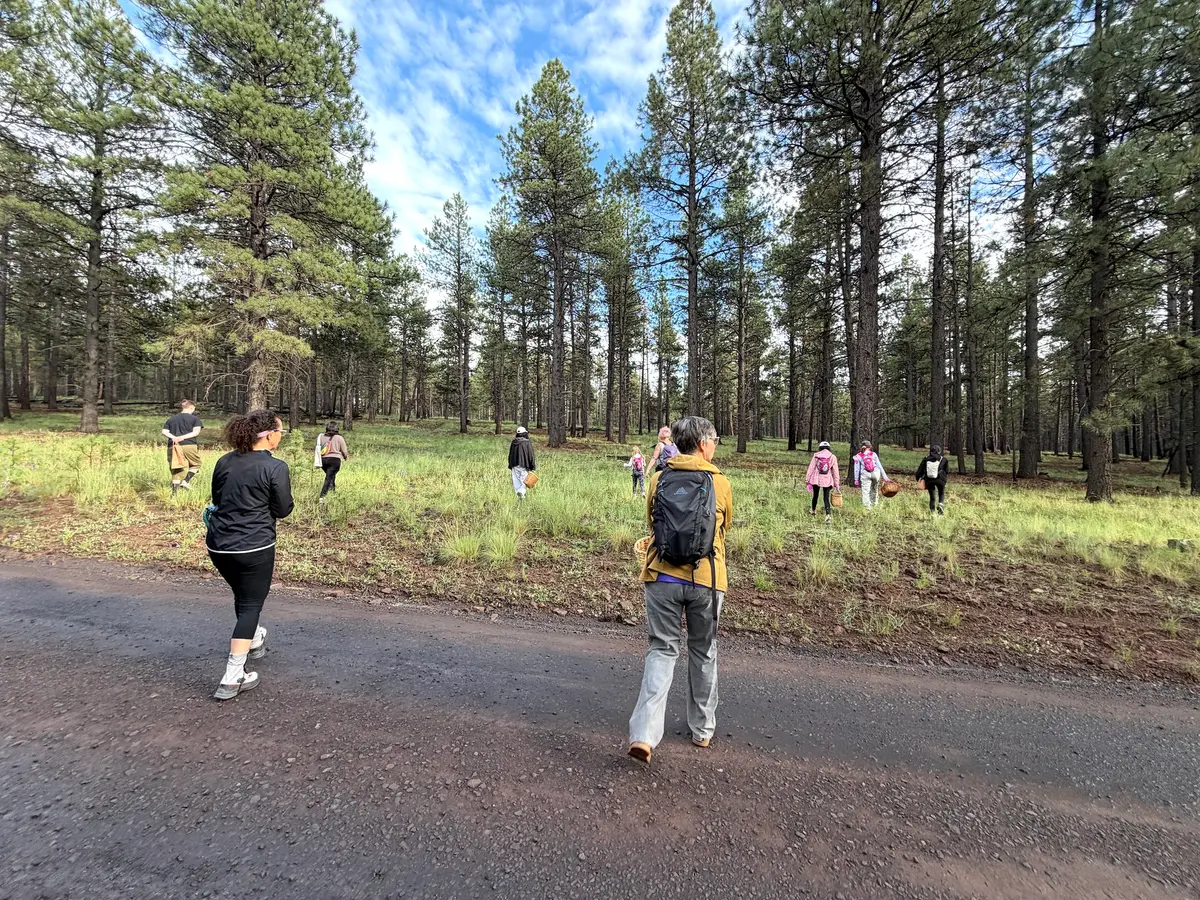
But at higher elevations, it not only snows but features some of the largest ponderosa pine forests in the country.
The Coconino National Forest, covering an estimated 1.85 million acres in northern Arizona, is home to a wide variety of mosses and mushrooms.
Basking in the shadow of the San Francisco Peaks, the forest benefits from monsoon rains between July and September, nourishing a variety of fungal species.
Among the top 20 edible wild mushrooms in Arizona are shaggy mane, white king bolete, giant sawmill, and peeling puffball, according to picturemushroom.com.
Others include certain types of Amanita mushrooms, such as the Caesar Amanita, with its distinctive yellow gills.
However, the Amanita genus also contains some of the world’s most toxic varieties, so knowing how to tell them apart is key, Dechter said.
He said misinformation has also accompanied the growing interest in mushroom hunting.
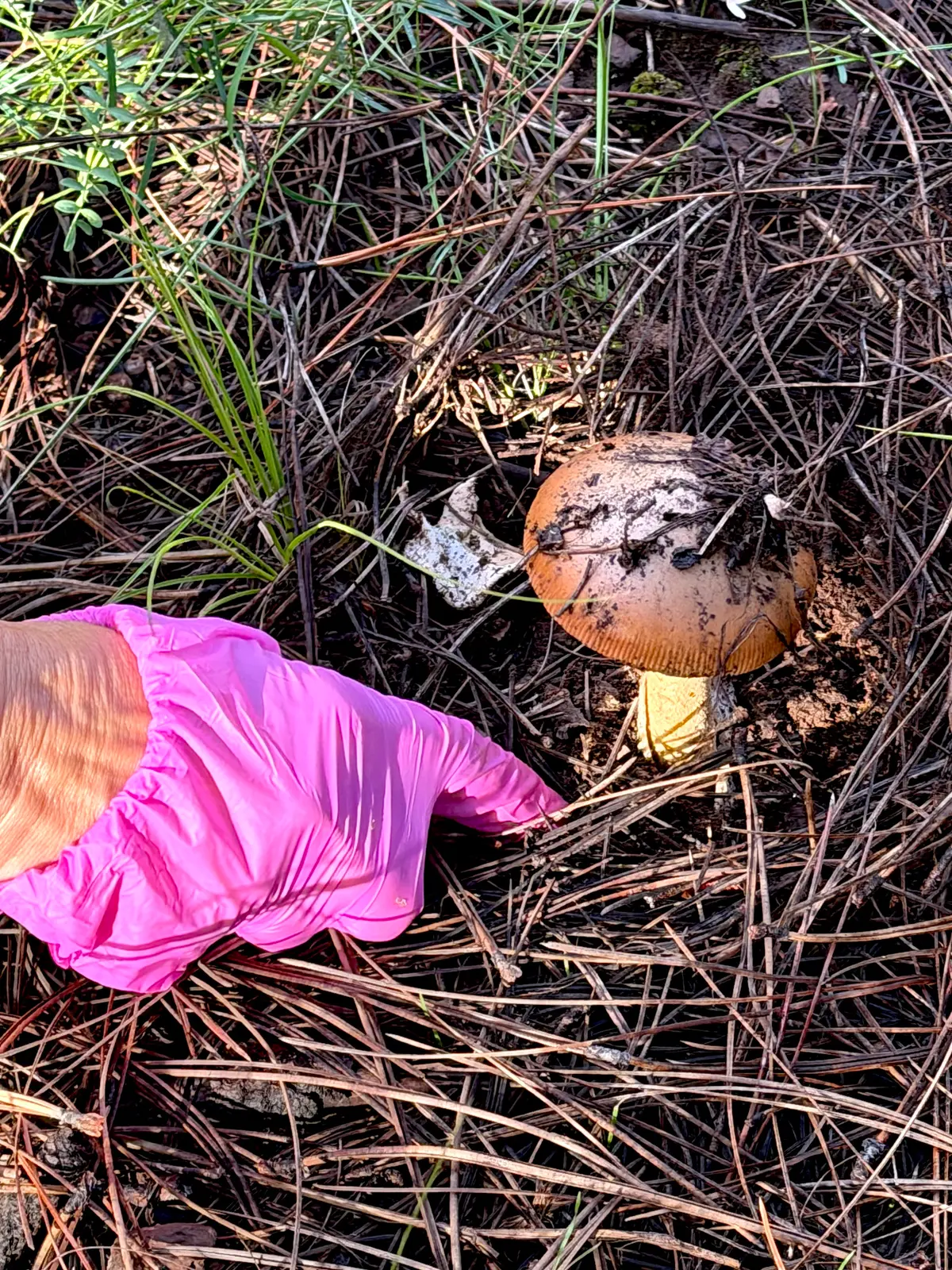
One misconception is that “you’ll be fine” if you refrain from eating mushrooms with white gills, the striations located on the bottom of the mushroom cap.
“That’s really bad advice,” Dechter told The Epoch Times. “Some mushrooms with colored gills can really hurt you. Some mushrooms with white gills are perfectly fine and delicious.”
“There’s another saying: anything that grows on wood, you can eat.”
This is an “old wives’ tale,” he said, because the saying does not account for the many species that can grow on wood and their differing levels of toxicity.
The short advice is there are no shortcuts when it comes to identifying wild mushrooms, Dechter said.
“You just have to know what you’re looking at. The way to do that is look at the characteristics. You want to ask a reliable source if you’re a beginner and then verify that.”
The National History Society of Maryland added that there is no simple way to tell if a wild mushroom is poisonous.
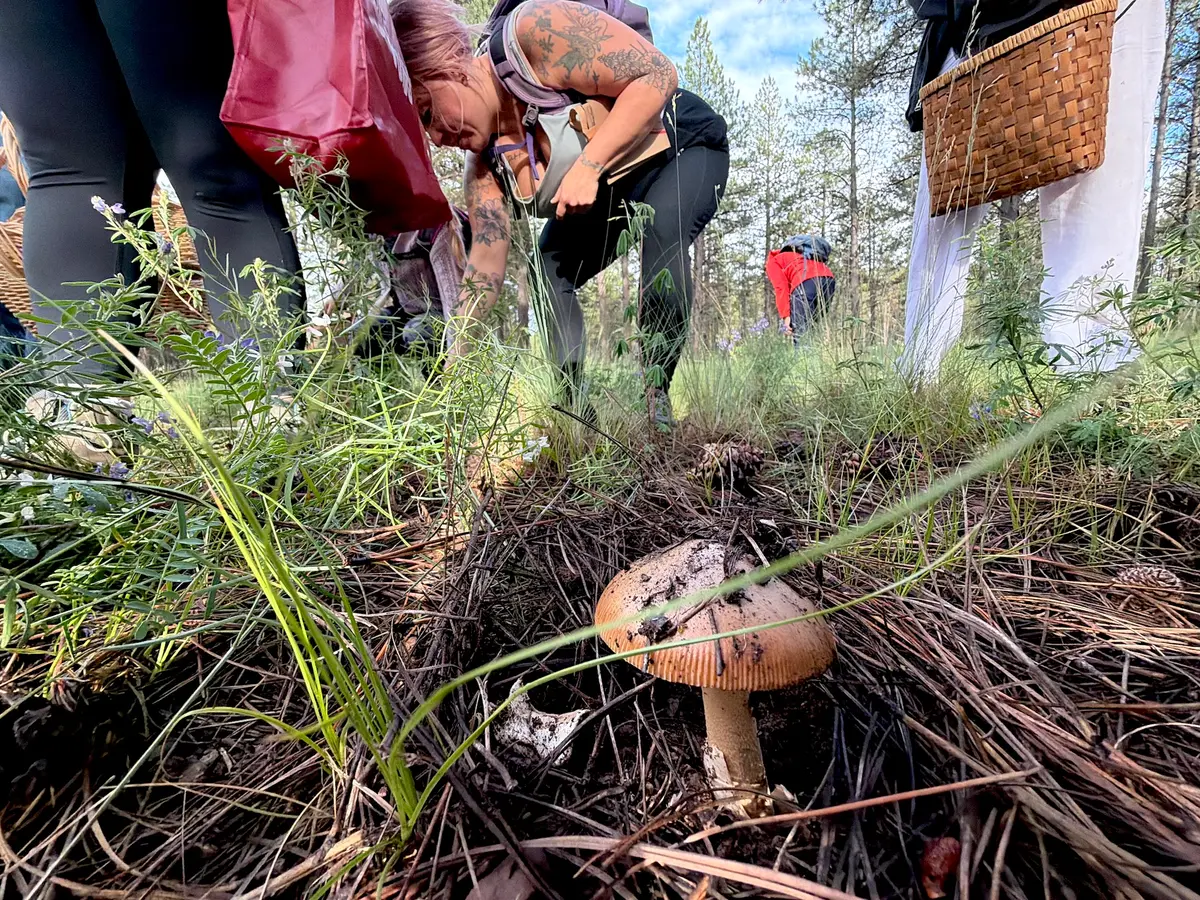
“To know for sure, you have to identify it and learn about it. Many mushrooms are not poisonous, and some are edible,” the NHSM said on its website.
“But beware. A few edible species have poisonous lookalikes. Take extra care in scrutinizing wild mushrooms for subtle details. It can make the difference between a close call and a trip to the emergency room—or the morgue.”
The Carlson Company, a forensic toxicology and DNA diagnostics firm, reports that more than 6,000 mushroom poisonings occur each year in the United States. Many involve children and amateur mushroom pickers.
Between 30 and 50 severe cases require intensive care.
“Mushroom poisoning has become a growing trend throughout the United States, especially during spring and autumn foraging seasons,” the company said on its website.
“Most wild mushrooms appear benign, yet ingesting the wrong type can cause extreme health issues—even death.”
Some of the more toxic species of mushroom include the Death Cap (Amanita phalloides) and Fly Agaric (Amanita muscaria).
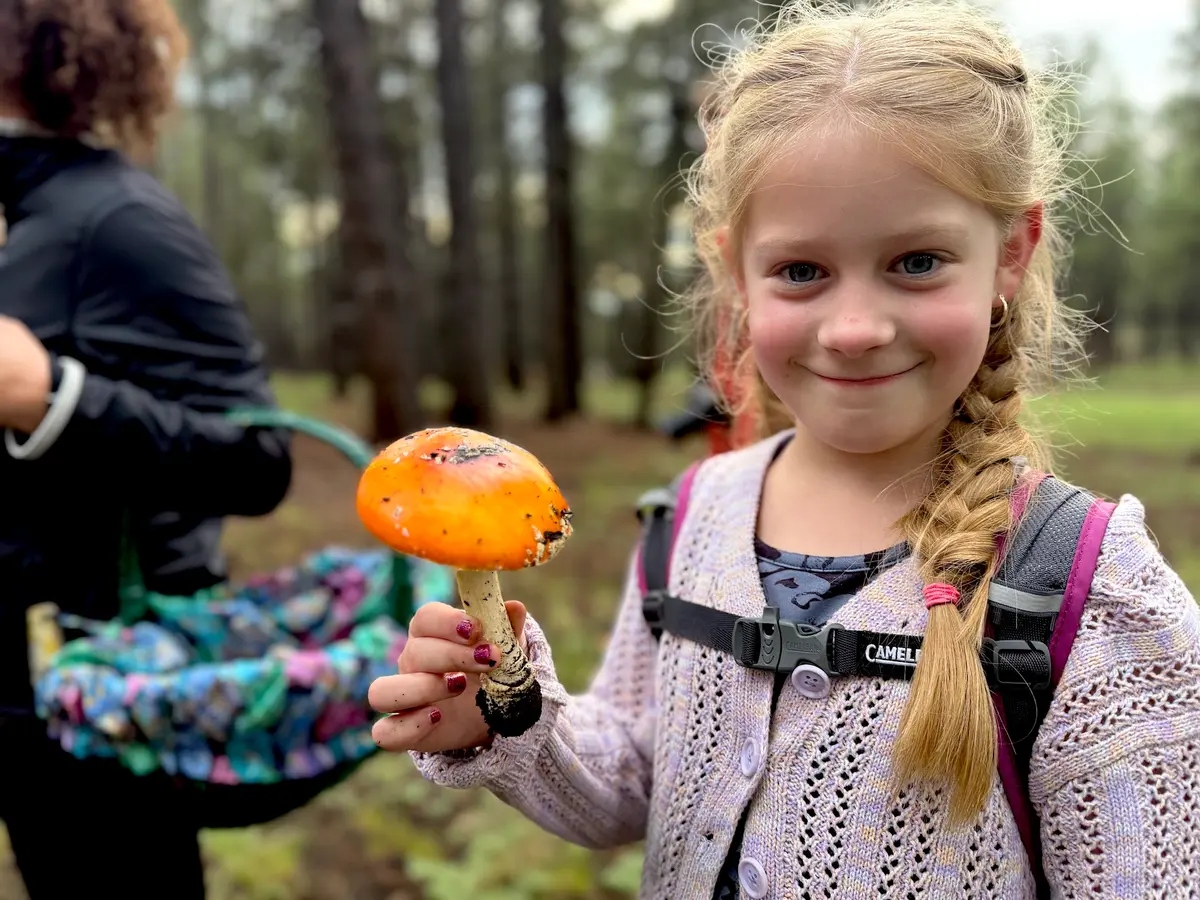
Dechter identified several potentially toxic mushroom species during the foray, as well as many that were safe to eat and gathered in baskets.
Fascination With Fungi
Dechter got involved in mycology as a field botanist with an environmental consulting firm and while working with the U.S. Forest Service.
Often, he’d encounter mushrooms he couldn’t identify, which only fueled his interest.
“From that point on, I was all in about learning about mushrooms,” he said.
Dechter acknowledged there is a very narrow window of opportunity for gathering mushrooms in Arizona. Much of it depends on the nourishing monsoon rains, soil, and climatic conditions.
Mushrooms flourish in rainforest regions in the Pacific Northwest, the Great Lakes region, and the Rocky Mountains of Colorado due to their optimal growing conditions.
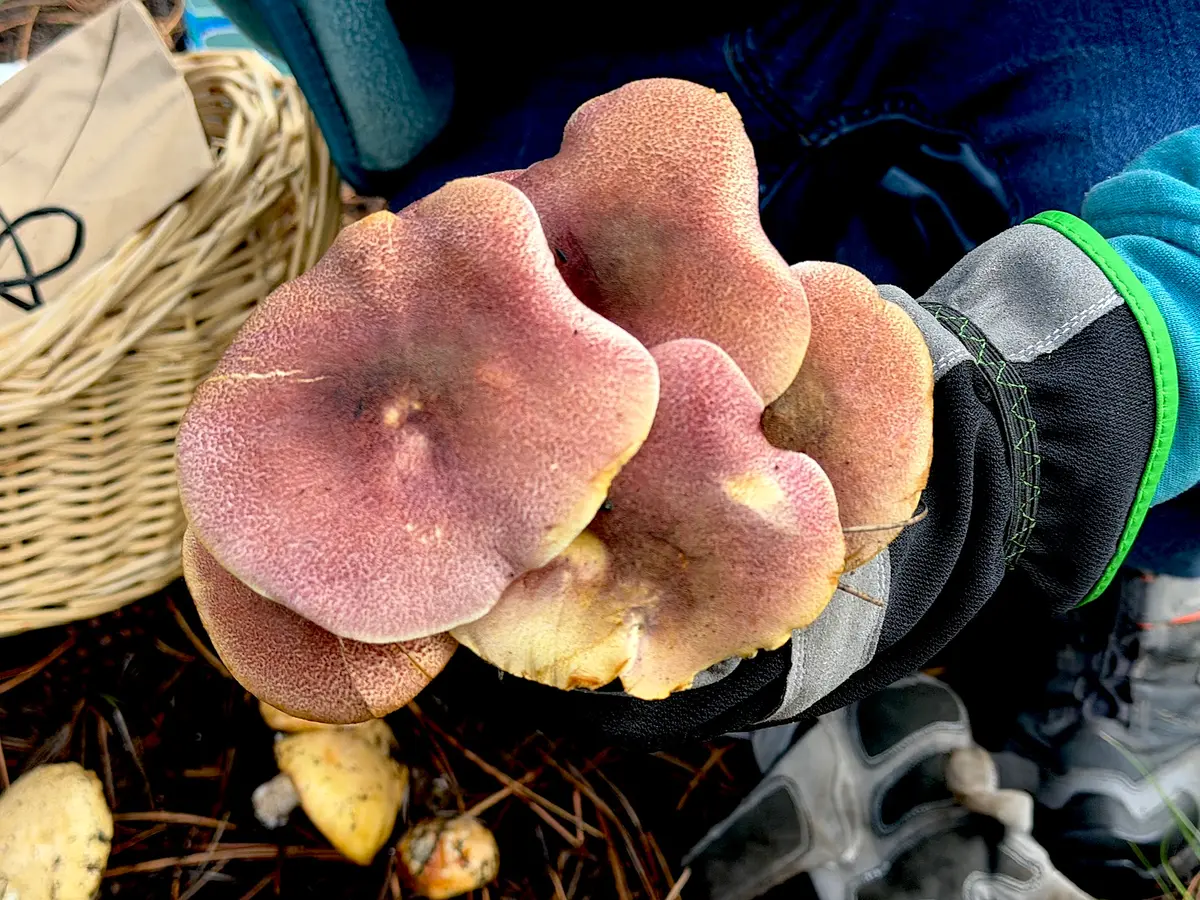
In New England, with its rainy weather and vast forests, edible mushrooms such as chanterelles, morels, chicken of the woods, and maitake grow in abundance.
Mushrooms thrive along the northern slopes away from the sun, Dechter said. They also do well in forest fire burn scars, breaking down destroyed timber and helping ecological recovery.
While the exact volume of wild-harvested mushrooms is unknown, clubs and societies have sprouted like mushrooms across the country.
Market Data Forecast estimates that the business of cultivating mushrooms is expected to grow annually by 4 percent over the next eight years—from a $20.24 billion industry in 2026 to $27.7 billion by 2034.
Around 40 million metric tons of mushrooms and truffles, edible subterranean fungi, are cultivated each year globally.
Dechter said mushrooms are widely known for their immune-boosting potential and high levels of vitamin A.
Bountiful Boletes
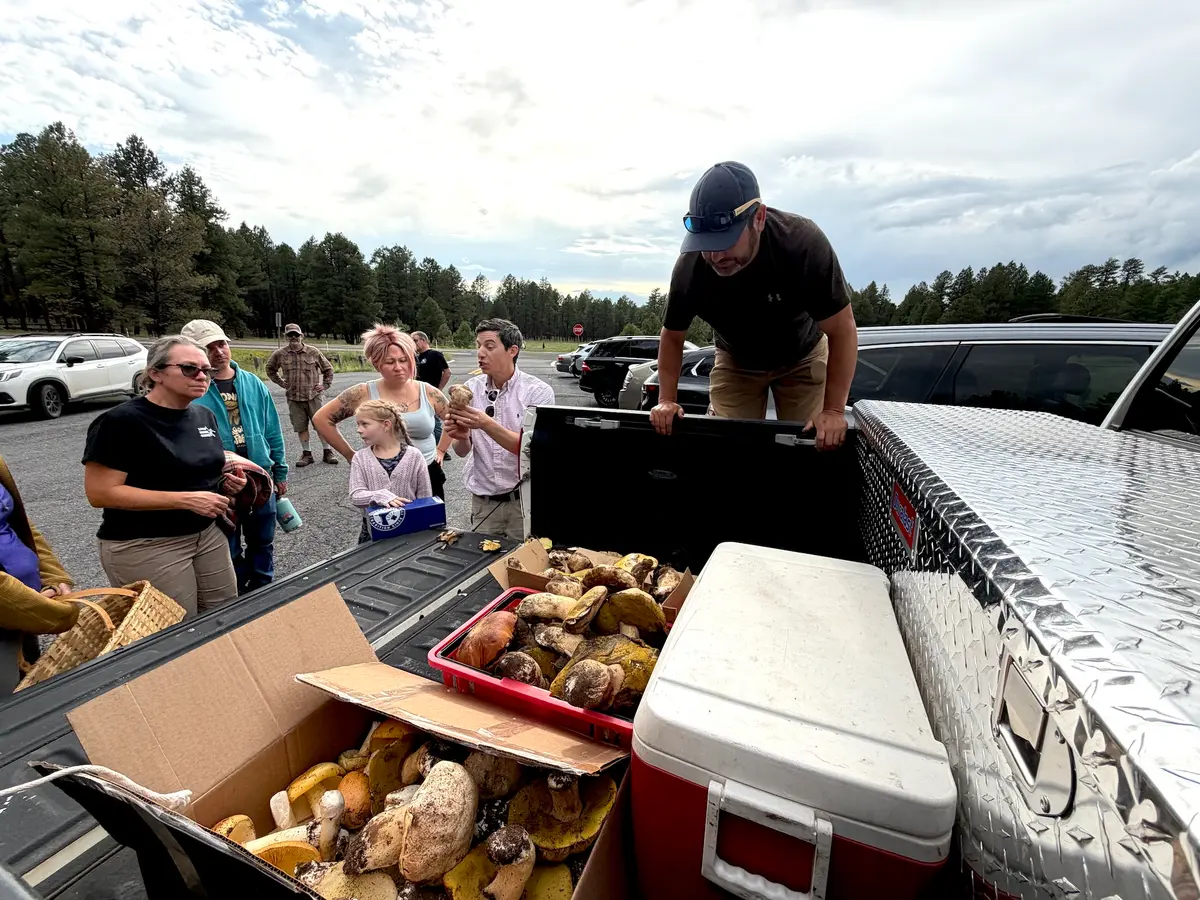
Amateur mycologist D.J. Montoya of Flagstaff displayed a truck bed with boxes filled with edible bolete mushrooms harvested on Aug. 14.
Some of the specimens were as big as his hand.
“All these are from 9 a.m. this morning. We’ve been kind of stop and go,” Montoya told The Epoch Times.
“I’ve always seen tons of mushrooms out here. I never knew what they were, so it was just curiosity.”
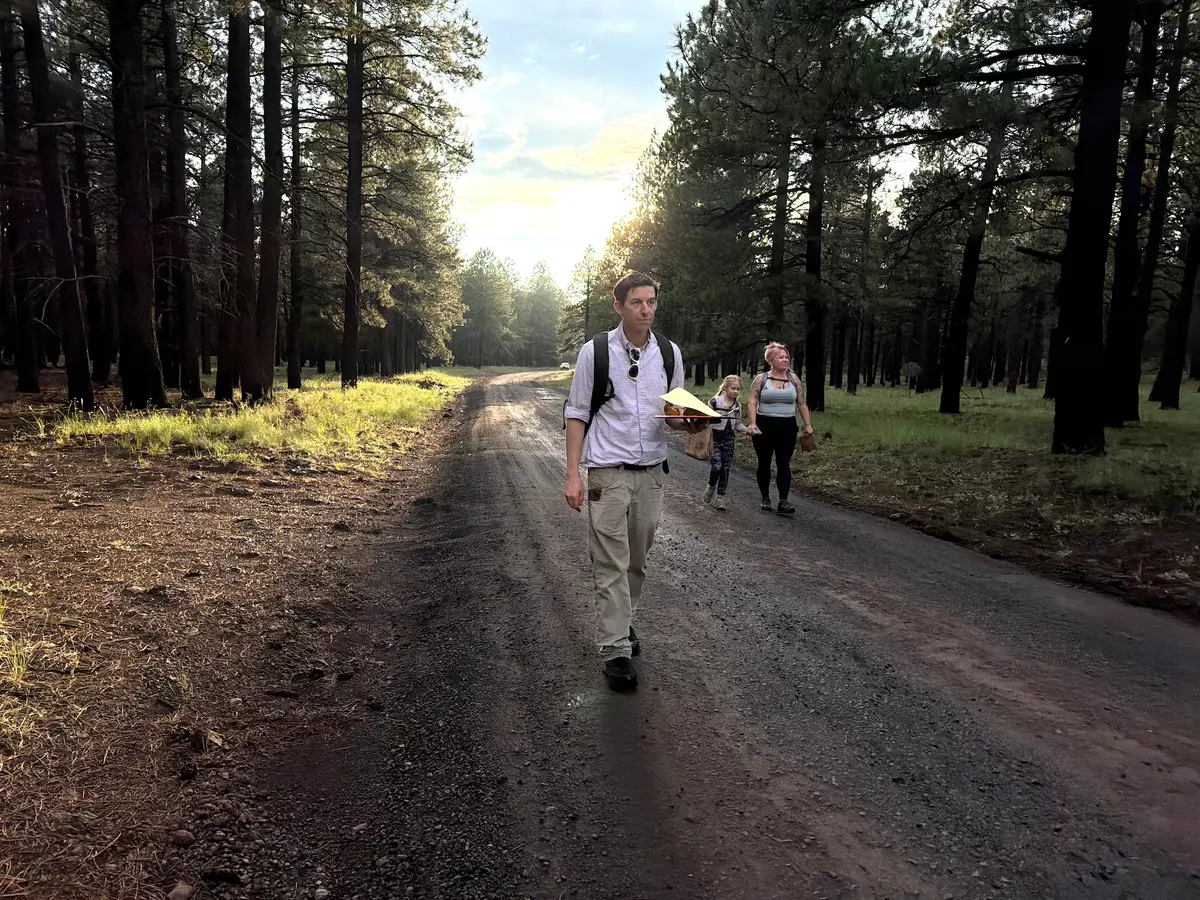
Michelle Lindsay, a cardiac nurse in Flagstaff, and her daughter, Jovie, 7, were among the participants during the evening foray.
“This is the first time I’ve gotten away [from work]. I get a lot of food out of it, honestly,” Lindsay said.
When pickled and stored in mason jars, wild mushrooms not only have a long shelf life but taste great with meals, she added.
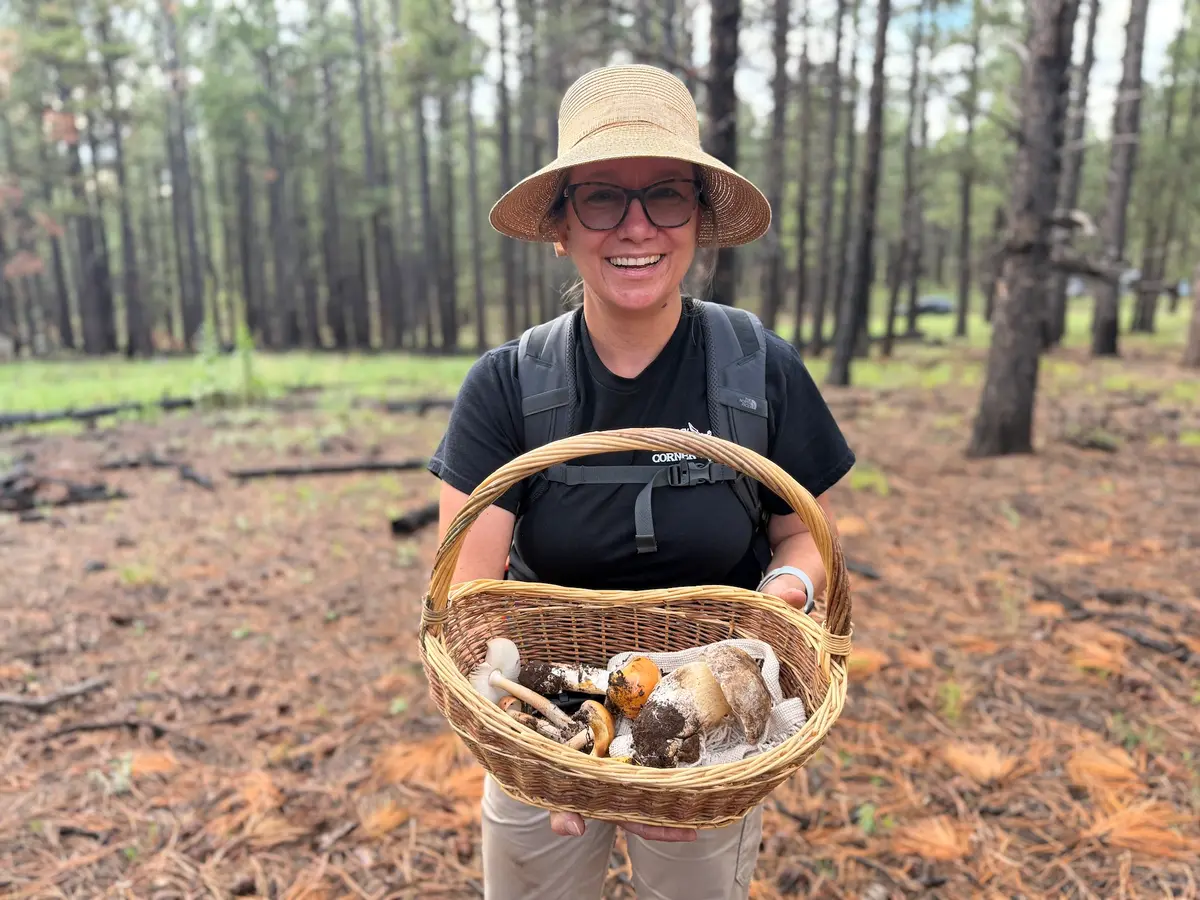
Amateur mycologist Crystal Randall said this was her third year with the group.
She said it was the discovery of an amazing lobster mushroom in Williams, Arizona, that really got her hooked on wild mushroom hunting.
“It was like catching gold fever but better, because you can put mushrooms in your belly,” Randall told The Epoch Times.
“It’s an accomplishment. It’s a satisfaction, for sure.”
The best part, she said, is meeting up with like-minded hobbyists and experts versed in nature’s fascinating fungi.
Dechter said that wild mushrooms—both edible and toxic—serve a vital purpose: providing food and helping maintain healthy ecosystems.
Then there’s the thrill of eating what you find—to “live to hunt another day,” Randall said.