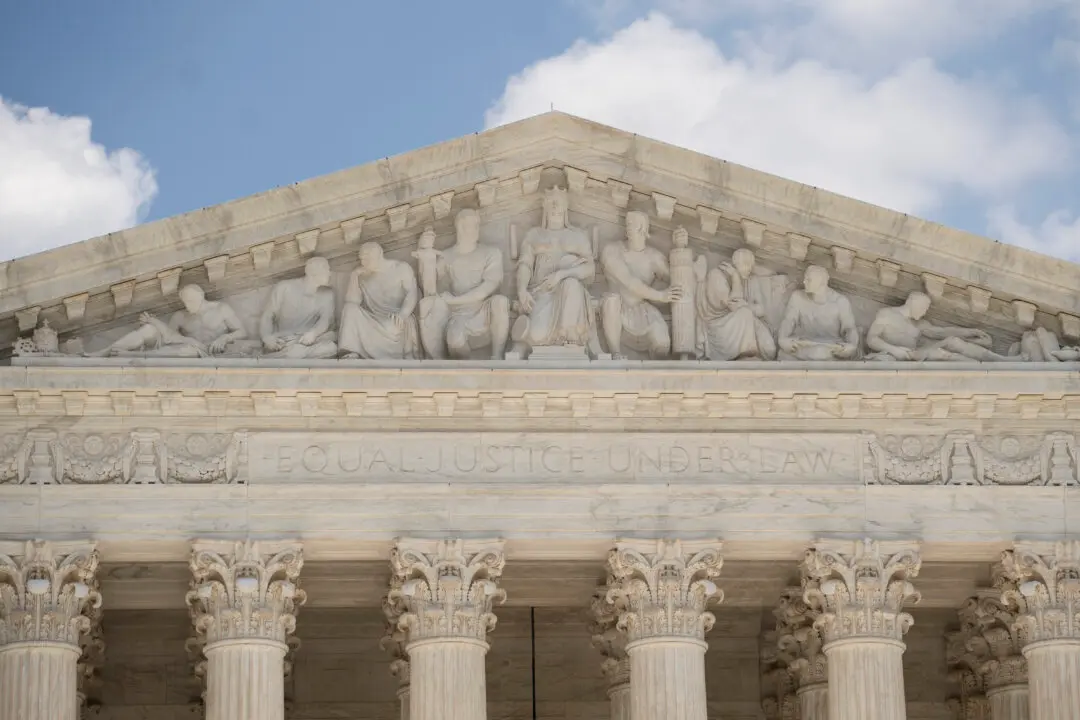
The Federal Trade Commission (FTC) plans to appeal a federal court’s decision that Meta does not hold a monopoly, the agency announced on Jan. 20.
The FTC had argued that Meta has an unfair advantage in the “personal social networking” market, since it now owns Facebook, Whatsapp, and Instagram, three major players in that field. By buying Whatsapp and Instagram, Meta had effectively removed much of its competition, the government said, leaving only Snapchat and a smaller platform called MeWe.
Meta countered that it was still competing against other social media companies such as YouTube and Tik-Tok. Boasberg agreed.
The FTC had posited that YouTube and TikTok belonged in a separate category of “video entertainment” apps, but Boasberg ruled that user data proved this theory was incorrect.
“The magnitude of TikTok’s and YouTube’s effect on Meta’s market share convinces the Court that these apps do not merely compete with Facebook and Instagram ‘at some level,’” Boasberg wrote in his ruling.
“Instead, they compete fiercely over a meaningful share of Meta’s business.”
As evidence, Boasberg cited data showing that when TikTok suffered a temporary outage, Facebook use arose by as much as 72 percent. Meta also estimated that even before TikTok had gained wide popularity in the United States, it was responsible for nearly a quarter of Instagram’s year-over-year user loss in 2019.
Similarly, when TikTok was banned in India in 2020, Facebook and Instagram saw a spike in teen users, Boasberg noted.
The Epoch Times reached out to Meta for comment.