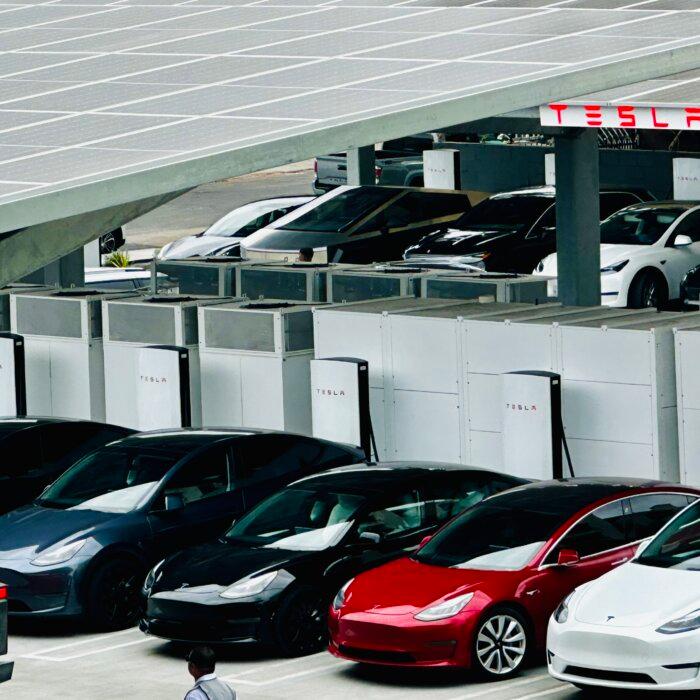
However, only 384 charging ports had been built nationwide under the NEVI and CFI programs as of April 2025, the report said.
GAO said the Federal Highway Administration (FHWA), which administers the two programs, has lagged in setting clear performance targets for NEVI and CFI.
The report noted that Congress had “expressed concern over the pace” at which charging ports had been built under the programs.
“That is pathetic. We’re now three years into this. That is a vast administrative failure,” he said. “Something is terribly wrong, and it needs to be fixed.”
The Biden administration had planned to set up 500,000 charging ports by 2030, according to former Transportation Secretary Pete Buttigieg.
As of May 2025, there were roughly 219,000 publicly available individual charging ports at 77,000 EV charging stations across the United States, the GAO report said.
Only 56,000 of these units are DC fast chargers that allow EV owners to quickly charge their vehicles. The majority, 162,000 units, are Level 2 ports that take much longer to charge, the report said.
For instance, one hour of charging with a Level 2 port only delivers 25 miles of driving range, far lower than the 100 to 200 or more miles delivered by a DC charger, GAO said.
Moreover, there are large cost differences between the two options.
“Level 2 chargers may cost about $900 to $3,000 per charging port to purchase, and between about $700 and $4,000 per charging port to install,” the report said.
In contrast, “the fastest DC fast charger can cost over $140,000 per charging port to purchase, and more than $39,000 per charging port to install, when between three and five charging ports are installed,” according to the report.
GAO highlighted that federal support for EV charging infrastructure may be affected due to the Trump administration’s policies.
In the order, Trump instructed all agencies to “immediately pause the disbursement of funds” appropriated via the IIJA or the Inflation Reduction Act of 2022, including funding for EV charging stations made available through the NEVI and CFI programs.
In February, FHWA said in a letter sent to the directors of state departments of transportation that it was suspending commitment of funds under the NEVI program.
At the time, the agency said the decision was taken to align with current policies of the Department of Transportation (DOT), including a Jan. 29 DOT order that policymaking be based on “sound economic principles and analysis supported by rigorous cost-benefit requirements and data-driven decisions.”
According to the GAO report, FHWA officials told them in March that due to Trump’s executive order and related agency actions, “most of FHWA’s NEVI and CFI activities were under review while it, and other relevant agencies, determine whether these efforts align with the administration’s policies and priorities.”
“Officials did not provide a time frame of their review process. As of May 2025, these reviews were ongoing and their outcomes unknown,” the GAO report added.