A federal judge has ruled that a lawsuit filed against the Trump administration’s “anti-weaponization” fund can proceed and said the Department of Justice (DOJ) must declare in a sworn statement before the court whether the fund is dead.
The order, filed Wednesday by U.S. District Judge Leonie Brinkema, said that recent testimony by acting Attorney General Todd Blanche declaring the fund dead is insufficient, and that the DOJ must state it in a “short, written declaration under the penalty of perjury.”
“That the defendants have refused to accord a genuine degree of trustworthiness to their representations about the Fund not going forward is particularly concerning because of the President’s consistent support for the Fund and Acting Attorney General Blanche’s acknowledgement that the Fund remains ‘important,’” Brinkema wrote in the order.
The judge also wrote that Blanche’s and President Donald Trump’s “continued interest in compensating alleged victims of alleged government weaponization, the defendants’ unwillingness to provide declarations under the penalty of perjury, and Acting Attorney General Blanche’s refusal to rescind the May 18, 2026 memo, which set up the structure of the Fund, all support the conclusion that this civil action is not moot.”
In filings before the court, lawyers for the DOJ wrote that written statements under oath are unnecessary and said that having Blanche, along with U.S. Treasury Secretary Scott Bessent, make sworn statements before the court “are unnecessary and the compelled testimony of senior officials from the Executive Branch implicates serious separation of powers concerns.”
“Although Acting Attorney General Blanche reiterated several times during his testimony that the Fund was not going forward, when asked whether he would ‘issue a new memo in writing rescinding that May 18 memo,’ he replied, ‘I’m not committing to putting anything in writing. And I said it over and over again,’” the judge also wrote.
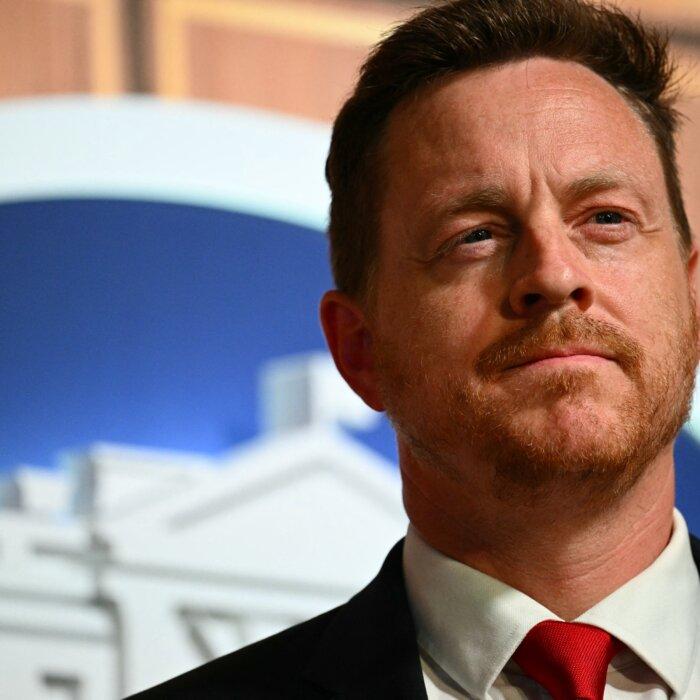
Brinkema in late May blocked the fund from going forward, saying that the DOJ cannot take any action relating to the “creation or operation of the Anti-Weaponization Fund, which includes the transferring of money to the Fund; the consideration of any claims submitted to the Fund; and the disbursing of any funds from the Fund.”
The initial order came in response to a lawsuit filed by Andrew Floyd, a former federal prosecutor who brought cases against individuals allegedly involved in the Jan. 6, 2021, breach at the U.S. Capitol. Joining him are a California professor, Johnathan Caravello, who was arrested while he protested against a federal immigration raid, and a nonprofit organization.
The DOJ in May announced the $1.776 billion fund as a means to compensate individuals who have said they were mistreated by previous presidential administrations. It was proposed in exchange for Trump agreeing to drop a lawsuit against the IRS, dropping claims connected to the Russian collusion investigation that was launched during his 2016 presidential campaign and that lasted during his first presidential term, and dropping a claim relating to the 2022 FBI search of his Mar-a-Lago property.
While Democratic lawmakers were largely critical of the fund’s creation, some Republicans questioned whether it was legally established.
“I think it’s unprecedented for someone to be on the both sides of a legal decision, where you make a plea bargain with yourself, essentially,” Sen. Rand Paul (R-Ky.) told reporters in May.
Responding to the critics at the time, Trump said in a post on Truth Social that he “gave up a lot of money” by dropping his claims against the IRS and government to establish the fund, asserting that his tax returns were illegally released and that the Mar-a-Lago search was an “illegal BREAK IN.”
“Instead, I am helping others, who were so badly abused” by what he said was government weaponization, he wrote.
The DOJ did not immediately respond to a request for comment.