EPA Seeks to Repeal Obama-Era Findings Justifying Car Emission Regulations

The finding said greenhouse gases emitted from new motor vehicles contributed to pollution that threatened public health.
EPA Seeks to Repeal Obama-Era Findings Justifying Car Emission Regulations
Evening traffic fills the 101 Freeway in Los Angeles on June 14, 2004. David McNew/Getty Images
|Updated:
0:00

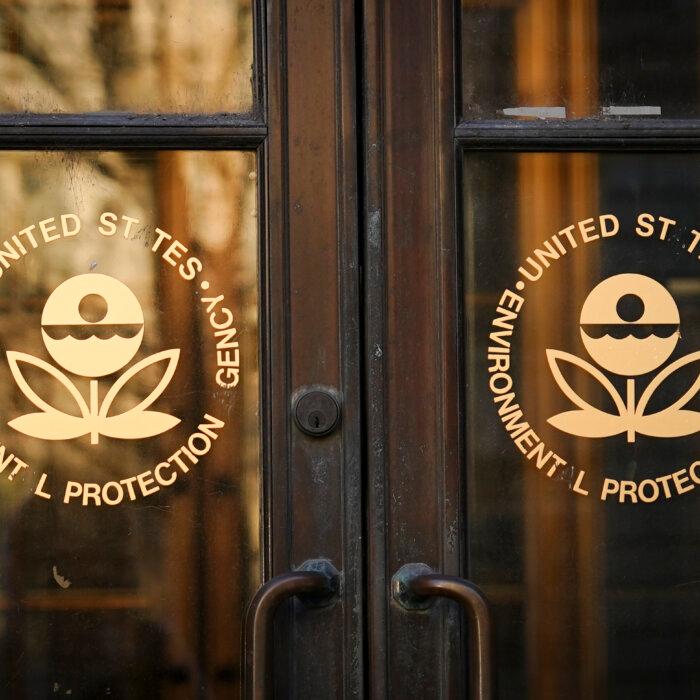
The Environmental Protection Agency (EPA) is seeking to repeal the basis for its ability to regulate the U.S. economy in the name of fighting climate change, Administrator Lee Zeldin confirmed on July 23.

“The EPA has sent to the Office of Management and Budget a proposed rule to repeal the 2009 endangerment finding from the Obama EPA,” Zeldin told Newsmax.
The finding stated that emissions of carbon dioxide and other greenhouse gases from vehicles would contribute to pollution that threatened public health.
According to the EPA’s website, two findings were signed in December 2009 under a section of the Clean Air Act. The first said “current and projected concentrations” of six well-mixed greenhouse gases, including carbon dioxide, methane, and nitrous oxide, in the atmosphere threatened public health and welfare. The second found that the combined emissions from new motor vehicles and new motor vehicle engines contributed to greenhouse gas pollution.

“These findings do not themselves impose any requirements on industry or other entities,” the EPA stated. ”However, this action was a prerequisite for implementing greenhouse gas emissions standards for vehicles and other sectors.”

Zeldin said that since the finding, there had been “trillions” of dollars’ worth of regulations, from tailpipe emissions to electric vehicle mandates. He criticized the left for not talking about many reasons why carbon dioxide is essential to life on earth.
“The left might say, and in many cases they do, that there’s a choice, a binary choice: You can either protect the environment or grow the economy,” he said. “The Trump EPA rejects that. We choose both. We believe that you can protect the environment and grow the economy. That’s very important. That’s what the American public voted for, and that’s what they demanded when they went to the polls last fall.”

This announcement comes more than a month after Zeldin announced that his administration would start relaxing Clean Power Plant greenhouse gas and mercury emission regulations imposed under the Biden and Obama administrations. These regulations would have required power plants to “capture” 40 percent of their emissions by 2032 and increase that to 90 percent by 2039, which Zeldin said was set to cost coal- and gas-fired plants upward of $1 billion a year.

“In 2023 and 2024,” he said on June 11, “rules were enacted seeking to suffocate our economy in order to protect the environment, seeking to make all sorts of industries, including coal and more, disappear, regulate them out of existence.”

However, he clarified that no power plant would be able to go beyond its current emissions.

The Epoch Times has reached out to the EPA for more details on the proposed repeal.

The move has already faced vocal opposition from environmental groups.

“Make no mistake: This action would put millions in harm’s way,” the Environmental Defense Fund said on X, calling it the Trump administration’s “most environmentally destructive action yet.”

The organization went on to argue that the Trump EPA’s actions would lead to more pollution, stronger hurricanes, more powerful floods, and more frequent fires. It also argued that it would cause higher insurance and fuel costs for Americans.

John Haughey contributed to this report.

Google LogoMark Us Preferred on Google
T.J. Muscaro
T.J. Muscaro
Author
T.J. Muscaro is an award-winning reporter and NASA Correspondent for The Epoch Times, covering the Artemis program, Space Force, and other public and private ambitions within the growing space industry. Based in Tampa, Florida, he also covers stories of extreme weather and disaster relief, as well as various matters of national and international politics.