Judge Reggie Walton’s dismissal came half a year after the Office of Personnel Management (OPM) first sought to end the decree. They argued in Angelo Luevano v. Charles Ezell that it was racially discriminatory and that it kept them from assessing job applicants effectively.
Charles Ezell was the acting OPM director at the time the case was filed.
In interviews with The Epoch Times, experts on civil rights and public policy were not shocked to see Luevano fall. Alongside measures on diversity, equity, and inclusion (DEI) in the federal government, the dismissal is the latest in a sweeping effort by the Trump administration to change how the United States hires and elevates talent.
Driven by executive orders, the moves are upending norms that some see as discriminatory and others see as inclusive, but strong reactions and reversals could be coming.
“I’m surprised that it [Luevano] lasted as long as it did,” said James Michael Martinez in an email to the Epoch Times.
“It is not surprising that Trump would seek to challenge this longstanding decree, spotlighting his administration’s relentless pursuit of changes that align with its ideological vision,” Riccucci, who studies social equity in the public sector, said in an email to The Epoch Times. “He does not want a diverse federal workforce.”
The Epoch Times reached out to the White House for comment but did not receive a response by publication time.
Jeremy Carl, a senior fellow at the Claremont Institute, said the Trump administration has “addressed a huge percentage” of the concerns he highlighted in “The Unprotected Class,” his 2024 book on anti-white discrimination.
“I do think we’re in a golden age for pushing back against these types of discriminatory policies,” he said. “The momentum is pretty substantial.”
He hopes the end of Luevano will lead to the return of merit-based testing. So does Foreign Service Officer Marcus Thornton.
“It’s been a systemic issue across the federal government that we’ve deviated from merit-based approaches,” said Thornton, chief of staff at the U.S. Agency for International Development.
A 44-Year-Old Decree, a 142-Year-Old Law
The federal government agreed to the Luevano consent decree in 1981 as part of Luevano v. Campbell.That case began with a lawsuit against a key examination for the competitive civil service. It was filed by black and Hispanic applicants who failed the test.
They alleged that it violated Title VII of the Civil Rights Act, as more of them failed than white applicants.
Riccucci said Luevano “effectively banned the use of civil service exams by the federal government in hiring.”
Many agencies can use a self-administered test for some positions. For the most part, however, agencies go their own way.
Thornton said federal hiring has become more open-ended since Luevano. Agencies often focus on knowledge, skills, and ability.
“The problem with many of those [is that] it’s based on what you put on your resume and your application, and that’s often very subjective,” he said.
Luevano came almost a century after the 1883 Pendleton Civil Service Reform Act, which made merit the cornerstone of most federal hiring.
Before Pendleton, jobs were divvied out through the spoils system. Presidents handed them out to friends and allies with no guardrails.
“Many federal leaders wanted to create a class of public servants who secured their positions based on what they knew, not who they knew,” Martinez said.
Carl, Thornton, and other critics of Luevano say it undercut that merit-first agenda.

Martinez, by contrast, said the decree “recognized that traditional measures of ‘merit’ were not always fair and equitable.”
“Because affluent whites tended to perform better than other groups on certain tests, the goal was to tweak the tests to allow for a more diverse pool of qualified candidates,” Martinez said. “To the extent that the decree created space for persons of color to gain federal employment that they might not have gained, it was modestly successful.”
Riccucci offered a similar perspective.
Disparate Impact
The Luevano dismissal comes several months after OPM issued a memorandum outlining its Merit Hiring Plan.Although Carl praised Trump’s work so far, Carl hopes that Trump will soon tackle another legal theory that bears on Luevano.
“Disparate impact is still the one big thing out there,” Carl said.
Under that theory, practices that are meant to be neutral can be seen as discriminatory if they lead to different outcomes for different groups.
The Luevano consent decree stemmed from just such a gap, in that case, between groups of test takers.
“By favoring the applications of blacks and Hispanics, the decree disfavors all other racial groups,” OPM wrote.
It also drew on a recent decision in the Northern District of Georgia.
In that case, the Cobb County Fire Department was accused of discriminating against black job candidates because its hiring process included a credit check and written examination.
Judge William Ray did not enter a Luevano-like consent decree in that case.
Ray even pondered whether today’s Supreme Court—more conservative than in the past—would uphold disparate impact.
“There is scholarly debate whether it is constitutional for federal law to prohibit practices or policies which are race neutral on their face if there is a disparate impact, especially when there was no discriminatory intent,” he wrote.
On the Horizon
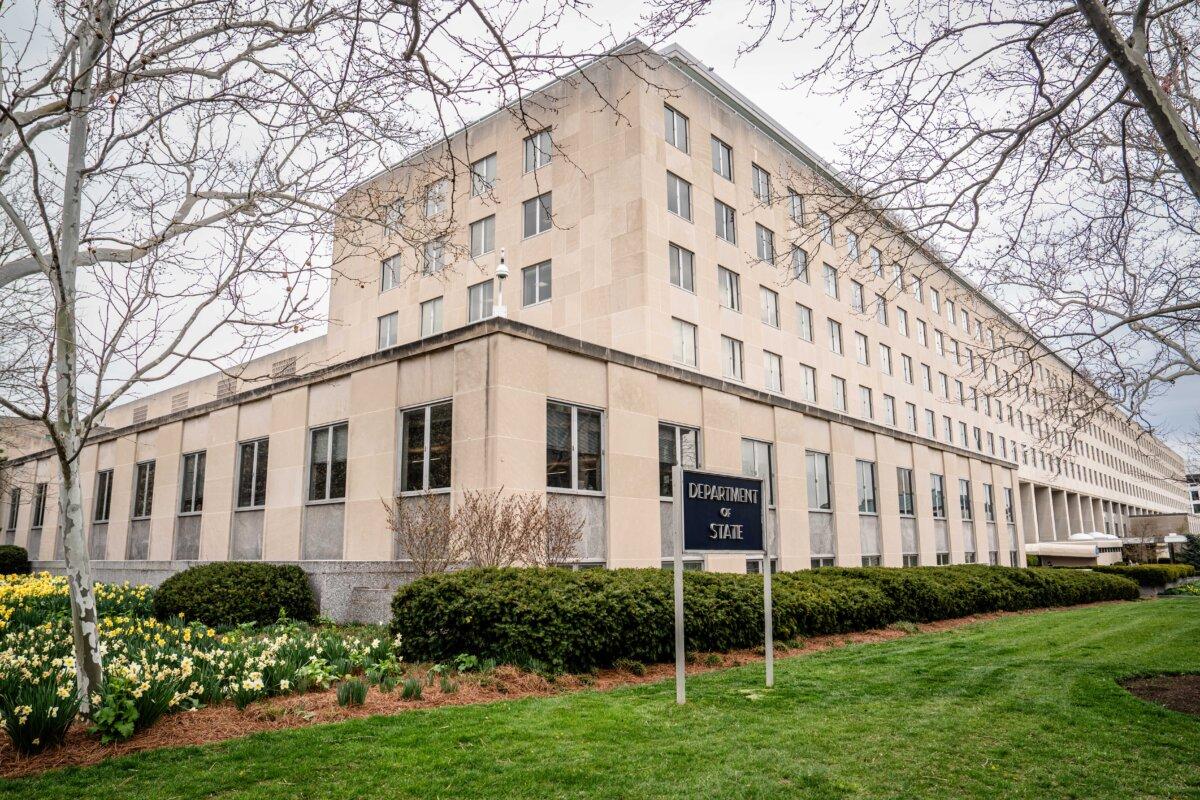
Thornton, for his part, hopes that the Luevano dismissal heralds further reforms to federal employment, including in the State Department.“Anytime you have a system that is subjective, whether it’s for hiring or promoting internally, you run the risk of getting into a bubble of groupthink, where the people that are most likely to get hired and promoted and retained are going to be the people who are the most conformist to whatever that organization is,” he said.
The future could include pushback, too.
Although Luevano went down with little fanfare, Carl anticipates that the focus on merit could provoke a stronger reaction in time.
“You’re going to have a background of people getting hired that is different from the backgrounds of the overall population. And at that point, some of the groups that feel like they’re being negatively affected may begin to start organizing and really pushing back on this aggressively,” he said.
Martinez hesitated to predict when or whether reversals would come.
“It depends on whether a majority—or a vocal plurality—of the electorate embraces inclusivity or exclusivity in the future, especially in the 2026 and 2028 elections,” he said.
Carl, too, stressed the importance of 2028, noting Trump’s reliance on executive orders. Like many of President Joe Biden’s executive orders, they could swiftly be taken down by a future executive.
“If the Dems can just turn it around in 3 1/2 years, the impact will be a little bit blunted,” he said.