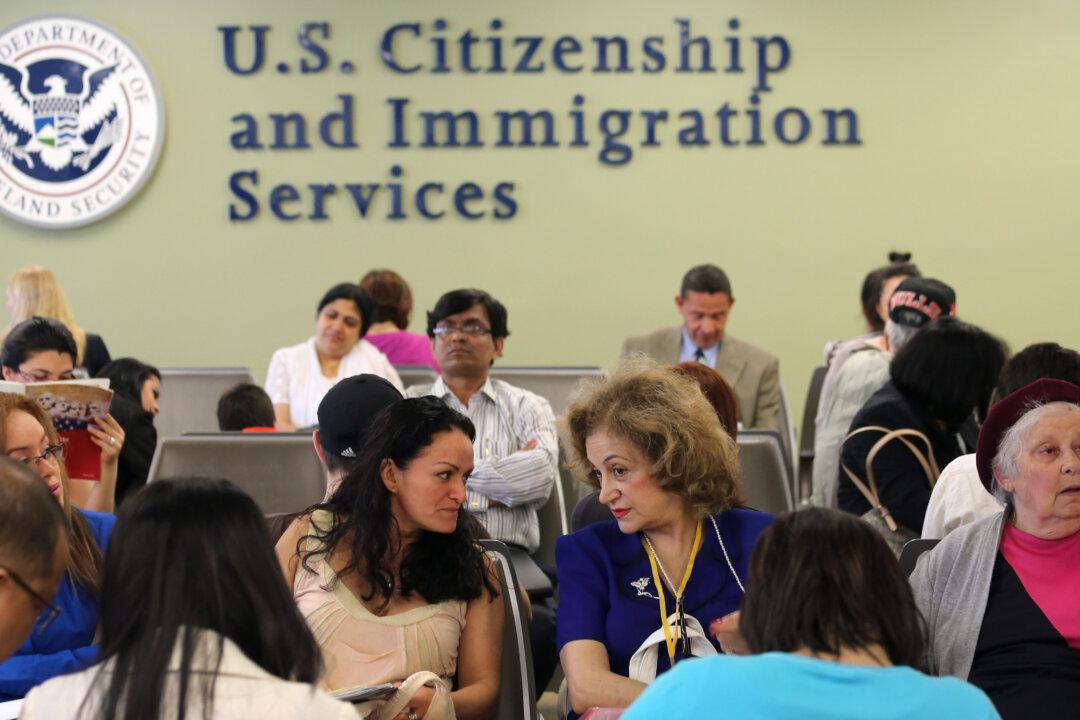
The position, open at 70 locations nationwide, offers a salary of $159,951 to $207,500 per annum, Noem said, adding that there is potential for full-time remote work.
“The Trump administration has secured the southern border—but after four years of crisis, there’s still work to do. If you’re a lawyer called to serve, we need YOU to protect our borders,” Noem added.
Individuals who join will “make decisions with generational consequences; ensure that only aliens with legally meritorious claims are allowed to remain,” the department said.
Moreover, judges have to “ensure adherence to the law; combat fraud and ensure those seeking to exploit vulnerabilities in our immigration system are not successful,” it said.

Applicants must possess an LL.B., J.D., or LL.M. degree and must be an “active member of the bar, duly licensed and authorized to practice law as an attorney under the laws of any state, territory of the U.S., or the District of Columbia,” it said.
Job applications and recruitment at agencies tackling immigration have surged under the Trump administration.
In a Nov. 7 post on X, the Coast Guard announced it achieved “record-breaking” recruitment results for fiscal year 2025, having hit 121 percent of its active-duty target goal.
Citizenship and Immigration Services has received an “overwhelming” 35,000-plus applications since launching its hiring campaign on Sept. 30, DHS said earlier this month, adding that this was the “most for any position in agency history.”
Court Challenges
The job call comes amid many judges at the federal and state levels countering the Trump administration’s policy decisions and forcing the federal government to adopt certain stances on immigration and law enforcement.This has led the administration to term these judges “activists.”
A TPS designation allows people from countries affected by natural disasters, armed conflict, or other extraordinary situations to remain in the United States.
The Trump administration appealed against the decision. But on Sept. 17, the Court of Appeals for the Ninth Circuit declined to pause the district court’s ruling.
“Vacating and terminating Venezuela’s TPS status threw the future of these Venezuelan citizens into disarray, and exposed them to a substantial risk of wrongful removal, separation from their families, and loss of employment,” the appeals court said.
The administration argues that the TPS program has been overused and that many immigrants from TPS-designated nations living in the United States no longer merit protection since conditions in their home nations have improved.
President Donald Trump signed a presidential memorandum on Aug. 11 allowing such deployment, highlighting that the local D.C. administration had “lost control of public order and safety in the city.”
However, the federal judge ruled that Trump’s actions were not aligned with the U.S. Constitution and unlawfully interfered with the authority of local officials to control law enforcement in the region.
“President Trump is well within his lawful authority to deploy the National Guard in Washington, D.C., to protect federal assets and assist law enforcement with specific tasks,” she said.
“This lawsuit is nothing more than another attempt—at the detriment of D.C. residents—to undermine the President’s highly successful operations to stop violent crime in D.C.”