The Department of Transportation (DOT) said on July 31 that the Federal Railroad Administration is proposing reforms to train noise emission standards that it said would help clear the way for high-speed rail.
At present, train noise standards focus on mechanical and engine sounds and fail to take into account wind noise generated when locomotives speed past 160 miles per hour (mph), the DOT said in a July 31 statement. At speeds beyond this limit, “the aerodynamic noise resulting from airflow moving over and around the train begins to become the dominant contributor to the overall noise emitted,” the DOT notice said. The noise at speeds above 160 mph exceeds current standards.
To resolve this challenge, the Federal Railroad Administration (FRA) is proposing new standards for high-speed rail.
The current standard sets the maximum noise limit of train operations to 90 dB(A), with dB(A) referring to decibels as perceived by the human ear. The FRA plans to raise this to 96 dB(A) for trains at speeds above 160 mph. For speeds exceeding 160 mph up to 220 mph, the noise threshold increases to 103 dB(A).
For trains with speeds exceeding 220 mph, such as Maglev, the new framework will include a special approval process for noise emissions rather than establishing a fixed process.
In its statement, the DOT said the proposal rids outdated requirements that will eliminate “costly, unnecessary” modifications for current trainsets. The FRA estimates that the reforms would save $100 million for developers of high-speed rail over three decades.

“One of the reasons we don’t have true high speed rail in the United States is because current rules disadvantage trains that generate most of their noise from sources other than their engines and rolling stock instead of approaching the issue holistically,” FRA Administrator David Fink said in the statement.
“Updating this rule will remove a major obstacle railroads currently face when trying to operate high speed trains.”
The current administration is “cutting through the red tape” that has hampered rail innovation in the United States, Duffy said. He criticized the previous administration’s funding of California’s “multi-billion-dollar Train to Nowhere” instead of undertaking necessary regulatory work to support rail innovation in the country.
At the time, Duffy said that the California High-Speed Rail Authority (CHSRA) failed to lay even a single high-speed track despite around $15 billion spent on the project over a period of 16 years.
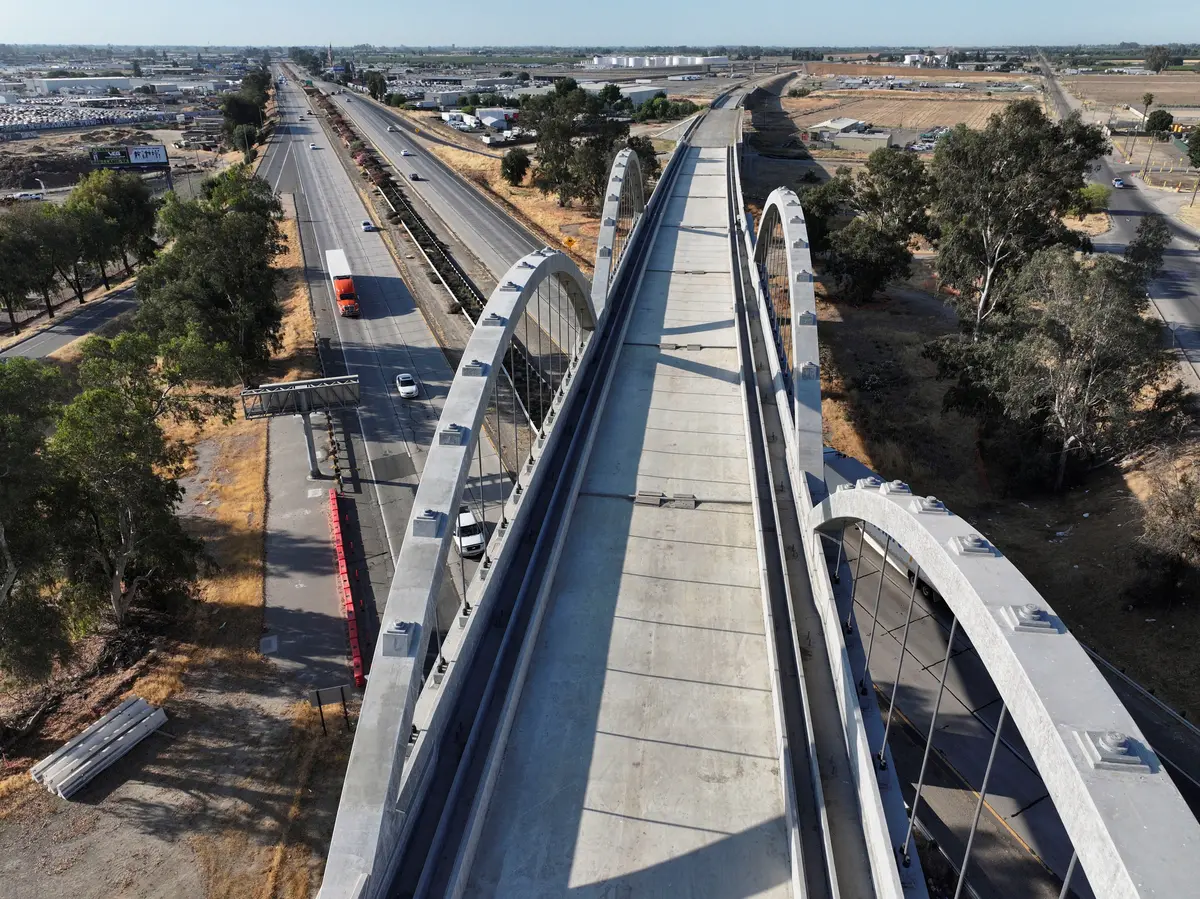
California Gov. Gavin Newsom had criticized the funding cancellation at the time, highlighting that more than 50 major railway structures and more than 60 miles of train guideways were already built under the project.
Improving US Rail
On May 12, the FRA announced that it had taken action to cut red tape plaguing the rail sector. Specifically, the agency finalized 11 deregulatory rules and removed more than 1,000 words from the Federal Register, aimed at helping U.S. rail operators implement modern practices and pursue innovation.
“We can’t build big, beautiful infrastructure that will serve Americans for generations if our industries are burdened by outdated regulations that stifle innovation and ignore the latest safety practices,” Duffy said at the time. “These critical updates will enhance safety, support our great rail workforce, and enable the next wave of innovative technologies on our tracks.”

In April, the DOT announced it would invest $2.04 billion to modernize the United States’ rail infrastructure to improve the travel experience for American families and make the transportation of goods across the country more reliable and efficient.
The funding aimed to support projects that reduce rail congestion, improve regional railroad infrastructure, and develop safety programs to minimize fatalities and injuries.