This copy is for your personal, non-commercial use only. Distribution and use of this material are governed by our Subscriber Agreement and by copyright law. For non-personal use or to order multiple copies, please contact The Epoch Times Reprints.
Five Democratic-led states announced new steps on July 14 to counter what they call the rising costs of President Donald Trump’s tariff policy, as the White House said that consumers are seeing lower import prices.
Arizona, Colorado, Illinois, New York, and Oregon announced a mix of executive orders and state agency directives on July 14 aimed at charting how new and proposed duties affect household budgets, supply chains, and state economies.
Washington’s governor was listed with the group but did not announce any fresh action on Monday—although the state had already filed an amicus brief in May supporting a multi-state lawsuit to block the tariffs.
Illinois Gov. JB Pritzker signed Executive Order 2025-03 directing agencies to “evaluate the scale and impact of how Trump’s tariffs will affect key economic sectors and the increased costs that will be passed onto working families.”
He said, “Donald Trump’s reckless trade policies are nothing more than a tax on working families that will jack up prices, threaten jobs, and impact the way we live.”
Colorado Gov. Jared Polis created a Colorado Tariff Burden Reduction Task Force, saying, “Tariffs do not work, and we will continue to prove that what Americans and Coloradans need most is certainty and stability, not whiplash tariffs driving up the cost of groceries and goods.”
In New York, Gov. Kathy Hochul ordered agencies to compile data on “cost increases and supply chain disruptions” and to produce a statewide impact report by Oct. 31.
Oregon Gov. Tina Kotek told agencies to deliver a 90-day analysis, citing businesses telling her of “anxiety, uncertainty, and an information vacuum from the federal government.”
Washington Gov. Bob Ferguson, who filed an amicus brief in May supporting a multistate lawsuit against the duties, warned that “our economy hangs in the balance.” Ferguson cited falling port traffic and a drop in agricultural shipments.
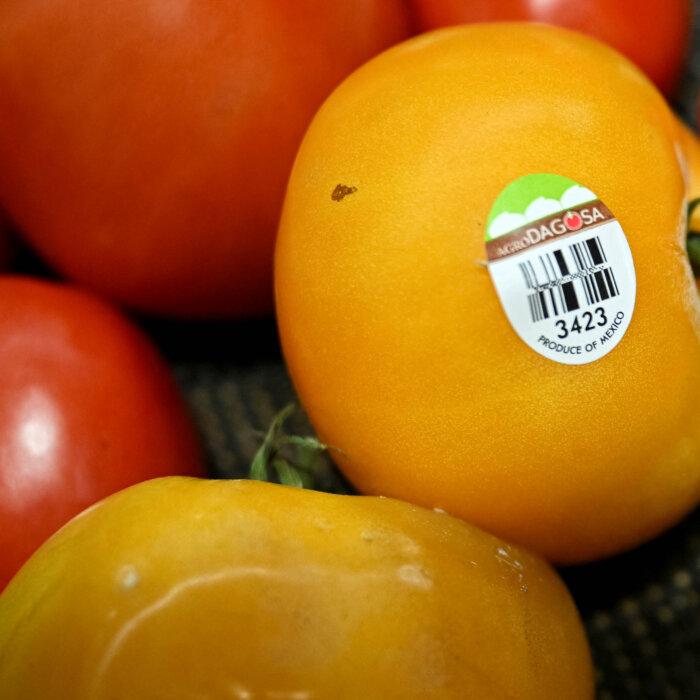
Although Arizona issued no separate statement, Gov. Katie Hobbs joined the coalition, stating in Pritzker’s release that Trump’s withdrawal from the Tomato Suspension Agreement—which raises duties on Mexican tomatoes by 17 percent—is threatening to “kill over 50,000 jobs between Arizona and Texas and forcing Arizonans to pay more at the grocery store, all to benefit Florida farmers.”
The Trump administration announced on July 14 that it was withdrawing from the 2019 agreement, saying the deal “has failed to protect U.S. tomato growers from unfairly priced Mexican imports.”
White House Responds
The White House challenged the governors’ view of the tariffs.
“The Administration has consistently maintained that the cost of tariffs will be borne by foreign exporters who rely on access to the American economy, the world’s biggest and best consumer market,” White House spokesman Kush Desai said in an email to The Epoch Times.
“A new CEA analysis proves just that: prices of imported goods have actually fallen this year despite President Trump’s historic tariffs.”
The Council of Economic Advisers (CEA) report that Desai referenced finds that “the prices of imported goods have not only fallen this year, but also declined faster than overall goods prices since February.”
“Overall goods prices in the PCE index have increased by 0.4 percent from December 2024 through May 2025, which corresponds to a 1 percent annualized rate,” that report stated. “Meanwhile, the imported component of PCE goods prices fell by 0.1 percent from December 2024 through May 2025.”
Trump administration officials say tariffs are meant to address trade imbalances and revive domestic industries, including steel. Supporters of the trade policy say that duties encourage U.S. production and reduce reliance on foreign suppliers.
Governors leading Monday’s efforts say their reviews will quantify costs induced by tariffs. Colorado agencies will study aerospace, agriculture, and health care. Illinois is examining medical supplies, food assistance, and infrastructure projects. New York will look at farming, tourism, and construction. Oregon will map potential “pain points” from groceries to manufacturing.
Each state plans to publish findings later this year.
Chase is an award-winning journalist. He covers national politics for The Epoch Times. For news tips, send Chase an email at [email protected] or connect with him on X.