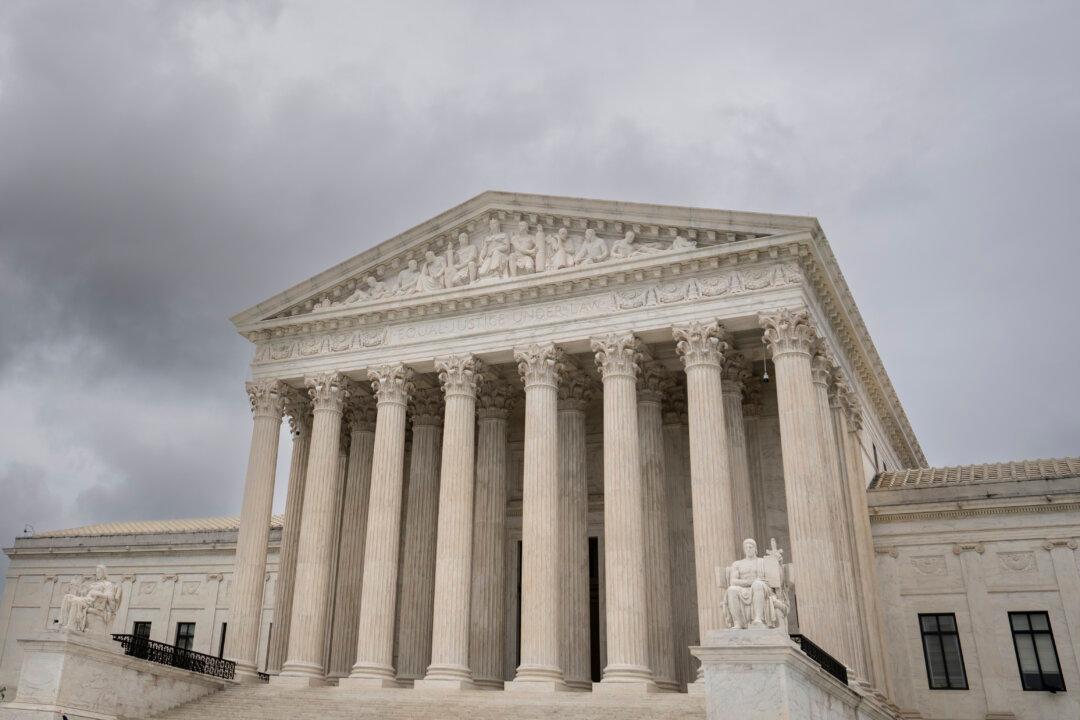
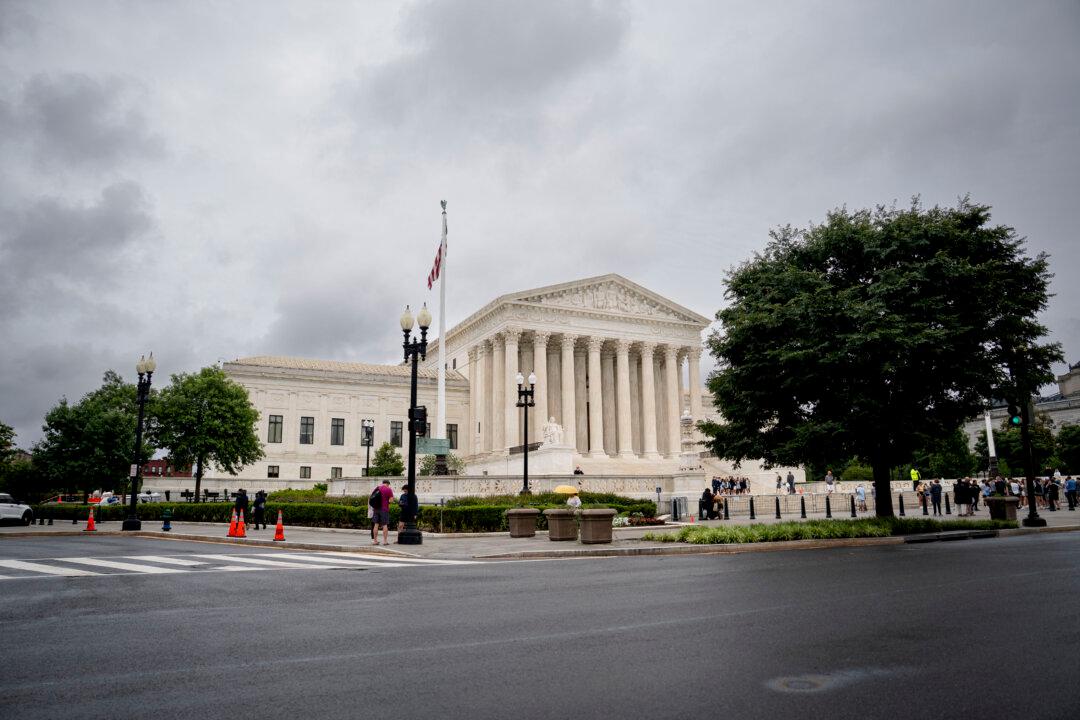
Companies suing the Trump administration over tariffs urged the Supreme Court on Aug. 5 to take up their case to resolve a disagreement between lower courts over which one has the authority to hear the tariff challenge.
The case is Learning Resources Inc. v. Trump.
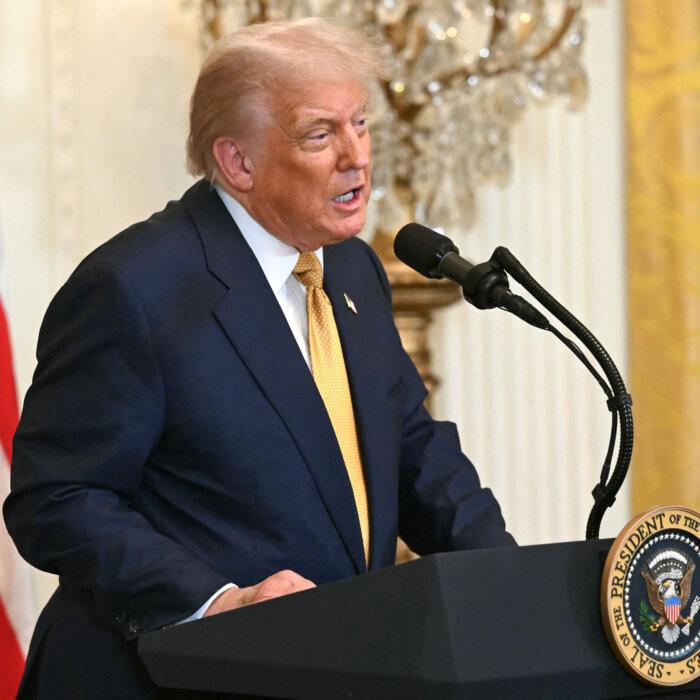
The lead petitioner, Learning Resources Inc., an Illinois-based maker of educational toys, argues that the tariffs adversely affect the company. The petitioners argue that President Donald Trump does not have the authority under the International Emergency Economic Powers Act (IEEPA) to unilaterally impose tariffs.
Trump also argued at the time that the tariffs would advance national security, lure manufacturers back to producing in America, and raise more money for the Treasury Department, which might help deal with the federal deficit.
The tariffs have been the subject of several lawsuits since they were announced.

The trade court held that the IEEPA does not give the president “authority to impose unlimited tariffs on goods from nearly every country in the world.”
“The Constitution assigns Congress the exclusive powers to ‘lay and collect Taxes, Duties, Imposts and Excises,’ and to ‘regulate Commerce with foreign Nations,’” the trade court ruled.
The Trump administration appealed that ruling to the U.S. Court of Appeals for the Federal Circuit. On May 29, the Federal Circuit put the trade court’s decision on hold, temporarily reinstating the tariffs.
One of the judges told Justice Department attorney Brett Shumate that he was concerned that the IEEPA “doesn’t even mention the word ‘tariffs.’”
The district court held that the tariffs were unlawful and that the statute does not allow the president “to unilaterally impose, revoke, pause, reinstate, and adjust tariffs to reorder the global economy.” The tariffs present “an existential threat” to the company’s business, the court also found.
The government argues that the trade court has exclusive jurisdiction over the challenge, while the district court disagrees, according to the brief.
The high court should take up the case to resolve which of the lower courts has jurisdiction to hear the challenge to the tariffs, the brief states.
“The only way for this Court to ensure it has jurisdiction to resolve the question presented is to consider this case and the Federal Circuit cases concurrently,” the brief reads.
The Federal Circuit has yet to rule on the cases of V.O.S. Selections Inc. v. United States and Oregon v. Trump, for which it heard oral arguments on July 31.
Because the D.C. Circuit and the Federal Circuit are operating on different timelines, it seems likely that the Federal Circuit “will issue an opinion before the D.C. Circuit even hears arguments, and that the losing parties there will quickly seek review in this Court,” the brief states.
The president may do this “to deal with any unusual or extraordinary threat ... to the national security, foreign policy, or economy of the United States, if the President declares a national emergency with respect to such threat,” the DOJ brief reads.
Here, the president has imposed tariffs to deal with two specific emergencies, according to the brief.
In Proclamation 10886, issued on Jan. 29, the president said the Chinese regime is involved in producing fentanyl that finds its way to the United States. Invoking the law, he imposed an extra 10 percent tariff on most products from China. In Executive Order 14228 on March 7, Trump increased the tariff to 20 percent on Chinese goods because he found the Chinese regime wasn’t doing enough to “alleviate the illicit drug crisis.”
In April, Trump issued Executive Order 14257, in which he declared that there was “a lack of reciprocity in our bilateral trade relationships” and imposed an additional 10 percent on all imports, with certain exceptions, the DOJ brief states.
Usually, when a petition is granted, the court schedules oral arguments for the case. Four of the nine justices must vote to approve a petition.