This copy is for your personal, non-commercial use only. Distribution and use of this material are governed by our Subscriber Agreement and by copyright law. For non-personal use or to order multiple copies, please contact The Epoch Times Reprints.
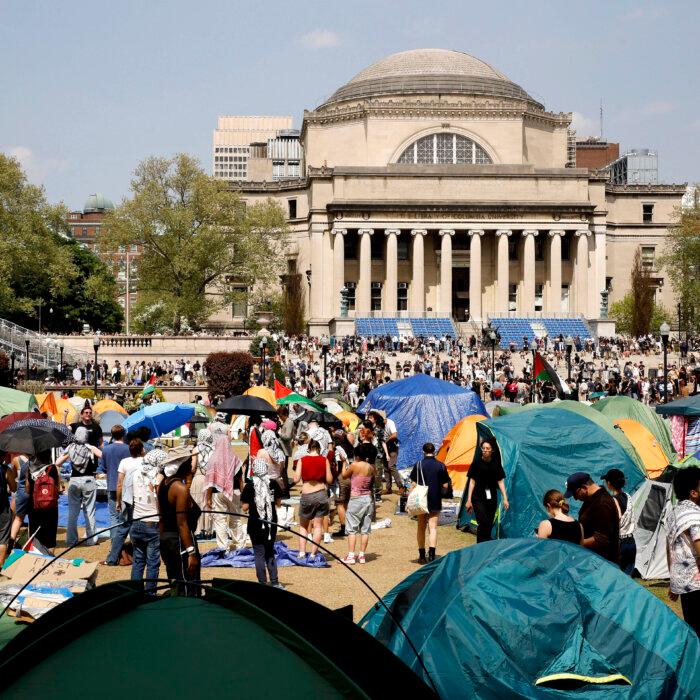
Columbia University has expelled, suspended, and revoked degrees of multiple students for participating in what it described as disruptive protests in spring 2024 and earlier this year.
The Ivy League institution announced the disciplinary actions on Tuesday, stating they were finalized the day prior by its Judicial Board.
The sanctions stem from a pro-Palestinian encampment on campus in spring 2024 and the May 7, 2025, occupation of a reading room in Butler Library. In response to the latter incident, the university placed 71 students on interim suspension in May.
According to the university, a panel composed of professors and administrators reviewed each case over the summer and issued individualized penalties based on specific findings and any prior disciplinary history. While Columbia does not disclose individual student outcomes, the sanctions related to the Butler Library occupation include probation, suspensions ranging from one to three years, expulsion, and revocation of degrees.
Roughly 100 protesters entered the Butler Library reading room on May 7, one of Columbia’s “study days” that students typically spend preparing for their final exams. The protesters chanted, hung Palestinian flags and banners from bookshelves, and wrote slogans on furniture and picture frames, including “Columbia will burn 4 the martyrs,” student newspaper Columbia Spectator reported at the time.
A video shared to X by protest group Columbia University Apartheid Divest (CUAD) shows participants wearing masks and Palestinian-style keffiyehs, chanting and clapping to drumbeats amid painted banners throughout the room.
“As long as Columbia funds and profits from imperialist violence, the people will continue to disrupt Columbia’s profits and legitimacy,” CUAD wrote in a statement posted on Substack that day. “Repression breeds resistance—if Columbia escalates repression, the people will continue to escalate disruptions on this campus.”
The New York Police Department arrested 78 people after acting University President Claire Shipman authorized officers to enter the campus to quell the protest. Shipman said two campus safety officers were injured during a crowd surge as protesters tried to force their way into the room, which she described as “outrageous.”
The incident is “especially unacceptable while our students study and prepare for final exams,” Shipman said in a statement at that time.
In Tuesday’s announcement, officials reiterated that the library occupation “affected hundreds of students attempting to study,” and that disruptions to academic activities are a violation of university policies.
Columbia did not respond to a request for detailed information, such as how many students were disciplined. CUAD said nearly 80 were suspended. The group also said disciplinary letters sent to suspended students require them to submit written apologies in order to return to campus after one to three years.
CUAD accused the university of punishing students as a concession to the Trump administration.
“The sanctions are believed to be part of a federal deal Columbia is about to announce,” the group said in a statement shared on X.
The Trump administration in March froze approximately $400 million in federal research funding to Columbia over alleged failure to protect Jewish and Israeli students from anti-Semitic harassment in the wake of the Oct. 7, 2023, Hamas terrorist attack on Israel that rekindled the Middle East War.
Columbia has so far agreed to several demands by the federal government, including reforms to its disciplinary process and the adoption of the International Holocaust Remembrance Alliance’s (IHRA) working definition of anti-Semitism when it comes to discrimination complaints.
Shipman referenced the ongoing federal negotiations in her July 15 message announcing the university’s adoption of the IHRA definition, which is also the official definition used by the U.S. Department of State.
“The fact that we’ve faced pressure from the government does not make the problems on our campuses any less real; a significant part of our community has been deeply affected in negative ways,” Shipman said. “In my view, any government agreement we reach is only a starting point for change. Committing to reform on our own is a more powerful path.”
As of July 23, the frozen federal funds have not been restored.