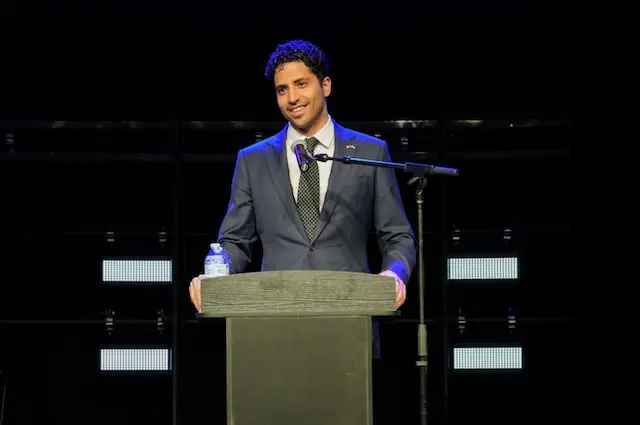
DENVER—Colorado’s term-limited Attorney General Phil Weiser was a longtime party stalwart when he entered the governor’s race as a long-shot insider against a presumed favorite.
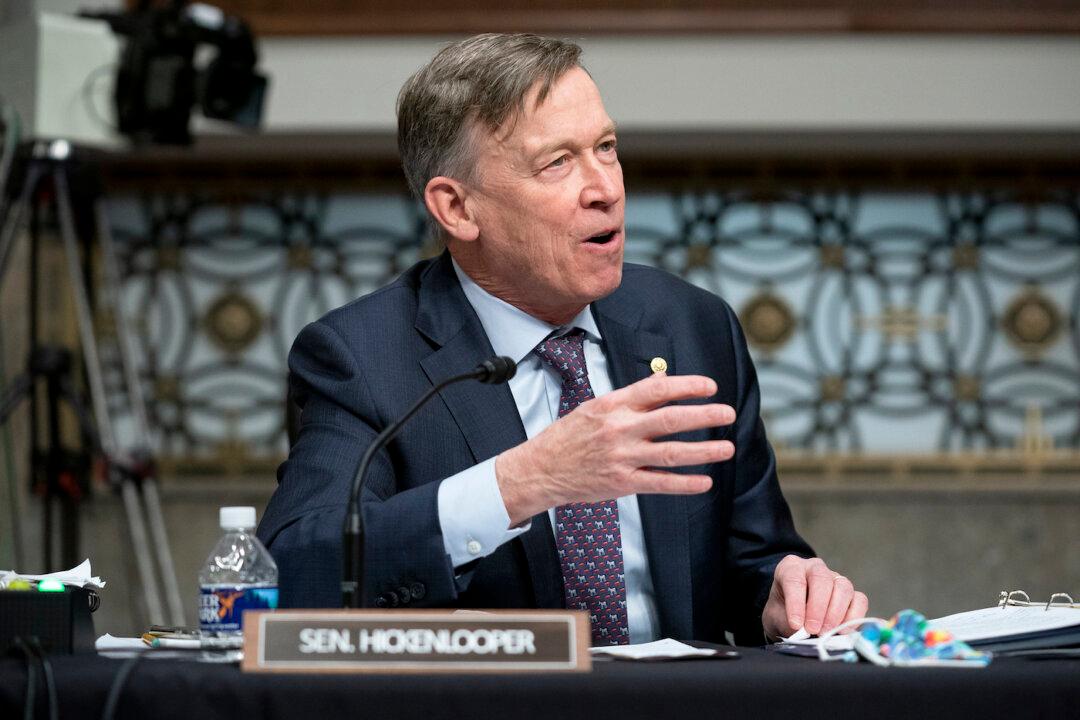
Now, he’s the Democratic nominee to lead the state, defeating Sen. Michael Bennet (D-Colo.) for the nomination with around 55 percent of the vote to Bennet’s 45 percent.
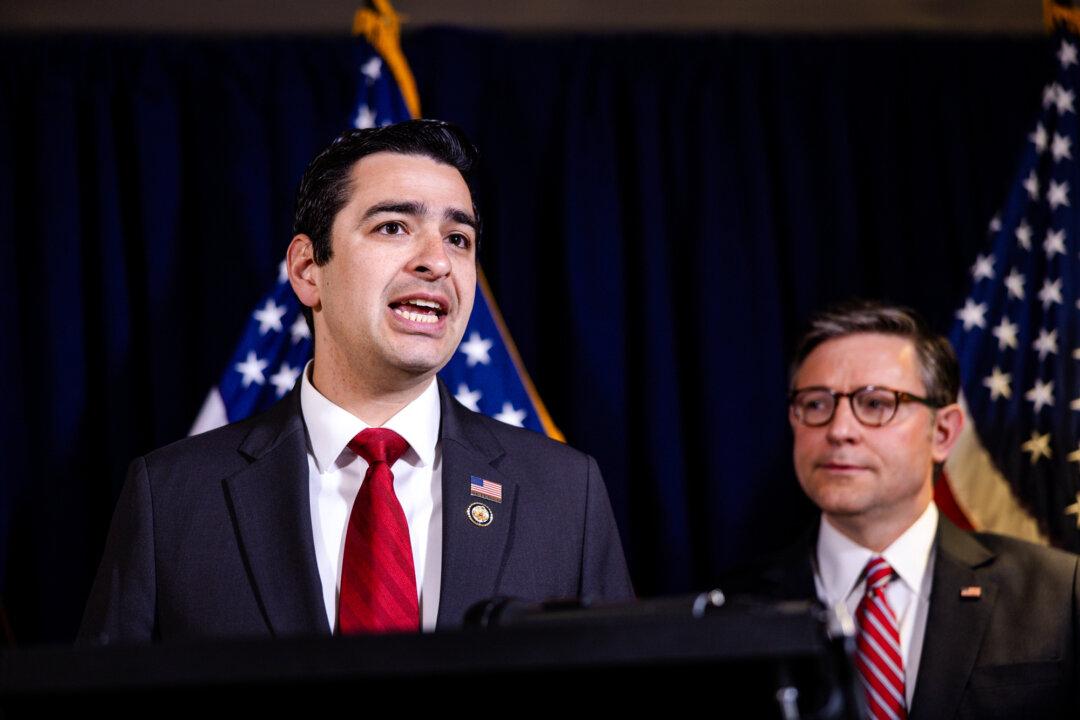
On the Republican side, the race remains a nail-biter between All Things Possible Ministries founder Victor Marx and state Sen. Barbara Kirkmeyer.
The winner of the Republican contest will square off against Weiser in the race to succeed term-limited Democratic Gov. Jared Polis in November’s general election.
Marx, making his first run for political office, hopes to lock in a win in a contentious battle that saw the newcomer outraise and outpoll his opponents. But with the race down to a hair, Marx is falling behind Kirkmeyer.
Kirkmeyer leads Marx by 6,399 votes, or 1.5 percentage points, with 80 percent of the vote counted. Rep. Scott Bottoms was a distant third with 20.2 percent of the tally.
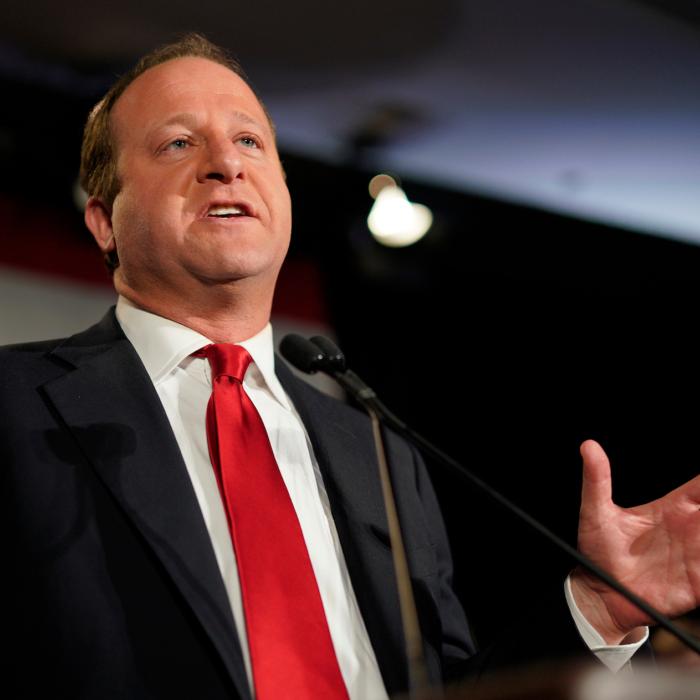

Weiser, meanwhile, cruised past U.S. Sen. Michael Bennet (R-Colo.), riding a progressive insurgency within the Democratic Party to an improbable win over a well-known moderate in the most expensive gubernatorial primary in state history.
According to the Colorado Secretary of State’s office, Weiser was leading Bennet by nearly 60,000 votes, or about 7.5 percentage points, when the AP called the race at 7:55 p.m. RMT.
Weiser, 58, enters the general election cycle as the prohibitive favorite against Marx, 60, in “blue” Colorado, where a Republican hasn’t won a statewide election since 2018 or a governor’s race since Bill Owens’s 2002 reelection.
There are 26 Republican governors and 24 Democratic governors heading into the 2026 election cycle, with voters in 36 states casting ballots in gubernatorial races. Those 36 governors’ offices are now occupied by 18 Republicans and 18 Democrats, including the term-limited Polis.
The gubernatorial primaries were among several marquee preliminaries on the June 30 ballot in Colorado, the 32nd state to hold its primaries during the 2026 midterms cycle. The next state primary is set for July 21 in Arizona.
Marx participated in only one primary debate and faced scrutiny over some of his claims. He said he “saved” 45,000 women and children through his ministry in war-torn countries, was forced to kill someone as a child, and has exorcised demons over the phone. Despite this, he won the party nod over two more politically seasoned rivals.

There was little daylight in separating Marx’s policy position from Kirkmeyer’s and Bottoms’s. Among his priorities would be requiring full-agency performance audits and reports, slashing red tape to lower housing costs, trimming property insurance costs, and expanding apprenticeships and workforce development programs.
Marx’s fundraising practices drew ire from Colorado’s Republican Party, which claims many reported contributions exceed the state’s $1,450 individual donation cap and that more than half his campaign spending is on fundraising rather than voter outreach.
According to the Colorado Secretary of State’s office, as of June 18, Marx had raised more than $2.85 million in his campaign, far outdistancing Kirkmeyer’s $630,000 and Bottoms’s $227,000. A May 7–8 Cygnal Political survey of 606 likely Colorado Republican voters had Marx not just leading, but garnering nearly 60 percent of responses, four times more than Kirkmeyer at 15 percent.
Citing ethical and financial concerns about Marx and questioning his general-election appeal to unaffiliated voters, Kirkmeyer and Bottoms pledged not to support Marx if he won the primary. It is uncertain if they will rescind that pledge with their party’s candidate facing difficult odds in November.
Weiser, who worked in the Obama and Clinton administrations at the U.S. Department of Justice and the White House before serving two terms as Colorado attorney general, is the son and grandson of Holocaust survivors liberated from the Buchenwald concentration camp by U.S. Army soldiers.
The former dean of the University of Colorado Law School came at Bennet from the left, claiming the state’s 2050 goal to end all greenhouse emissions is feasible by increasing solar-generated electricity and boosting battery storage capacity.
Bennet favored a cap-and-invest program that charges polluters for their emissions, using revenues to fund clean energy initiatives.
Weiser is proposing a universal primary care system while Bennet pushed for a public health insurance option in Colorado. Neither provided detailed blueprints of how they’d achieve that.
Collectively, according to the state’s Secretary of State’s office, their campaigns have raised more than $12 million, with Weiser garnering a Colorado governor primary record of $6.7 million.