Bureau of Indian Education Schools Reach Highest Graduation Rates in History

Students recorded a 9 percent increase in math proficiency and a 10 percent jump in English language arts proficiency since 2016.
Bureau of Indian Education Schools Reach Highest Graduation Rates in History
Students walk between buildings at the Little Singer Community School in Birdsprings, Ariz., on the Navajo Nation, on Sept. 25, 2014. AP Photo/John Locher
|Updated:
0:00
Student graduation rates at high schools funded by the Bureau of Indian Education reached the highest level in history last year, increasing from 51 percent in 2015 to 79 percent in 2025, according to data announced on Jan. 15 by the Department of the Interior.

“This historic achievement reflects disciplined execution, strong instructional leadership and an unwavering focus on student outcomes,” said Bureau of Indian Education Director Tony Dearman.

The average U.S. high school graduation rate for 2025 has not yet been released. The U.S. average for the 2021-2022 school year was 87 percent, which is the latest year available, according to the National Center for Education Statistics.

“We established clear expectations, strengthened accountability, and equipped schools with the tools they need to support every student through graduation and into college or the workforce,” Dearman said.

The Bureau of Indian Education, according to its website, is a school system that serves 40,000 students in 183 schools on 64 reservations in 23 states and another 325,000 Native students through programming from early childhood through post-secondary education.

Besides increased graduation gains, students also made improvements in academic performance. Bureau of Indian Education students recorded a 9 percent increase in math proficiency and a 10 percent jump in English language arts proficiency since 2016, the agency said.
The bureau attributes the increases to improvements in its data systems—using technology to give schools pacing guides, instructional resources, real-time dashboards, and reporting tools that enable consistent instruction and early identification of student needs.

The agency strengthened professional development opportunities for teachers, emphasizing data literacy and structured decision-making, along with ongoing coaching and technical assistance.

The bureau also provided updated oversight, improved performance reporting, and updated school report cards to strengthen communication with tribes and families.

“The Trump administration has focused on accountability, workforce readiness and ensuring American Indian and Alaska’s Native students have access to high-quality educational opportunities,” Assistant Secretary of Indian Affairs Billy Kirkland said.

“Under this administration, the Bureau of Indian Education strengthens instruction, uses data to drive decisions, and keeps student success at the center of every reform effort.”
The positive graduation gains come after a year of legal action against the Trump administration by a number of tribal organizations over funding freezes and staffing reductions that impacted the Bureau of Indian Education schools and tribal colleges.
In March 2025, the Native American Rights Fund sued the Bureau of Indian Education on behalf of tribes and five Native students, over cuts to staff and services. The lawsuit alleges that large-scale reductions in federal staffing devastated operations at some of the bureau’s schools across the nation and that the agency failed to consult with tribal nations.
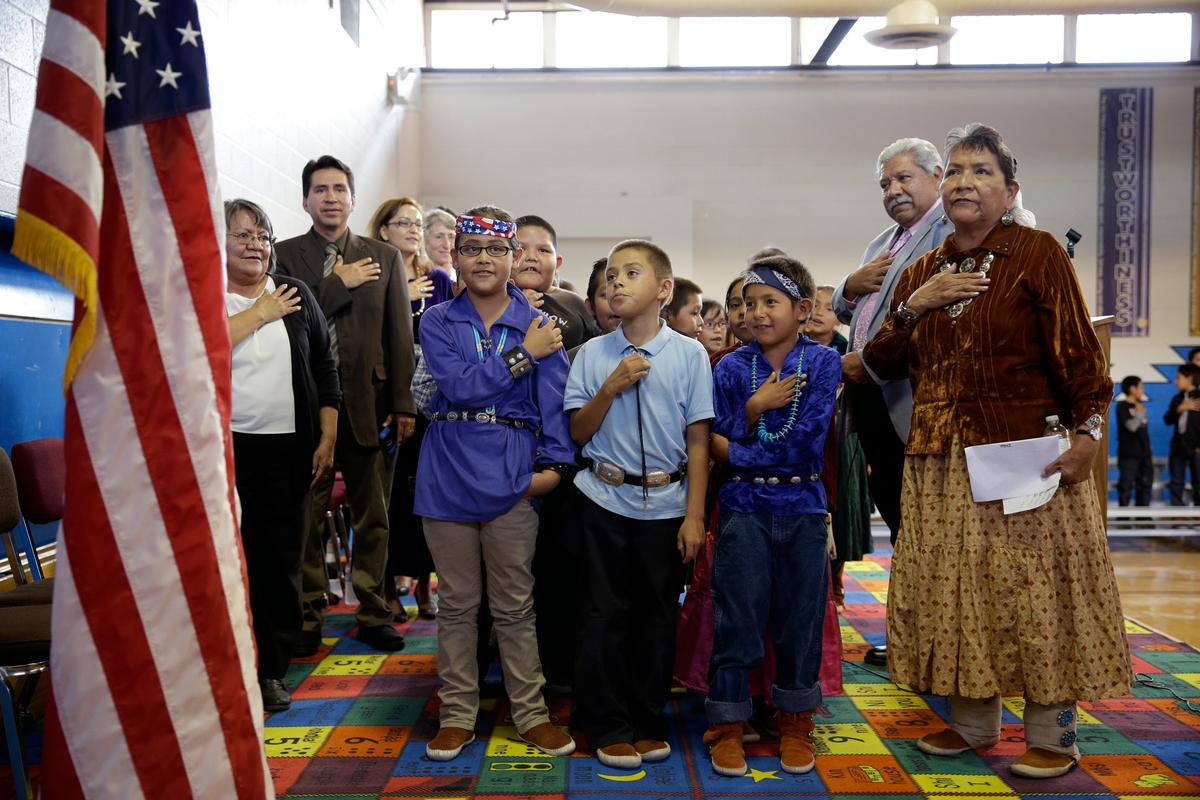
Students and faculty say the Pledge of Allegiance during an assembly at the Crystal Boarding School in Crystal, N.M., on the Navajo Nation, on Sept. 26, 2014. The school is one of 183 for Native American students run by the Interior Department's Bureau of Indian Education. (John Locher/AP Photo)
Students and faculty say the Pledge of Allegiance during an assembly at the Crystal Boarding School in Crystal, N.M., on the Navajo Nation, on Sept. 26, 2014. The school is one of 183 for Native American students run by the Interior Department's Bureau of Indian Education. John Locher/AP Photo

“We have a say in how [the bureau] operates the education provided our children in fulfillment of our treaty rights,” said Prairie Band Potawatomi Nation Chairman Joseph Rupnick. The litigation is ongoing.

The Interior Department will soon oversee 14 projects and funding related to tribal education previously managed by the Department of Education. These would include programs for tribally controlled colleges, Native language initiatives, and grants to public schools for Native students.

Lawmakers see it as a first step to dismantling the Department of Education and returning education decisions to the states—one of Trump’s campaign promises.

The Interior Department already houses the Bureau of Indian Education.

Sen. Lisa Murkowski (R-Ala.), who represents over 133,000 Native Alaskans, said the changes could have a lasting impact on the younger generations.

“The administration’s decision to transfer these congressionally mandated responsibilities and programs to other agencies that lack the necessary policy expertise may have lasting negative impacts on our young people,” Murkowski posted on X in November. “And simply moving the administration of these programs to other agencies will not return control of education to the states.”

The senator said she was strongly opposed to the plan.

Google LogoMark Us Preferred on Google
Jill McLaughlin
Jill McLaughlin
Author
Jill McLaughlin is an award-winning journalist covering politics, environment, and statewide issues. She has been a reporter and editor for newspapers in Oregon, Nevada, and New Mexico. Jill was born in Yosemite National Park and enjoys the majestic outdoors, traveling, golfing, and hiking.