Whether it is driving a car or summarizing a doctor’s appointment, autonomous artificial intelligence (AI) systems can make decisions that cause real harm, rapidly changing the landscape of liability.
Attorneys and AI developers say U.S. laws must keep up with the technology as debate persists over who is responsible when things go wrong.
Lawmakers are looking to close the accountability gap by shifting burdens and expanding the notion of who can be held accountable when autonomous AI systems fail. Unlike non-autonomous AI systems, autonomous models are more likely to be unpredictable.
Presently, there is no concrete federal legal foundation that demonstrates clear-cut accountability when autonomous AI systems fail, prompting some legal experts to say there must be greater transparency.

“For centuries, legal frameworks for assigning liability have relied on well-established principles designed for a human-centric world,” Pavel Kolmogorov, founder and managing attorney at Kolmogorov Law, told The Epoch Times.
Kolmogorov said cases of negligence require proof of a breach of “duty of care.” Liability related to products holds manufacturers responsible for defects or design flaws. However, both scenarios assume that there is clear human oversight and relatively static, predictable tools.
“Autonomous AI systems fundamentally disrupt this paradigm,” Kolmogorov said. “Their defining characteristics—complexity, operational autonomy, and the capacity for continuous learning—create profound challenges for applying these traditional legal concepts.”

He also said AI’s “black box” problem, or the fact that sometimes even developers cannot fully explain the specific reasoning behind an AI’s decision, makes it extraordinarily difficult to pinpoint a specific breach or defect in the traditional sense.
Kolmogorov gave an example of a legal quagmire.
Autonomy in Action
The idea of AI-driven cars running people down in the streets is no longer a sci-fi concept. The landmark 2018 case involving a self-driving Uber vehicle that struck and killed a pedestrian in Tempe, Arizona, was the first recorded fatality involving a fully autonomous vehicle. The human passenger, or “backup” driver, was ultimately charged with negligent homicide.“Right now, the law still treats autonomous driving systems under traditional negligence and product liability principles,” a representative for Valiente Mott Injury Attorneys told The Epoch Times.
“If a driver is expected to monitor the system and fails to intervene, they can be held responsible for negligence. But if the technology itself is defective or marketed in a misleading way, the manufacturer may face liability. In many cases, fault can be shared. We’re essentially applying old legal standards to new technology until the law catches up.”
According to the representative, current laws were written with human drivers in mind.
“As autonomy increases, legislatures and courts will need to define how responsibility is allocated between human operators, manufacturers, and possibly even software developers,” the representative said.
This ambiguity leads to what Kolmogorov called “responsibility fragmentation.”
“Unlike a simple tool with a single manufacturer and operator, an AI system is the product of a long and complex supply chain,” he said. “When a failure occurs, attributing liability becomes an exercise in untangling a dense web of dependencies, making it difficult for a victim to identify the appropriate defendant.”
This autonomous AI supply chain can include data suppliers, software developers, hardware manufacturers, system integrators, and end users, each contributing to the final product.
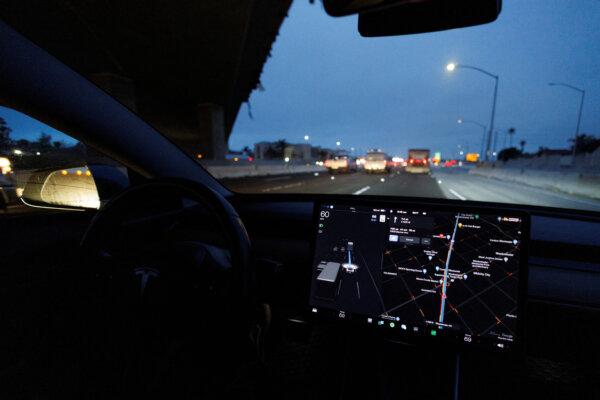
Kolmogorov said the driver bore the criminal responsibility in the 2018 Uber case, but on the civil end, legal experts said Uber had strong liability exposure that could qualify as negligence and product liability.
“The case exposed the split between criminal versus civil standards,” Kolmogorov said. “The former requires intent or recklessness, while the latter hinges on design and testing failures.”
Similarly, Tesla’s Autopilot has been tied to multiple crashes, including a 2019 fatality in Florida. This August, a jury found Tesla partially liable, saying that its AI system contributed to the accident alongside driver negligence.
Avoiding Hazards
Researchers at IBM have called 2025 the year of the AI agent. At a glance, agentic AI includes mostly autonomous systems that can act independently to achieve goals with minimal human oversight.Some AI experts, including David Talby, CEO of John Snow Labs and chief technology officer at Pacific AI, believe that AI agents can have quality-of-life impacts as models advance and become increasingly independent of human involvement.
“Health care stands out as one of the most demanding domains,” Talby told The Epoch Times. “Unlike consumer applications or even some enterprise use cases, AI in health care directly impacts people’s lives and well-being.”

Talby said many autonomous AI systems already exist in health care, including digital health applications that interact directly with patients, clinical decision support systems, and visit summarization tools that work alongside doctors.
“These systems can independently process complex medical data, draft clinical notes, or guide patients in self-care, but it’s important this is always under a human-in-the-loop framework of accountability,” he said. “While parts of the workflow are fully automated, human oversight is still needed in health care and beyond.”
Talby said errors can have profound consequences and accountability must extend past accuracy metrics. Issues such as bias in medical datasets, robustness under real-world variability, and adherence to ethical standards all demand what he called “rigorous governance.”
“In health care, our top concerns extend beyond model accuracy,” Talby said. “We must ensure that AI systems are not only effective but also safe, transparent, and compliant with regulations.”
Kolmogorov said that “physicians face dual risks” as AI diagnostic tools become more accurate in health care.
“[They face] negligence for not using validated AI and negligence for over-relying on flawed recommendations,” he said, noting that patients should be informed when AI is used. “And data representativeness is crucial to avoid bias.”
“Risks to people increase with the autonomy of a system: The more control a user cedes to an AI agent, the more risks to people arise,” the article states.
“I regularly advise clients in emerging tech and mobility sectors on AI autonomy risk,” Kolmogorov said. “The focus is on mitigating exposure before a failure becomes a legal crisis.”