A federal appeals court has halted U.S. District Judge James Boasberg’s pursuit of potential contempt for the Trump administration and signaled it would look into whether the judge was overstepping his authority in attempting to investigate the executive branch.
The order was issued on the same day as a now-canceled hearing Boasberg had scheduled for testimony about how administration officials handled his orders blocking deportations earlier this year.
The executive branch usually investigates contempt, but because executive officials are the ones subject to the contempt inquiry, Boasberg may instead appoint a special prosecutor.
The appeals court is seeking information on the legal basis a district court, such as Boasberg’s, could have in investigating wrongdoing, as well as in delaying referral for prosecution.
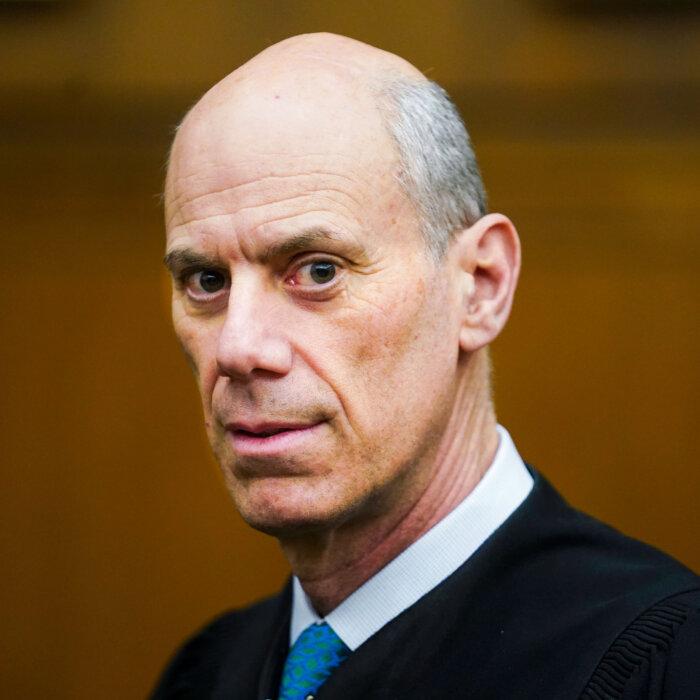

In its appeal, the Justice Department accused Boasberg of effectively usurping an executive branch function by attempting to investigate potential wrongdoing by officials.
It’s the latest flashpoint in a months-long court battle that kicked off in March.
President Donald Trump had invoked the Alien Enemies Act as a basis to more quickly deport members of the Venezuelan gang known as Tren de Aragua.
The Supreme Court ultimately vacated two blocks Boasberg placed on those deportations, stating that the lawsuit that produced the blocks was brought in the wrong court.
Nonetheless, Boasberg said he found probable cause to find the administration in contempt of violating his orders and pursued potential contempt proceedings.
Although the D.C. Circuit stunted Boasberg’s efforts earlier this year, it didn’t shut the door on his pursuit of contempt proceedings.
Now, the appeals court is tasked with determining whether the way Boasberg pursued potential contempt exceeds his authority as a federal judge.
Last week, Boasberg defended his decision to request testimony from Drew Ensign, a current Justice Department attorney, and Erez Reuveni, a department whistleblower who worked on multiple cases in Trump’s second term.
The testimony, Boasberg said, could help shed light on officials’ state of mind when they were making decisions about the deportations.
The Trump administration had removed detainees before Boasberg issued an order blocking deportations.
After his order, the detainees on those flights were transferred into El Salvador’s custody.
The Trump administration has maintained that it was following Boasberg’s directions, which ordered them not to “remove” individuals pursuant to Trump’s Alien Enemies Act declaration.
Wanting more information, Boasberg requested testimony from Ensign and Reuveni.
Both the Justice Department and Reuveni’s attorney have raised concerns about potential intrusions into the attorney-client privilege.
Boasberg, meanwhile, downplayed those concerns when they came from the department.
“The court will remain mindful of attorney-client privileges that may pertain to other communications as the testimony proceeds, and the government will be free to object to particular questions,” he said on Dec. 12.
Reuveni, in particular, was cited as someone who could offer valuable testimony on the administration’s decision-making, given a whistleblower complaint he filed alleging plans by department leadership sought to resist court orders in multiple cases.
At the end of November, Boasberg ordered the government to submit declarations by all individuals involved in the decision not to halt the transfer of custody.
When Bove, now an appeals court judge, responded, he was relatively tight-lipped.