Dozens of national park exhibits that President Donald Trump ordered removed for being disparaging toward Americans will not have to be restored by July 3, a federal appeals court has decided.
The ruling Monday gives the National Park Service a reprieve mere days ahead of the nation’s 250th anniversary.
An undivided three-judge panel of the 1st U.S. Circuit Court of Appeals in Boston lifted the July 3 cutoff instituted June 12 by U.S. District Judge Angel Kelley.
The order had instructed the Park Service to repost interpretive materials taken down under an executive order focused on signs the president said inappropriately disparaged Americans or presented divisive views of the nation’s past.
The appeals court, however, denied the administration’s request to immediately stay the rest of Kelley’s ruling, which prevented the Interior Department from further implementing the policy. The panel said it would rule soon on that more general request.
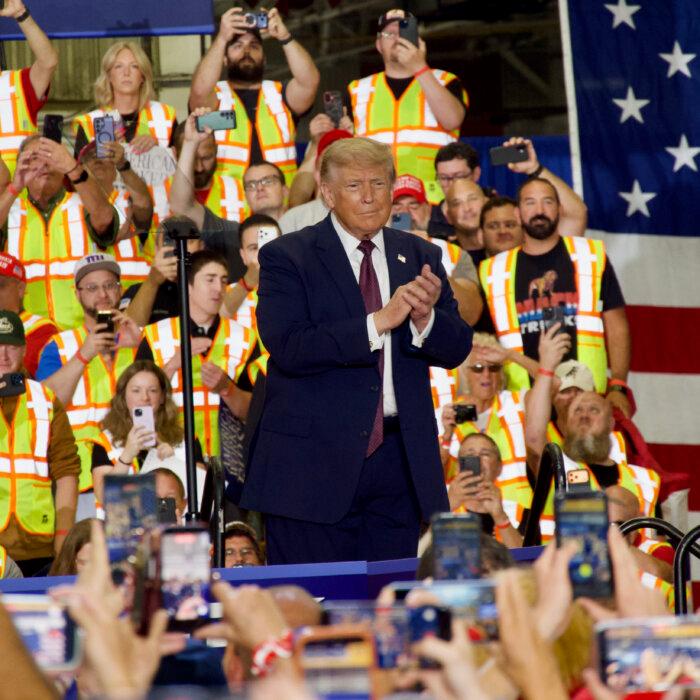
Trump’s March 2025 executive order was described as preparation for the semiquincentennial celebrations celebrating 250 years since the Declaration of Independence.
Plaintiffs in the Boston case, including the National Parks Conservation Association and the American Association for State and Local History, said the appeals court’s decision on the deadline was a disappointment.
“The administration’s decision not to reinstall and reinstate censored materials, particularly in advance of our nation’s upcoming 250th anniversary, is a disservice to every park visitor this summer and to the broader American public,” the groups said in a joint statement.
The Justice Department had contended to the appeals court that adhering with the July 3 deadline would represent a “herculean and unmanageable task.” The department portrayed Kelley’s underlying ruling as judicial overreach and quickly appealed.
The ruling Monday gives the Park Service more time to plan any reinstallations while the broader legal fight continues. The court has not yet decided whether to pause all of Kelley’s June 12 order during the appeal.
A spokesperson for the Interior Department approved of the partial relief.
“We are confident that as this inferior ruling from an activist lower court judge receives further scrutiny, they will be further restrained,” the spokesperson told Reuters.
Kelley, who was appointed to the federal bench by President Joe Biden, had ruled that the removals represented an unlawful effort to “rewrite the nation’s history with a white-out pen.” She ruled that the materials must be restored by July 3 so that visitors could see a full presentation of American achievements ahead of the July 4 anniversary.
The administration argued that the reviews and changes were needed to restore balance and accuracy to historical interpretation at federal sites, including the Smithsonian museums.