On a fair autumn evening on Nov. 20, 2022, civilian pilot Jonathon Fay was landing his two-seater plane at Arlington Airport in Washington state when a sudden flash of blue light blinded him.
“By the grace of God, I have no permanent vision loss.”
Two-and-a-half hours later, a second plane was targeted, a four-seater being flown by a student pilot. The flight instructor on the plane captured images of the laser light source that impaired the pilot’s vision.
Law enforcement later identified Christopher Harris from Snohomish County as the individual using the laser pointer.
Laser pointers, which once cost hundreds of dollars, can now be bought online for $6. The proliferation of these pointers has resulted in more low-flying aircraft being targeted, endangering the lives of pilots and their passengers.
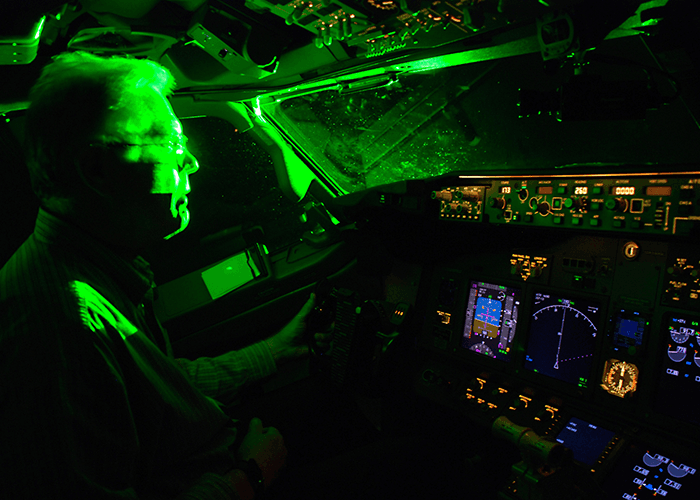
The glare created by laser beams hitting cockpit windows can cause flash blindness, according to FBI supervisory special agent David Gates.
Harris was indicted on both offenses in February 2023 and sentenced to eight months in prison and three years of supervised release.
At the sentencing hearing in January 2024, U.S. District Court Judge Richard Jones admonished Harris for almost causing Fay’s death.
“This was not one poor decision. Both times, Mr. Harris’s actions were deliberate,” assistant U.S. attorney Jocelyn Cooney told the court.
As laser pointer incidents have increased, so have the FBI’s pursuit of the perpetrators, which has resulted in hefty fines, and in some cases, jail sentences.
By 2010, that number had grown to 2,800.
“Shining a laser at an aircraft poses a serious safety threat and is a federal crime,” the FAA told The Epoch Times in an email.
“Lasers can incapacitate pilots, many of whom are flying airplanes with hundreds of passengers.”
Since 2010, when the FAA began tracking incidents, laser strikes have resulted in injuries to more than 325 pilots.

In addition to these fines, violators may also face federal criminal penalties, which can include up to five years in prison and a fine of $250,000.
On Feb. 26, Glenwood Bringle, a 56-year-old man from Arizona, pleaded guilty to aiming a laser at Air Force planes on Oct. 5, 2021. He received a nine-day jail sentence in federal court.
Authorities said Bringle pointed a laser at two F-16 fighter jets during a training exercise near his home in Bagdad, Arizona.
As of now, there have been no recorded plane crashes linked to lasers.
Tracking Suspects
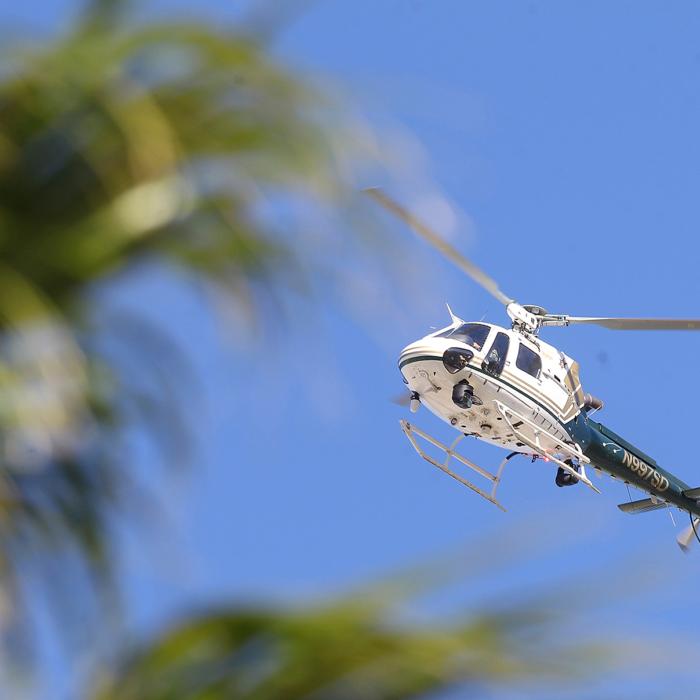
The FAA said that methods for tracking suspects include using onboard airplane sensors, infrared cameras, and ground-based systems, such as the Laser Airborne Strike System.Additional methods consist of witness reports and cooperation with law enforcement.
The FAA said some people point lasers at aircraft without knowing how powerful the laser is, while others do it on purpose.
Air traffic control facilities promptly report laser-strike incidents to local law enforcement, allowing for immediate investigation.
“Local law enforcement can provide invaluable assistance to the FAA by identifying and interviewing potential witnesses, identifying suspects, and identifying and collecting evidence such as video or other visual evidence,” the FAA said.
Most laser strikes happen at night, the agency added, and they typically target aircraft flying at altitudes of 10,000 feet or lower.
Denver International Airport (DEN) officials said they’re concerned that lasers can distract pilots during takeoff and landing.
In addition, these incidents can increase the workload for air traffic controllers and flight crews, leading to operational delays.
“At DEN, our mitigation efforts do include coordinated reporting procedures between pilots, air traffic controllers, and local/federal law enforcement partners,” an airport spokeswoman told The Epoch Times.
Denver airport officials said that enforcement remains highly challenging due to the difficulty in locating perpetrators.
FBI Supervisory Special Agent Melissa Ventresca—who leads the International Counterterrorism Squad at a satellite office in Austin, Texas, which also covers Austin-Bergstrom International Airport—warned that a laser strike could potentially result in “a mass casualty event.”
“If we can prevent one catastrophe, prevent one pilot from being blinded, that makes it worth it,” Ventresca said in an FBI report.