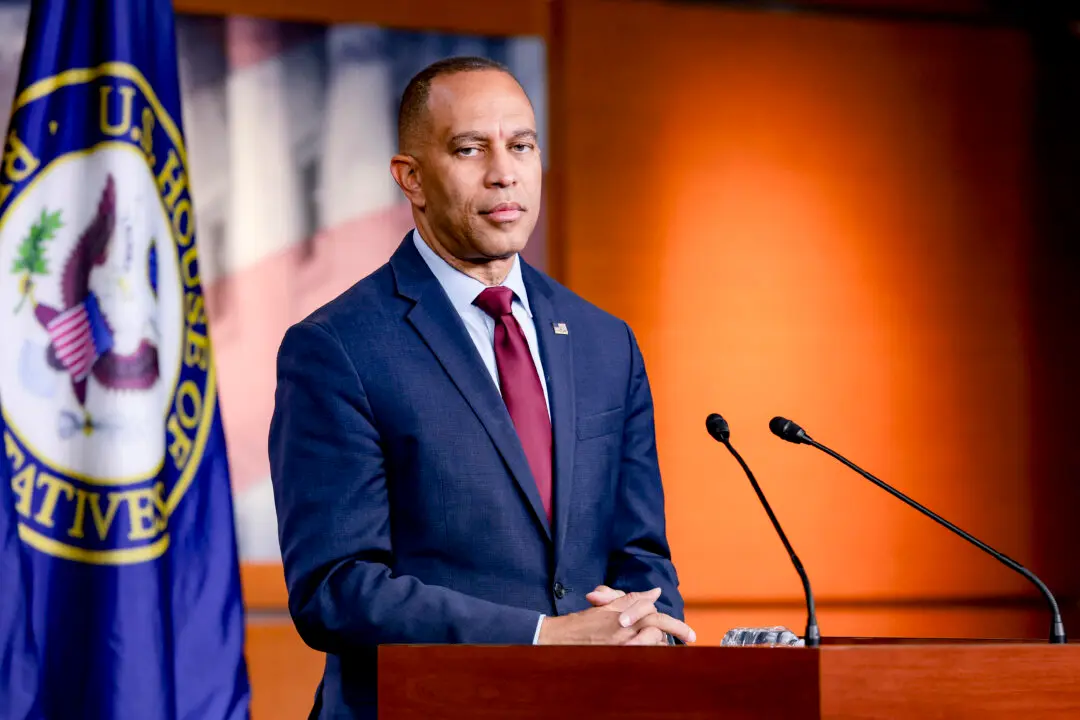
House Democratic leaders said on Wednesday they will vote against the fiscal 2026 Department of Homeland Security funding bill unless Republicans accept stronger constraints on Immigration and Customs Enforcement (ICE) in the House Rules Committee.
Rep. Pete Aguilar (D-Calif.), the House Democratic caucus chair, said he would vote no unless changes were made, arguing the bill’s ICE provisions do not go far enough to curb what Democrats have described as abuses.
“I shared with the caucus this morning, and the leadership team has shared with the caucus, that we'll be voting no unless there are any substantive changes or amendments in the rules committee,” Aguilar said during House Democratic leadership’s weekly press conference on Jan. 21.
Aguilar also suggested leadership was not seeking to force a unified position across the conference, noting he is not the party whip and that members would “vote their districts and they will judge the bill on the substance.”
The leaders’ comments highlighted a divide among Democrats as Congress moves toward a vote on a DHS bill that includes funding for ICE, Customs and Border Protection, FEMA, the Transportation Security Administration, the Coast Guard, the Secret Service and the Cybersecurity and Infrastructure Security Agency.
A day earlier, House Appropriations Committee Ranking Member Rosa DeLauro (D-Conn.) said the bill “takes several steps in the right direction” to rein in ICE, while acknowledging it “does not include broader reforms Democrats proposed.”

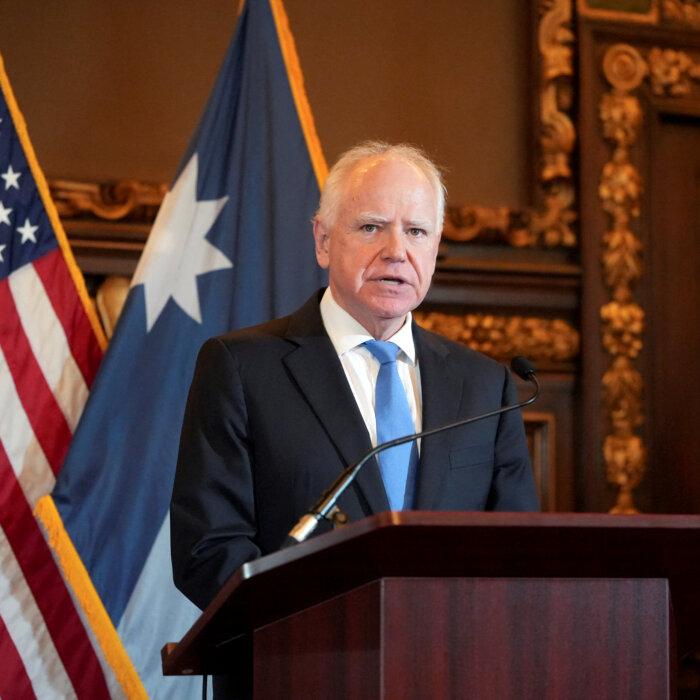
DeLauro said a lapse in funding could have wider consequences beyond immigration enforcement, including forcing TSA agents to work without pay, delaying FEMA assistance, and affecting Coast Guard operations. She also argued that a continuing resolution would keep ICE funding at current levels and “exclude new guardrails” contained in a full-year measure.
At the same time, DeLauro said she understood that some Democrats oppose funding ICE at all and urged members to review the bill and decide what is best for their districts.
Aguilar and Rep. Ted Lieu (D-Calif.), the vice chair of the House Democratic caucus, described additional limits they said Democrats had sought but were rejected, including barring ICE from detaining U.S. citizens and restricting certain enforcement tactics.
Noem said that during ICE operations in Minnesota, “in every situation we are doing targeted enforcement,” and “if we are on a target, there may be individuals surrounding that criminal that we may be asking who they are and why they’re there and having them validate their identity.”
The appropriations release said the bill does not include broader Democratic reforms such as preventing U.S. citizens from being detained or deported and preventing non-ICE personnel from conducting interior enforcement.
In testimony to the House Rules Committee on Wednesday, GOP lawmakers said the package would bring the final four fiscal 2026 appropriations bills to the floor, with the DHS division advancing its own bill, H.R. 7147, separate from a second measure, H.R. 7148, covering Defense, Labor-HHS-Education, and Transportation-HUD.
On DHS specifically, House Appropriations Committee Chairman Tom Cole (R-Okla.) said the bill provides “much-needed investments” to strengthen border security and protect the homeland, describing the funding as aimed at guarding against “terrorists, narco-traffickers, criminals, and others who wish us harm,” while reinforcing “layered defenses” to keep communities safe.
DeLauro meanwhile told the Rules Committee she supported three of the four appropriations bills but stopped short of backing the DHS measure, saying the bill contains some improvements—while arguing that ICE’s conduct “demands a forceful response with meaningful constraints.”