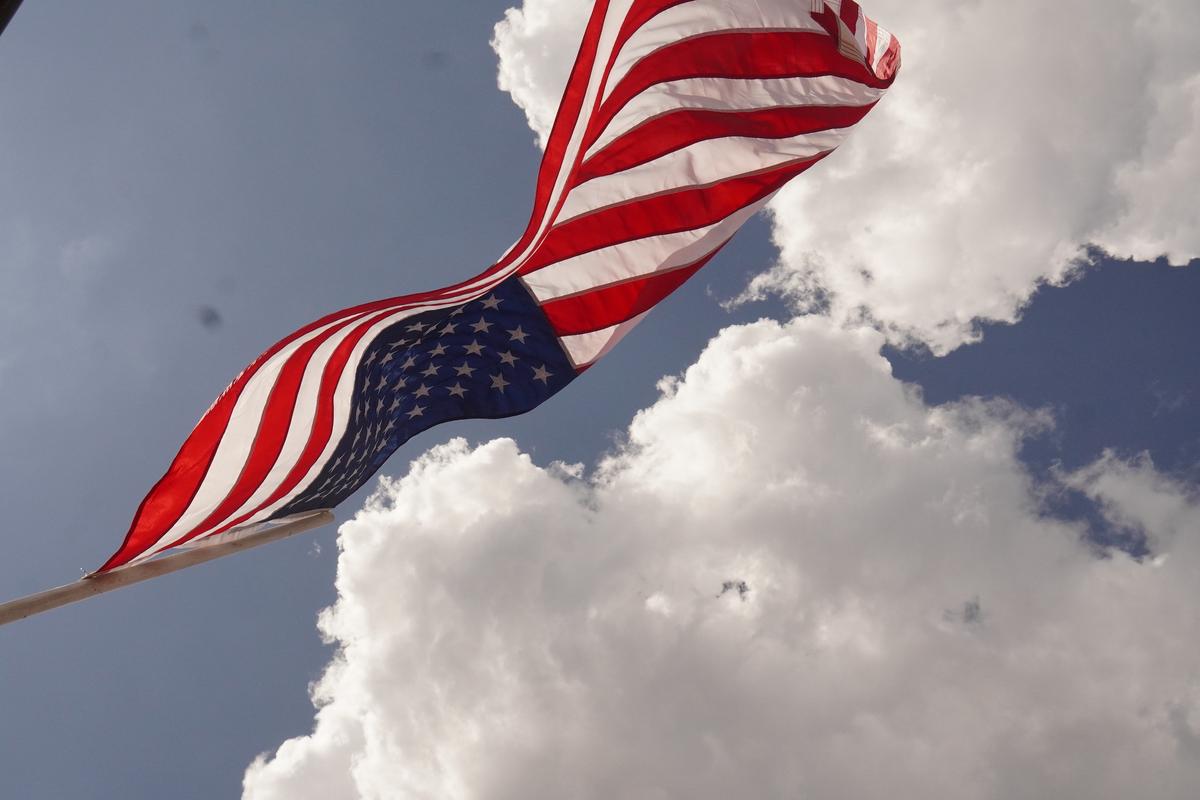
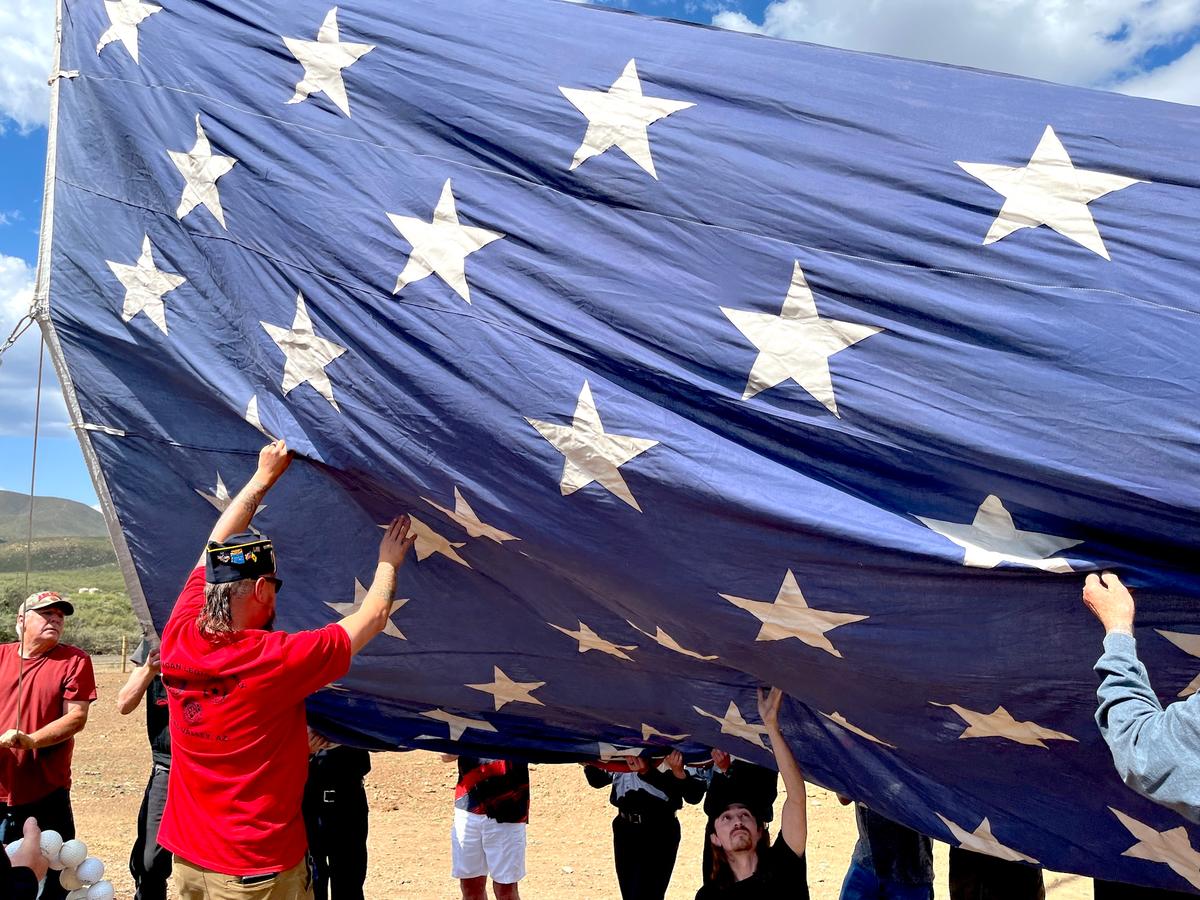
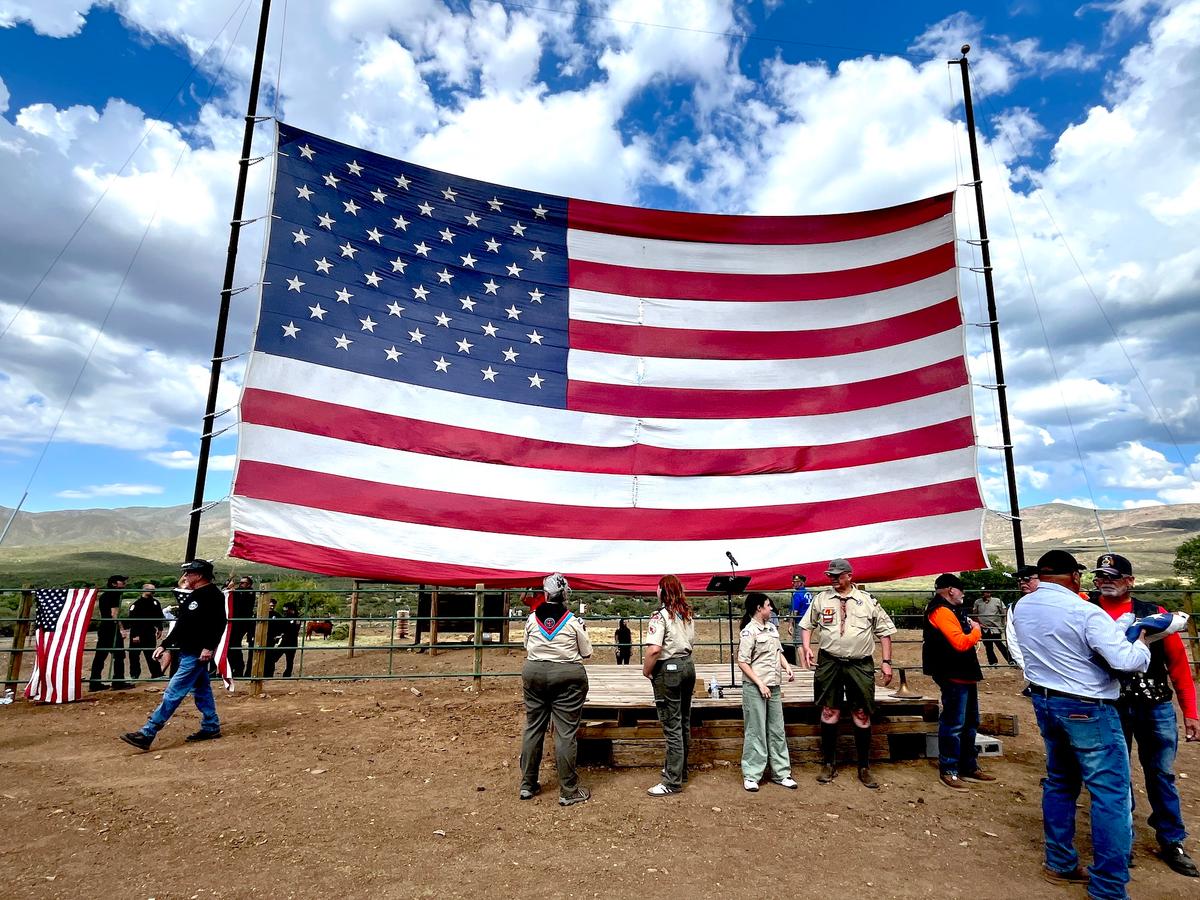
MAYER, Ariz.—A 30-by-60-foot Old Glory unfurled like a mainsail in a stiffening wind at Foothills Ranch in Mayer, Arizona, on Flag Day.
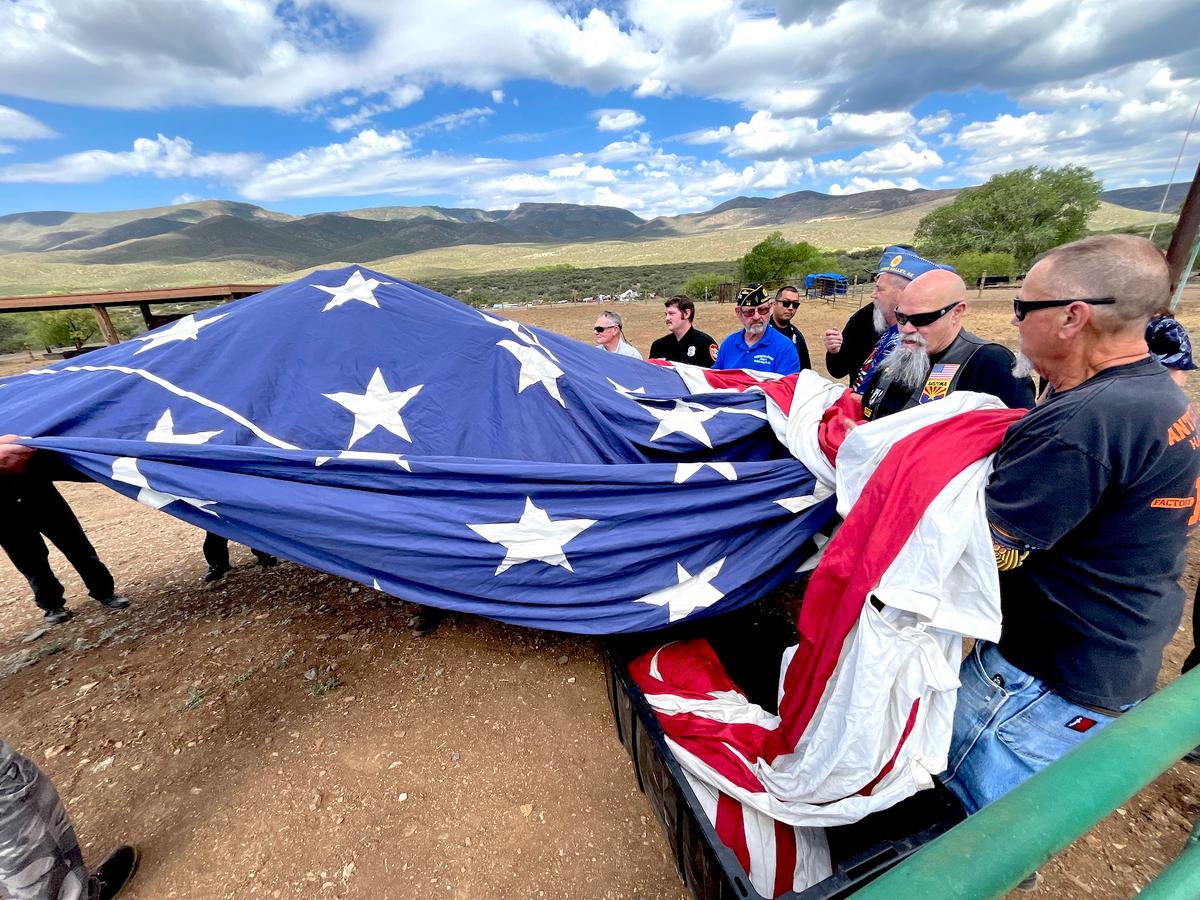
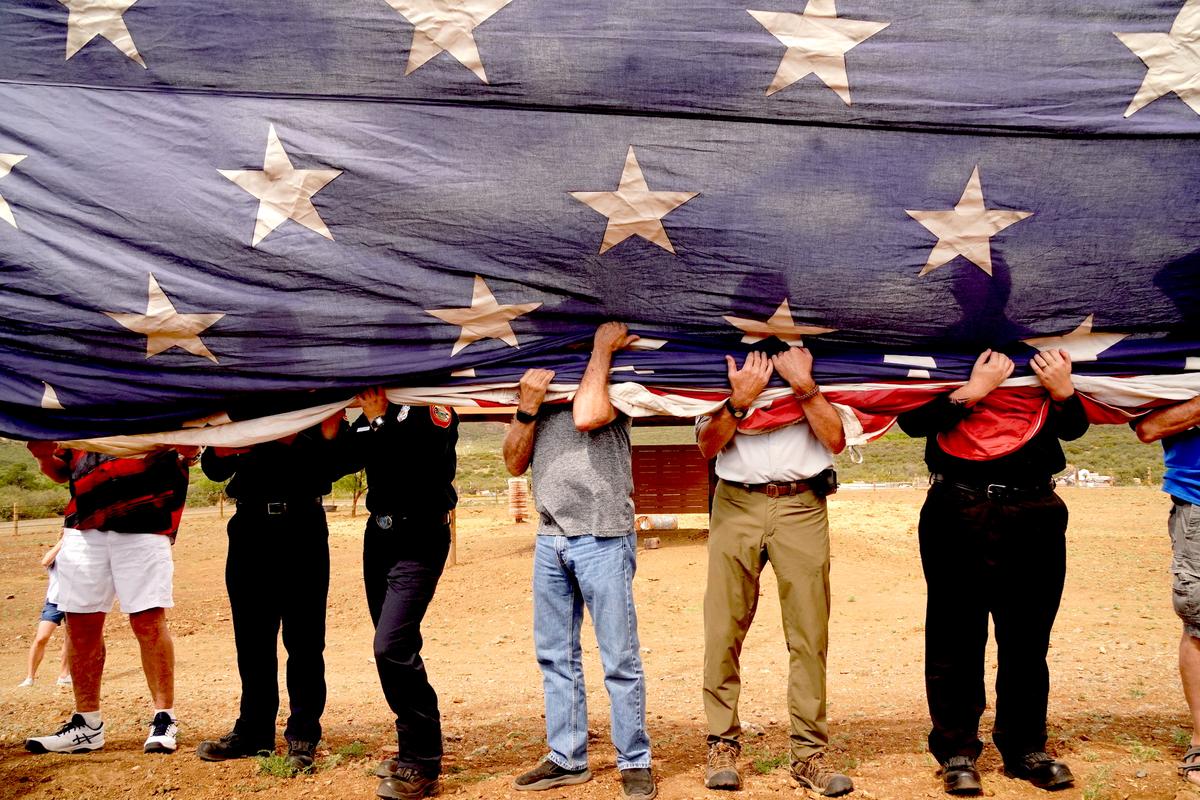
Raising the massive nylon flag was no simple task. A dozen volunteers carefully carried it to the twin flagpoles, ensuring it never touched the ground, as flag etiquette requires.
“Cradle it like you would a baby,” Wes Holmes, who owns the ranch with his wife, Phyllis Holmes, told the volunteers.
“What a beauty,” one woman said as the giant flag caught the wind.
For Wes and Phyllis Holmes, honoring the flag is not a once-a-year observance.
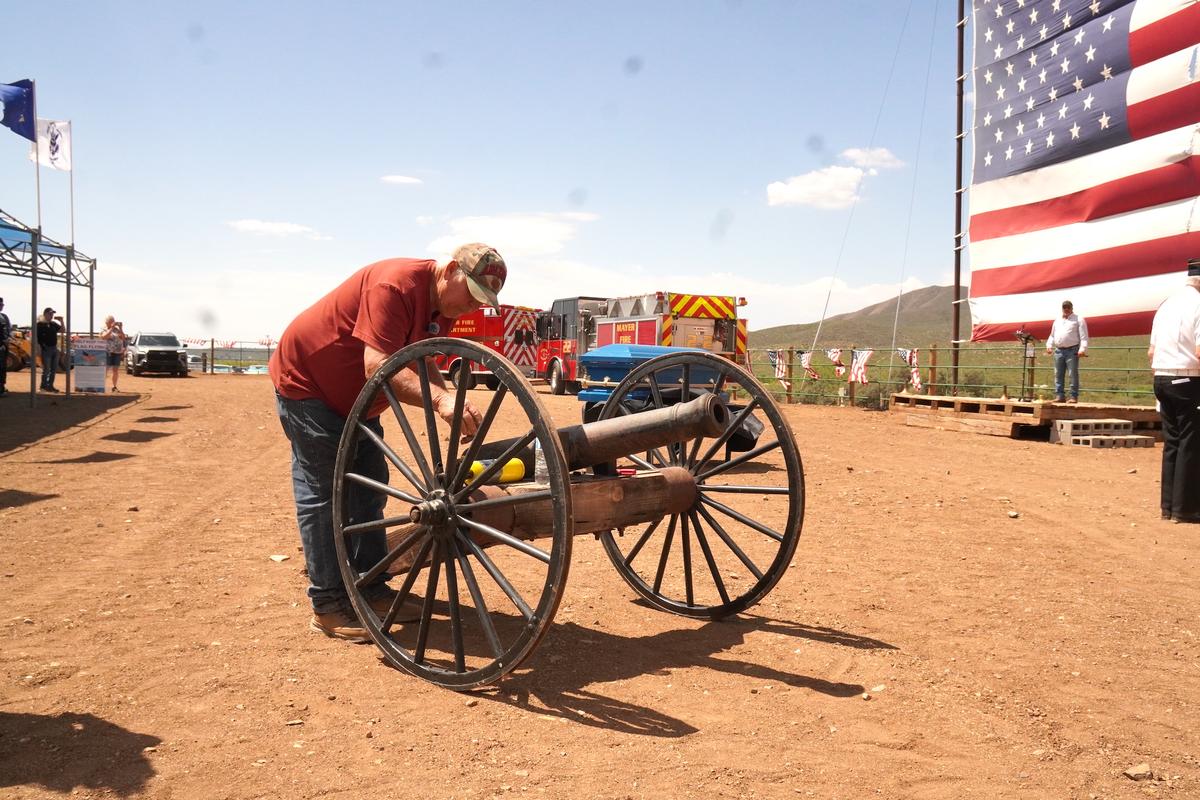
At Foothills Ranch, patriotism flies large year-round from a towering pole visible from Route 69.

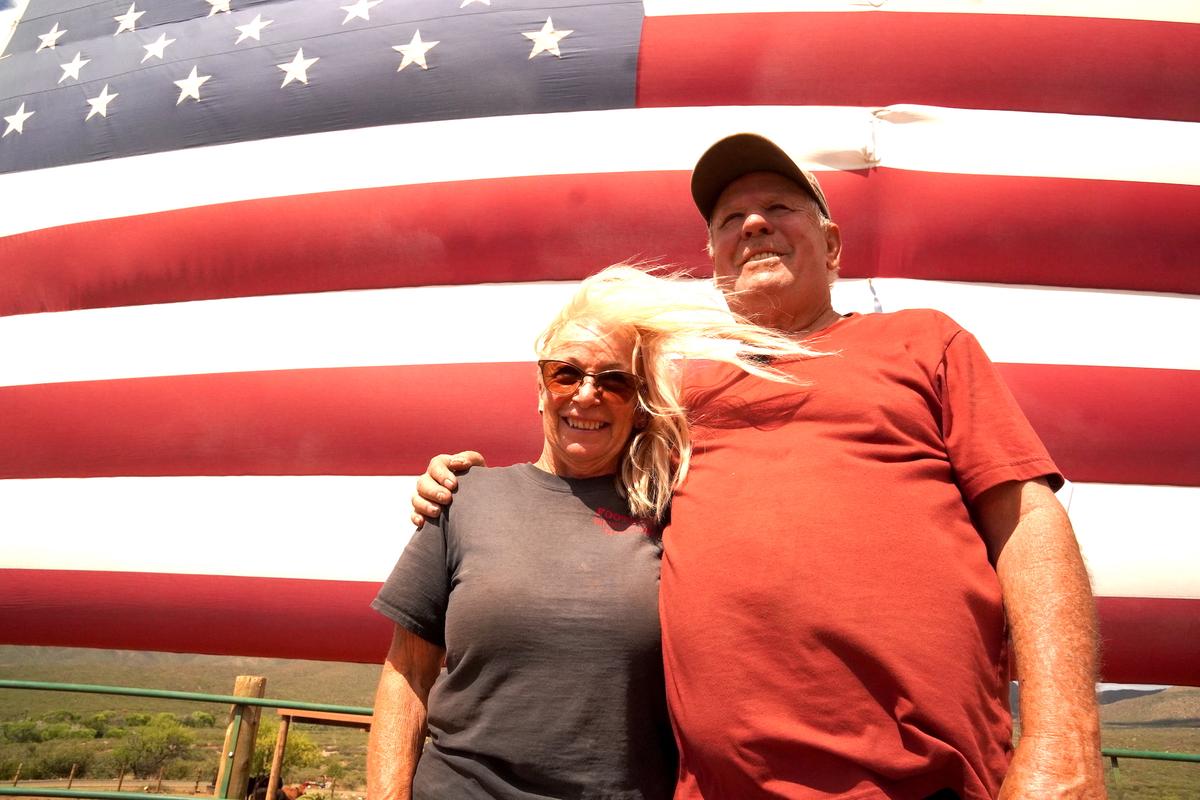
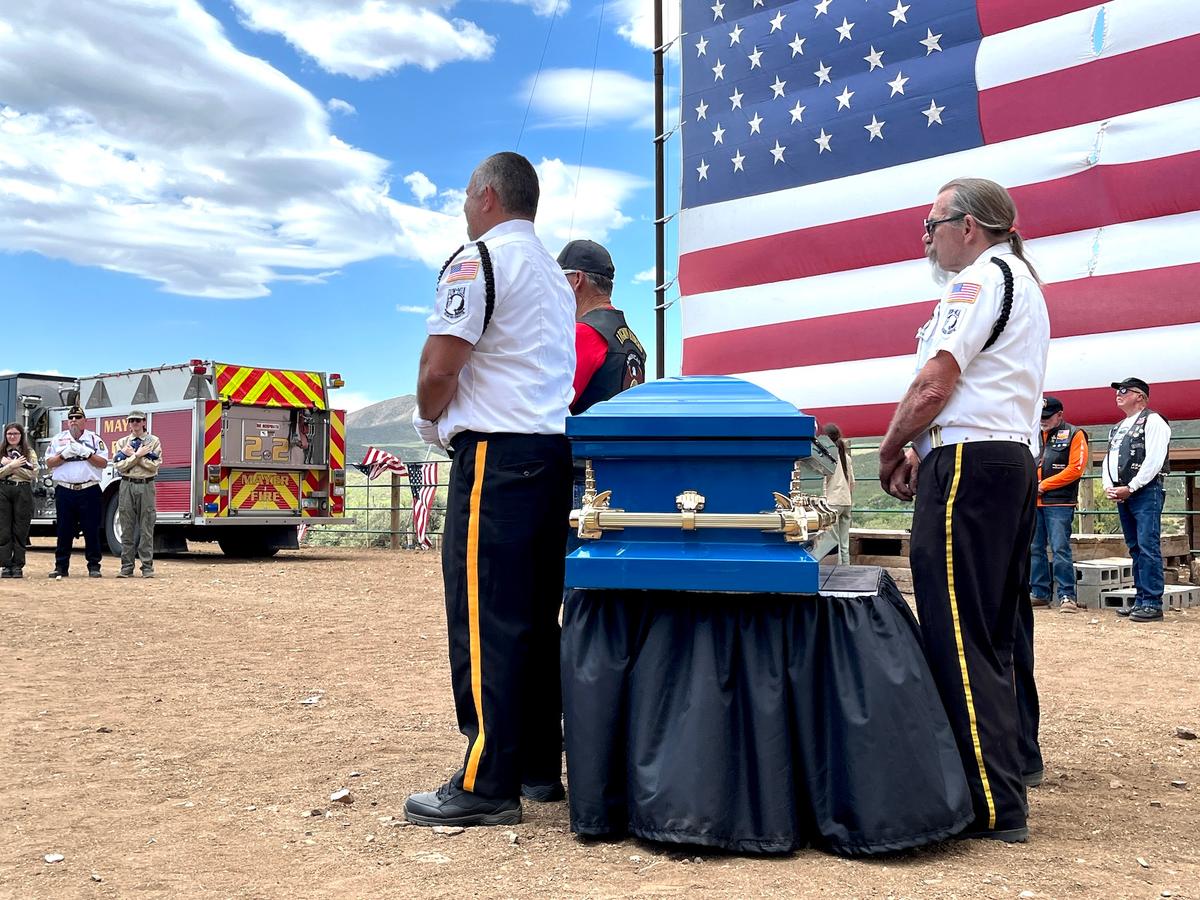
On Flag Day, the enormous banner became the backdrop for the morning’s retirement ceremony on the eve of the nation’s 250th anniversary.
More than 150 people from across the region attended, where members of several organizations helped retire 13 American flags—symbolizing the original 13 colonies.
The June 14 event drew the American Legion, Scouts, the Daughters of the American Revolution, American Legion Riders, retired Navy SEAL Richard Rodriguez, a color guard, and a bugler who played Taps.
The Holmeses have hosted the ceremony for four years.
“The flag is a very special thing to us and to this community,” Phyllis Holmes said. “We decided there wasn’t any place to properly retire a flag, so we created one.”
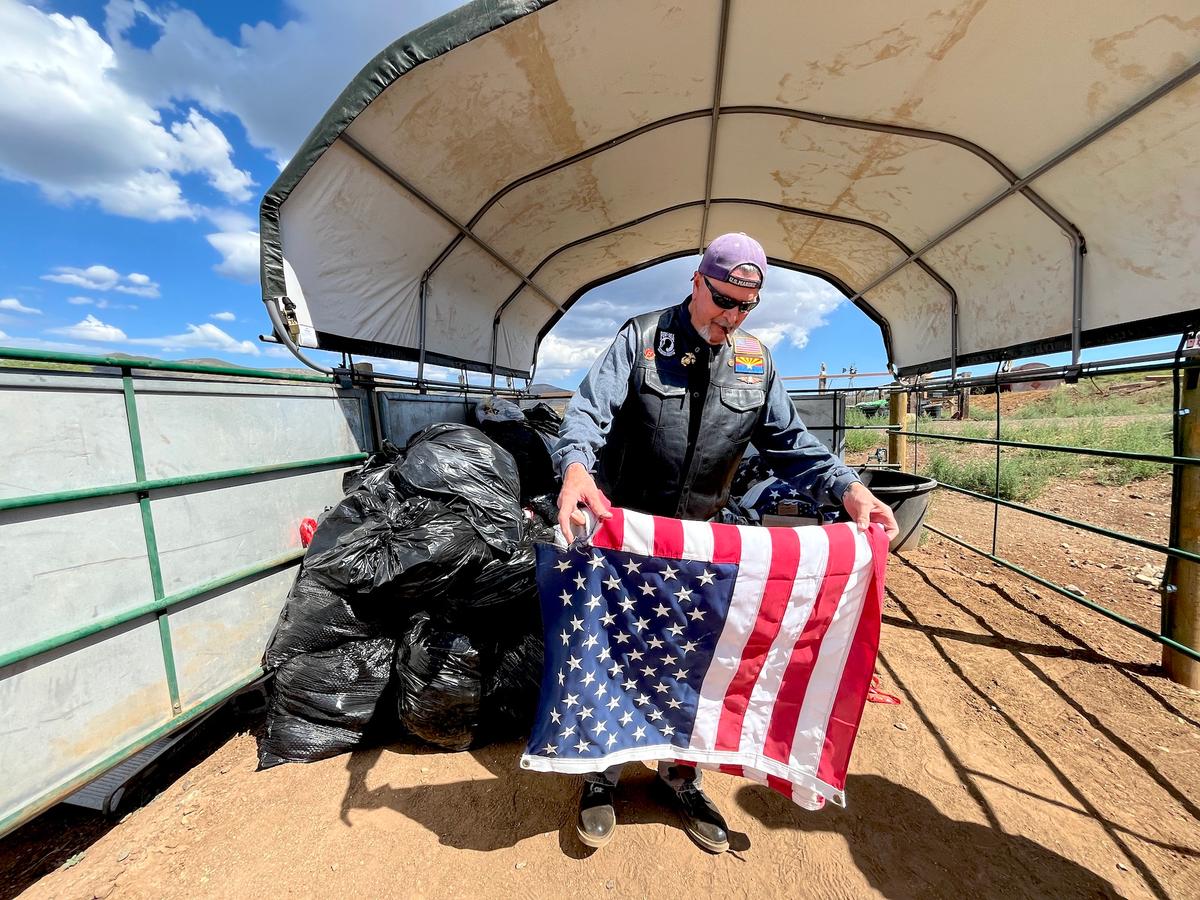
The couple’s 25-acre ranch proved an ideal setting. In past years, an on-site incinerator handled thousands of worn and damaged flags.
This year, fire restrictions prevented burning. With roughly 4,000 flags awaiting retirement, organizers adopted a new approach: sealing 13 flags in a blue wooden coffin during a ceremony conducted with full honors.
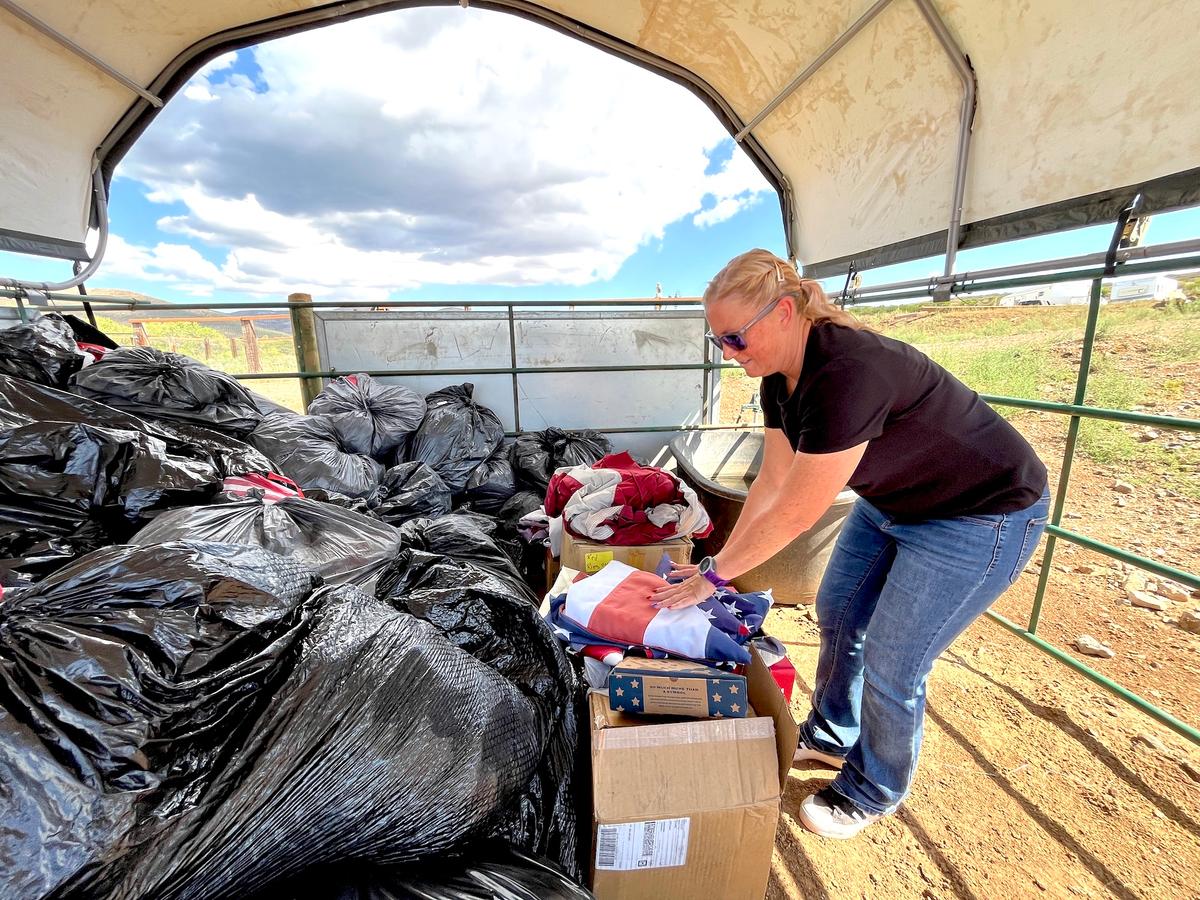
Another ceremony is held each year on Dec. 7, Pearl Harbor Day.
Phyllis Holmes said two ceremonies are needed to handle the volume.
“We just get too many to burn at one time,” she said.
“The proper way to retire a flag is to burn it once it reaches the end of its service,” Wes Holmes told The Epoch Times. “Normally, we’d use our incinerator. But because of fire danger, we can’t. So we’re using a ceremonial coffin. It’s going to be amazing.”
The Holmeses have flown a massive American flag over their property since building the ranch a decade ago, raising the towering pole as a patriotic priority. The banner has since become a landmark for travelers along Route 69.
But even Old Glory has a lifespan.
Exposed to Arizona’s relentless sun and wind, the giant flag typically lasts about two months before it must be replaced.
Phyllis Holmes, skilled in flag repair, said even her best efforts can’t extend its life indefinitely.
When a flag becomes beyond repair, the couple often works with a Prescott car dealership that also flies a 30-by-60-foot flag. That connection led the dealership to donate worn flags to the ranch, where they are repaired and returned to service when possible.
A single flag costs about $2,500 and can gain up to three additional months through repairs. The Holmeses aim to secure four flags a year.
Grommets from retired flags are collected and donated for a bell being built for the future USS Arizona memorial submarine.
According to the Veterans of Foreign Wars, strict rules govern flag retirement. When burned, flags should be folded in a triangle, and the fire must be large enough for complete combustion.
Participants come to attention, salute, recite the Pledge of Allegiance, and observe a moment of silence.
While most flags are made of nylon or polyester, the All-American Flag Act of 2024 requires federal agencies to purchase flags made entirely of U.S.-produced materials.
Wes Holmes noted that burning synthetic flags can release toxic fumes.
“If it’s cotton, the preference is to burn it,” he said. “Nylon and polyester—bury your flag.”
He added that flags can be washed and maintained more than many realize.
“You can hand wash it, lay it flat, let it air dry. You can also machine wash and dry it by itself or with other flags. Most reputable dry cleaners will even do it for free,” he said.
For the Holmeses, though, the purpose goes beyond disposal.
It’s not just about putting old flags to rest. It’s about honoring those who fought and died under them.