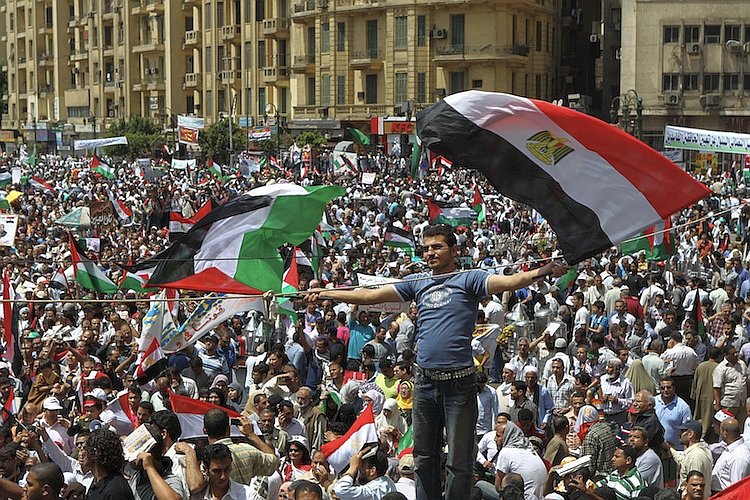
WASHINGTON—Arab Spring upheavals have not only affected the balance of power in countries where they have occurred, they have also had a strong ripple effect, shaking up the strategic outlook of the region’s dominant countries: Israel, Turkey, and Iran.
Superficially, the Arab upheavals—with dictators being overthrown and popular cries for democracy—may look desirable to the liberal democratic governments of Israel and Turkey, and a blight for Iran—but a closer look reveals that the regional winners and losers may not be so obvious.
Israel
For Israel, the Arab awakenings has created a “dramatic transformation” in the structure of the Middle East peace process, said Robert Malley, program director for Middle East and North Africa at the International Crisis Group (ICG), and a former special assistant to President Bill Clinton for Arab-Israeli Affairs (1998–2001).
Malley spoke at a Middle East Policy Council (MEPC) sponsored conference on Capitol Hill on Jan. 5 titled, Israel, Turkey & Iran in the Changing Arab World.
Malley said, the Palestinian cause weighs more heavily now due to popular sentiments in the Arab world that Arab leaders ignore at their peril.
Israel’s strategic outlook has historically been one of “pre-empting threats,” said Malley, which has required having a good sense of what the threats are. That approach, however, is harder to apply after the Arab upheavals when the unpredictable and uncertainty of the masses enters the equation. It’s impossible to know what the threat will be in a year’s time, he said.
“It’s one thing for Egypt to develop a certain strategic posture when you have President Mubarak or Gen. Tantawi in power. It’s very different if you have the Muslim Brotherhood,” said Malley.
Israel also has to deal with the reality that public opinion in the Arab countries has a greater role to play than it did before. The question of Palestine resonates more deeply today, Malley said. Any Arab political leader now will not enhance his popularity by reaching out to Israel or by advocating peace with Israel, he said.
The “peace process” between Israel and Palestinians will have to be “reinvented,” he said. The days of strong moderate Arab leaders and a strong U.S. role are called into question, said Malley.