Call it a “RAMpocalypse.”
The global artificial intelligence (AI) arms race has triggered a memory chip shortage.
Demand for memory chips is shifting from everyday consumer products to data centers.
“We are in the midst of a memory super cycle,” Di Zhou, portfolio manager at Thornburg Investment Management, told The Epoch Times in a note.
Since typical modern hyperscale data centers consume tens of millions of semiconductor chips—analog, foundational, logic, and memory—they will account for about 50 percent of all global chip sales. A single AI server rack contains more than 4,500 packaged chips.
By comparison, the average smartphone contains as many as 30 individual chips.
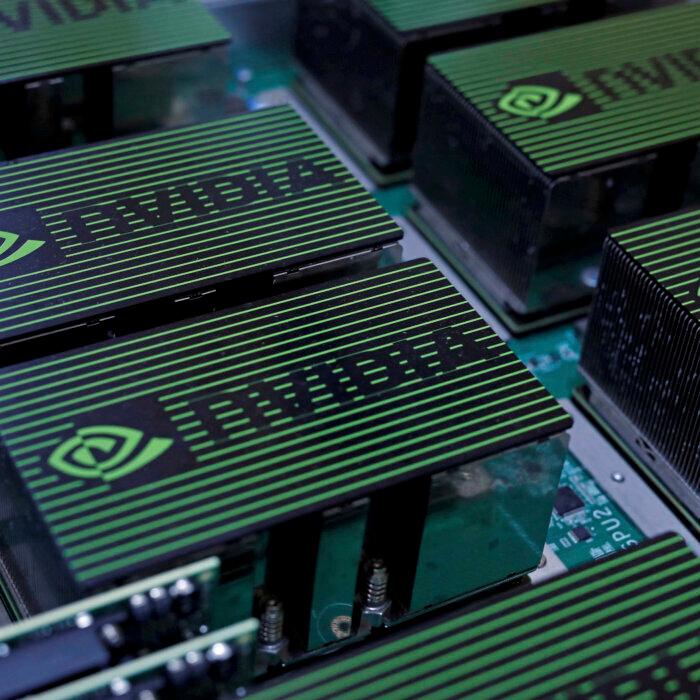
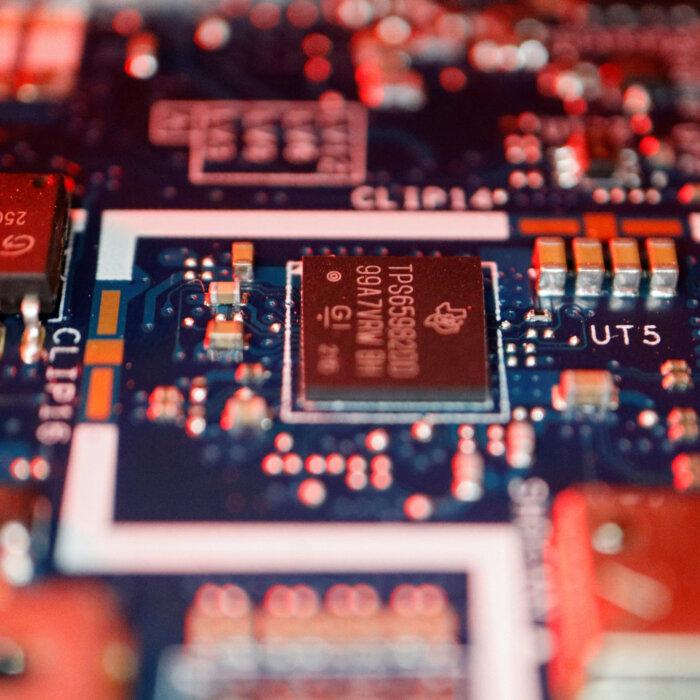
As a result, the cost of memory storage—also known as RAM—has surged this year, forcing scores of leading tech titans to raise product prices.
Since these chips are being diverted to data centers worldwide, businesses and consumers will feel the financial pain during this transition.
Apple announced last week that it is raising prices on its suite of headsets, laptops, speakers, and tablets. Customers will experience sticker shock for Microsoft’s current Surface PC offerings. Higher prices are coming for PlayStation and Xbox consoles.
Put simply, companies are passing the ballooning memory costs to consumers.
In a recent interview with The Wall Street Journal, Apple CEO Tim Cook warned that the price increases were “unavoidable.” While the iPhone maker has been employing measures to mitigate these costs, the situation has become “unsustainable.”
Xbox said its consoles are not sold at a profit but at less than the cost to make them.
“Unfortunately, console storage and memory prices have increased by more than 2.5x and we expect another doubling by the fall of 2027. The entire consumer electronics industry is struggling with the current components crisis, but the effects are particularly hard on consoles,” the video game console maker said in a June 25 post.
Companies such as Apple, Microsoft, and Sony have the cash flow to limit the financial damage. But consumer electronics businesses have minimal margin to spare.
They have been trying to alleviate price pressures by stockpiling RAM, establishing long-term commitments, or sacrificing margin. But the longer the memory chip shortage drags on, the harder it will be for these companies to minimize passing costs onto consumers.
Since experts do not anticipate any meaningful relief until late 2027 or early 2028, this might only be the beginning—and the collateral damage may already be underway.

Action camera maker GoPro recently revealed in a June 1 regulatory filing that it might not survive the memory crunch.
GoPro told the Securities and Exchange Commission that without new funding or a strategic deal, it may not be able to continue operating and could be forced to cut back, restructure, shut down, or even seek bankruptcy protection—though it said it has no current plans to file for bankruptcy.
‘Chipflation’ Contagion
Market watchers, including those at Morgan Stanley, have warned about the upcoming “chipflation” event that will eventually ripple through the global marketplace.
A new IDC report projects global PC and tablet shipments will decline more than 11 percent and almost 9 percent, respectively. Additionally, PC average selling prices are projected to increase by more than 18 percent, with costs unlikely to return to 2025 levels.
“The impact is expected to carry into 2027, with market stabilization not expected before 2028,” researchers said in the June 8 report. “Over the longer term, the market is projected to transition to a steady, replacement-driven cycle characterized by modest growth, premiumization, and shifting demand dynamics.”
For now, however, consumers are shrugging off the “RAMageddon.”
Best Buy reported in May that first-quarter sales climbed 2 percent, fueled by strong consumer demand for computing, gaming, and mobile devices.
Still, the company is making plans to cushion the blows of higher prices.
“Most customers come to us with a budget, and through our broad assortment of products and price points, find a great product within that budget,” Jason Bonfig, the incoming Best Buy CEO, said in an earnings call with analysts.
“We’ve seen evidence of this with our customer behavior in the past situations, most recently in response to tariffs. We have also made some strategic decisions to pull forward supply in certain areas to alleviate these impacts.”
But industry groups recommend that policymakers do something before the memory chip shortage worsens and spreads to medical devices, automobiles, and other manufactured goods.
A coalition of organizations—the National Retail Federation and America’s Communications Association, for example—penned a letter this month to Treasury Secretary Scott Bessent and Commerce Secretary Howard Lutnick urging action.
“The real-world impacts of these trends have already begun to show themselves and threaten to deteriorate rapidly if the situation is not remedied,” the letter stated.
One potential consequence could be consumers holding onto their devices for longer.
Shares of various tech companies have declined over the past year amid fears of weaker demand and the adverse effects on profit margins. Apple, HP, Lenovo, and Samsung have fallen around 5 percent.
The same could not be said for memory and semiconductor stocks, which have rebounded since the South Korea-led selloff last week.
Over the last week, Advanced Micro Devices and Micron Technology have risen about 5 percent. Nvidia slipped 4 percent, although it recovered nearly 1 percent to kick off the trading week. SanDisk took a breather on June 29, sliding almost 4 percent.
A chorus of market watchers argues that the memory industry is no longer a cyclical sector.
“The continued buildout of AI infrastructure is challenging the traditional view of memory as a highly cyclical market,” Hendi Susanto, portfolio manager and research analyst at Gabelli Funds, said in a note emailed to The Epoch Times.
“We believe AI-driven demand, especially by hyperscalers, is creating a more durable growth environment and supporting a structurally stronger outlook for pricing and earnings.”