Coaches along base paths beware. This coming MLB season, umpires will be watching closely that those stationed at first and third bases remain in their designated boxes prior to a pitch being thrown.
For decades, Rule 5.03(c) has been in the Official Baseball Rules Book. However, rarely has this rule, involving first- and third-base coaches, been enforced. A deep dive into whether a coach either at the Triple-A or MLB levels has ever been penalized for not following this rule—which is found on page 18 in the chapter Playing The Game—revealed no ejections or fines imposed for the practice.
There’s a first for everything, though, and given what team owners agreed on at their meeting recently, penalties may arise this coming season, because some habits for coaches may be difficult to break.
In a recent statement in the New York Post at the annual MLB owners meeting in Florida, MLB Commissioner Rob Manfred said there would be no gray area in interpreting Rule 5.03(c).
“The clubs approved a rule change on the coaches’ box requiring more adherence to the existing lines in the box,” he said.
Why the change in prioritizing a rule that centers on two non-players located on the foul side of fair territory? It’s because technology is catching up to another aspect of baseball.


Until the start of the 2022, pitchers and catchers communicated as they did for more than 100 years, by signaling what pitch to throw, and where, using the number of fingers that the catcher flashed. Catchers did their best to hide, with their glove hand and while in a crouched position behind home plate, the signals they put down; one finger for a fastball, two fingers for a curve, and a combination of others with their throwing hand. Opposing coaches stationed at first base or third base, somehow, were known to steal signals by catchers, and relay their findings to batters.
However, when MLB adopted a technology called PitchCom for the 2022 season, sign stealing and pitch tipping were reinvented.
PitchCom has essentially eliminated sign stealing. The catcher wears a transmitter on a wristband that sends a signal to a receiver placed in the pitcher’s hat. With the catcher in control, he works the button-operated transmitter to select the pitch types and location where the ball should be thrown. The radio signal is encrypted to prevent others from intercepting the communication between catcher and pitcher.
Because the line coaches can no longer observe the habits of catchers, they have begun making their way well out of the designated boxes to walk farther down the field. By looking at how the pitchers grip the ball from their new positions, the coaches can still gain an edge on what is soon to be delivered from the mound, and signal that to hitters. Pitchers at times have found themselves at a disadvantage as a result.
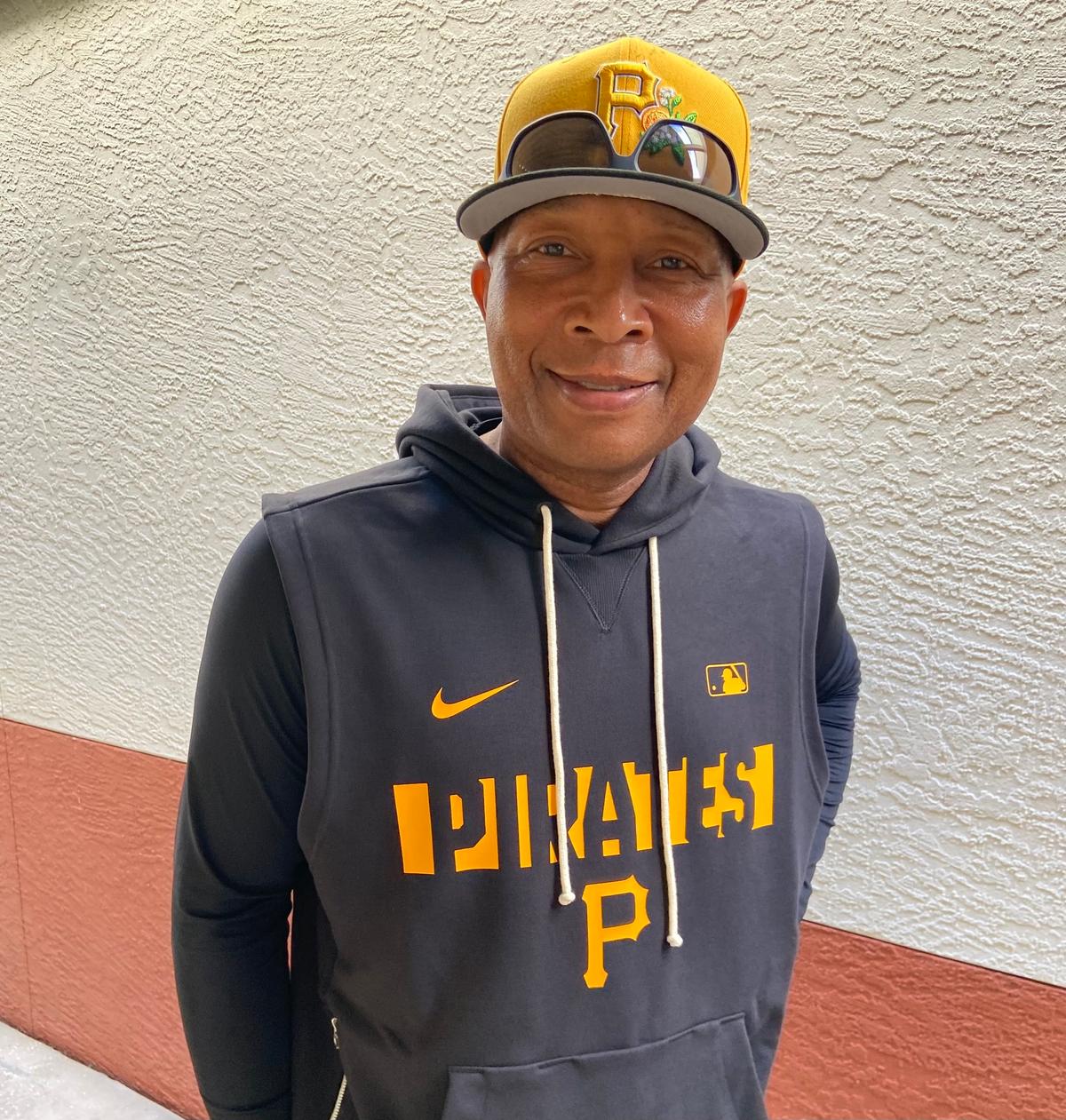
Brandan Bidois, a relief pitcher from Brisbane, Australia, who is in camp hoping to make the Pittsburgh Pirates’ Opening Day roster and has pitched at five levels in the minor leagues, told The Epoch Times on Tuesday that he has seen coaches pitch tipping.
“Yes, definitely I have watched coaches pick up on what pitch is coming. In the past, sometimes they got down the line pretty far. Before we had PitchCom, the coaches would stand really far back. If the catchers were a little too wide [in crouch], the coaches could pick up the signs by how many fingers they saw down.”
Safety is also a main concern for enforcing Rule 5.03(c), beginning with the Grapefruit and Cactus League schedules this weekend. In July 2007, while coaching first base for the Double-A Tulsa Drillers, Mike Coolbough, 35, was hit by a line drive in his neck during the Colorado Rockies’ affiliate’s game. Coolbough died less than an hour after he was struck. The tragedy prompted a change throughout MLB and its affiliates in 2008, when it became mandatory for batting helmets to be worn by all base coaches.
“We have talked about it,” Pirates’ manager Don Kelly said recently to The Epoch Times. “Staying within the box, our coaches can walk backwards. Really, safety is the biggest issue. Making sure they can get back and out of the way of a ball hit in their direction is always on our mind.”
While the pitcher’s on the rubber, base coaches are to remain in the white box. When the pitch is released, then they are free to roam.
Who would have thought it possible that a wireless communication system such as PitchCom could further revolutionize baseball? Even a veteran coach like Tony Beasley, with 16 seasons coaching third base for three clubs, is glad to have a 31-game spring schedule to introduce himself to the new strict enforcement of Rule 5.03(c).
“I’m used to roaming, so it’s going to take some time for me to get used to,” Beasley told The Epoch Times in Bradenton, Florida this week. “There are no base coaches that stay in the box exclusively. It’s going to be an adjustment for sure because you’re used to being in certain spots on the field. I’m not worried about it. This is one of those things that we don’t have control over.”
In 2023, MLB added a pitch clock to its rule book, intended to speed up gameplay. That same year, the designated runner rule became permanent. In extra innings, every half-inning a runner is automatically placed at second base before the first batter takes a swing.
Reminding base coaches to remain within designated white lines before a pitcher releases the ball should become routine quicker than saying, “Play ball!”