Cuban-born Tony Oliva can talk hitting like few can.
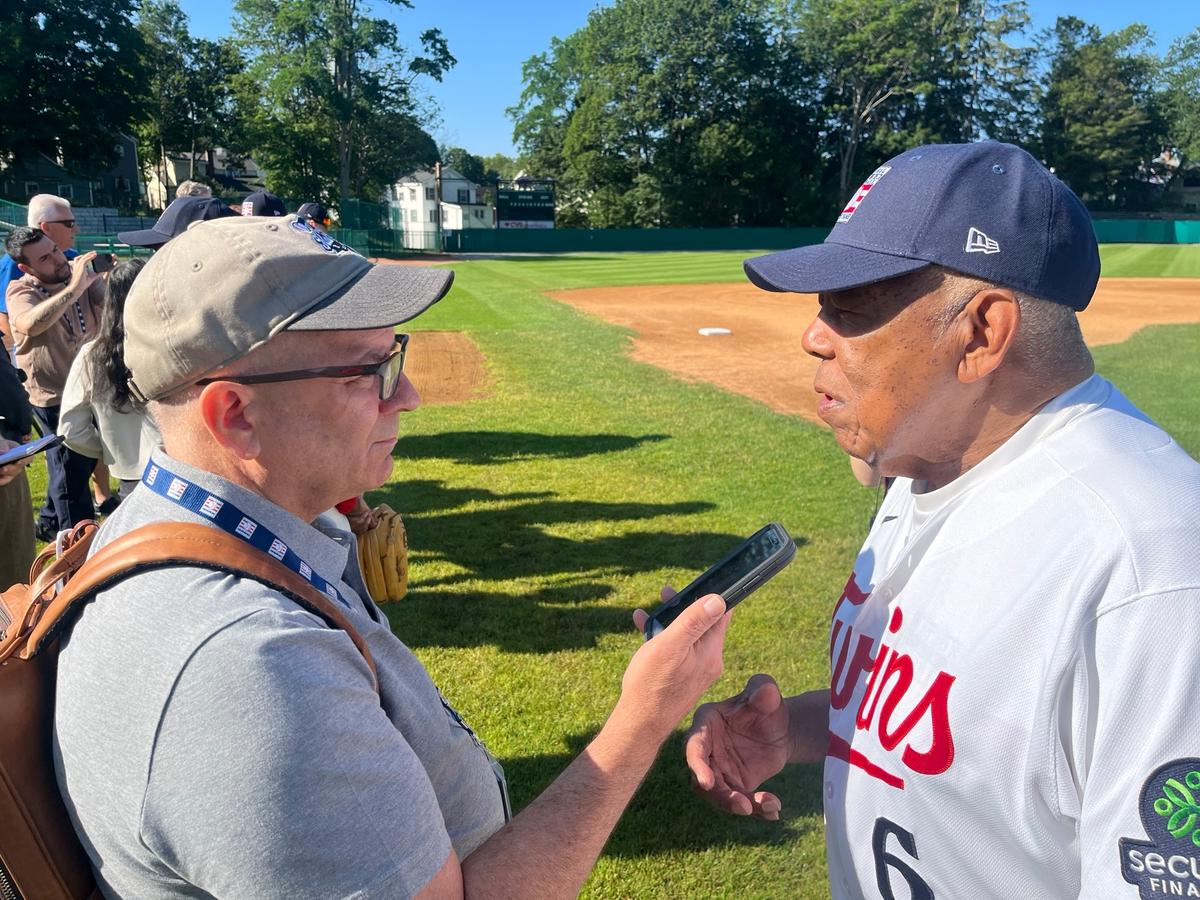
On Friday at 8 a.m. ET during Baseball Hall of Fame and Museum Induction Weekend in Cooperstown, New York, Oliva, 88, is at Doubleday Field. He slips on a white Minnesota Twins jersey with No. 6 on it, which the franchise retired in 1991, and is ready to pass along a little of his lifetime of batting wisdom to kids. Oliva, who was inducted into the Hall of Fame as part of the Class of 2022, is joined by fellow inductee Robin Yount and Billy Wagner to support Ozzie Smith’s (Class of 2002) Turn Two fundraiser in support of the Museum’s education department.
Multiple right knee surgeries during and after his 15 seasons playing right field and serving as the club’s first designated hitter in 1973, and a series of mini strokes in 2025, have the former three-time American League batting champion relying on the use of a cane to steady himself, while making his way onto the field. Across a career of 1,600-plus games and 6,000-plus at-bats on the MLB level, he produced a .304 career batting average. On this crisp, early morning in “The Home of Baseball” nestled in Central Upstate New York, Oliva is playing the ambassador role for the fundraiser, and in his audience are mostly kids. The participants’ grandfathers are the ones who would have watched Oliva work his bat like a magic wand, spraying hits to all fields across stadium diamonds.
Oliva’s audience is being brought up in an MLB era that celebrates bat flips and hitters posing at home plate after launching what they hope to be a home run (or a very long single), while slapping a base hit up the middle of the infield is way down the food chain of offense coolness. Of the 900-plus players on this season’s Opening Day rosters, there are only six hitting .300 or better, as of Wednesday. Launch angle and exit velocity aside, the approach to hitting since Oliva’s playing days of the 1960s and 1970s is dramatically different from how today’s metrics measure what successful hitting is.
“The batting averages have been dropping for most teams over the past few years. Everybody is taught now to swing hard, and hit a home run,” Oliva told The Epoch Times prior to putting on his instructor’s cap for the fundraiser. “You see guys that don’t have much power swinging up, and not doing the little things to get on base.”
During Oliva’s 1973 season, the first that the designated hitter was in play with the American League, at season’s end MLB clubs averaged a combined .257 batting average. This week, 2026 MLB hitting is down 13 points, averaging .244 per Baseball Reference, as to when Oliva slapped singles and doubles seemingly at will. Only three clubs, the Tampa Bay Rays, Los Angeles Dodgers, and Pittsburgh Pirates, are hitting .257 or better among the 30 franchises. Miami Marlins’ Otto López leads all batters at .328.
“When I played, we bunted more than they do today. If we saw a hole at second base, you would try to hit the ball up the middle. We practiced that. Now teams practice differently. Players go to spring training, and everybody is swinging up. The coaches rely more on analytics, and this makes it more difficult for players to follow the pitch and hit it where the fielders aren’t,” Oliva says.
Another key difference for batters, according to Oliva, is the number of pitchers in a game offenses will face. During the former Twins’ career, starting pitchers regularly completed their nine-inning assignments. With 2026 MLB starting pitchers putting in less than six innings of work each outing, batters are likely to see several different hurlers before games conclude. This, as Oliva believes, makes it harder to get an accurate read on what pitchers throw.
“After five innings, guys might see four pitchers. If you have a chance to see a pitcher more than two times, and you’re a good hitter, you have a good chance to get a hit. I don’t believe that pitchers throw harder than when I played. I faced guys that threw in the 100s, too.”
“There are a lot of ‘green players’ today that aren’t ready for the big leagues,” Oliva says. “They hit a little bit in the minor leagues, and they think they are ready for the major leagues.”
Students of the day this summer morning at the field down the block from the building where 354 baseball legends are enshrined will have decades of hitting knowledge crammed into a single session with one of the greatest ever to make good use of a wooden bat. Learning about baseball’s batting past from a great like Oliva just could benefit a future wizard of the wood in the big leagues.