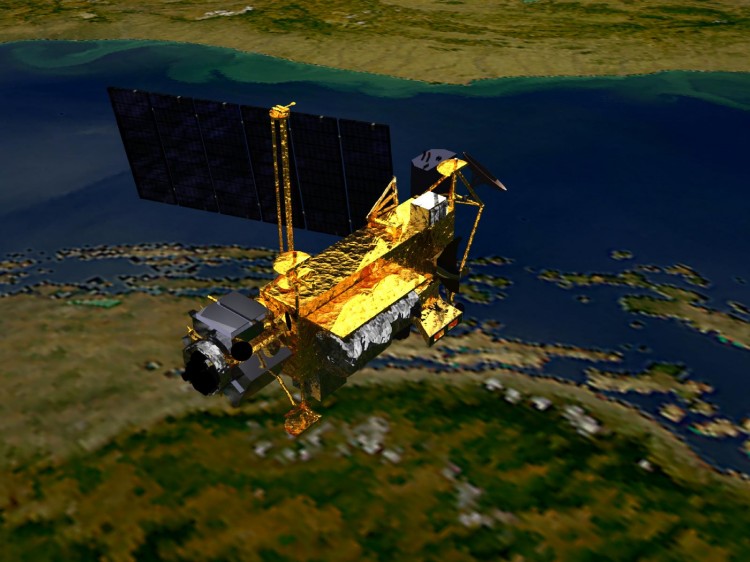
Scientists originally predicted that the Upper Atmosphere Research Satellite (UARS) would enter the atmosphere sometime in October.
Most of the UARS will break up into pieces and will burn up in the atmosphere as it reenters said NASA in an online statement, adding that debris falling from the sky poses an extremely small risk to public safety or property.
“Since the beginning of the Space Age in the late-1950s, there have been no confirmed reports of an injury resulting from re-entering space objects. Nor is there a record of significant property damage resulting from a satellite re-entry,” the statement reads.
The satellite will land somewhere between 57 degrees north and 57 degrees south of the equator, which is where most of the world’s population lives. NASA said that the “debris footprint” will stretch to around 500 miles long.
UARS, which weighs more than six tons, once was tasked with monitoring atmospheric changes around the Earth between 1991 and 2005. After that, scientists had little use for it and it was decommissioned.
NASA’s website says that if anyone finds a piece of the satellite, do not touch it as it is government property. The agency recommends contacting a local law enforcement official to assist in its disposal.
There are more than 22,000 objects larger than four inches across in Earth’s orbit, with only 1,000 being operational spacecraft, according to NASA. Most of this debris comes from satellites and rockets that have exploded while they were orbit, or broke up into smaller pieces when trying to enter or exit the atmosphere.
The International Space Station almost collided with a chunk of space debris, coming within 1,100 feet of the object.