SpaceX’s behemoth Starship rocket took to the skies above the Gulf of America for the 11th time on the evening of Oct. 13 for what would ultimately be a successful test of the vehicle’s durability.
Lifting off from pad 1 at Starbase for the last time, Starship and its Super Heavy booster roared into the clear Texas skies just after 6:20 p.m. CT.
The Starship exploded very shortly after splashdown, but SpaceX was not intending to recover the vehicle immediately, nor did SpaceX say that the explosion made the test a failure.
Building on the success of the tenth test flight in late August, this one was set to feature several objectives for both the upper stage and the super-heavy booster, and mark the end of this variant before the debut of the next-generation “V3” Super Heavy booster and Starship upper stage.
The mission’s primary goals, according to SpaceX, were about durability—measuring the real-world vehicle dynamics of the Super Heavy booster as it undergoes multiple engine shutdowns during a multi-phased landing procedure, as well as performing stress tests on the upper stage while demonstrating another Starlink satellite deployment.
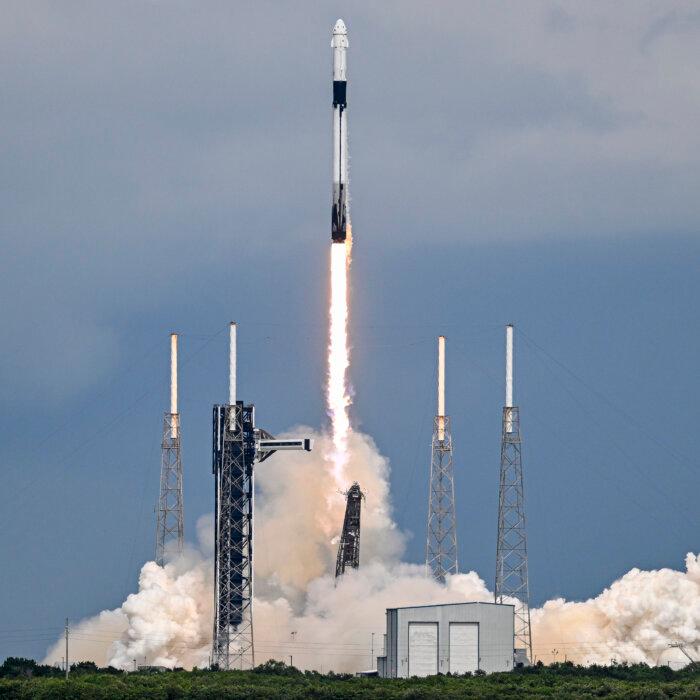
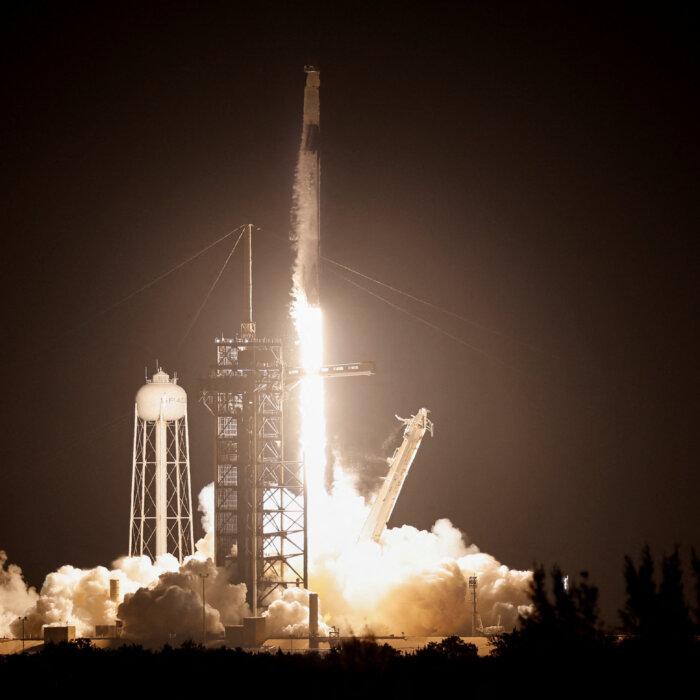
However, once again, spectators would not see the Starship upper stage achieve Earth orbit, nor would they see the stainless steel booster return to the launch pad and be caught by the launch tower’s arms.
Instead, Starship underwent another suborbital flight set to end in the Indian Ocean off the coast of Australia, and the booster aimed for a landing point in the Gulf of America to demonstrate a new landing burn sequence planned for the next-generation booster.
The Starship upper stage was set to deploy eight next-generation Starlink satellite simulators, which were set to be destroyed upon re-entry into the Earth’s atmosphere. It will also reignite one of its engines and mimic a path future vehicles will take back to Starbase.
Several heat shield tiles protecting critical aspects of the vehicle were intentionally removed, using its re-entry to undergo stress tests to see how durable the stainless steel is. It was also to perform banking maneuvers before splashdown.
All six engines performed nominally to get the starship’s second stage into space. Flight controllers called out that Starship was on a trajectory to achieve orbit, but the vehicle’s speed was kept low enough to keep it on a suborbital trajectory.
The simulated satellite payloads were deployed approximately 19 minutes and 30 seconds after liftoff; each satellite launched one at a time through a narrow payload door not unlike a Pez dispenser. Deployment of all eight dummy satellites took approximately seven minutes as the Starship flew over the equatorial Atlantic between South America and Africa. This marked SpaceX’s second successful attempt, following the deployment demonstrated on Flight 10.
Just before 38 minutes past liftoff, Starship completed a successful reignition of one of its engines. This was the third successful attempt, following Flight 10 and Flight 6.
Meanwhile, the booster’s complicated landing burn sequence saw 13 of its Raptor engines reignite to slow down the falling rocket, and then drop to only five engines that will be used for fine-tuning the booster’s path. Previously done with just three engines, the decision to increase that number to five was at least in part to provide redundancy in case of any spontaneous engine shutdowns on landing. But those five burning engines were scheduled to diminish to three to demonstrate a full hover over the water before splashing down.
SpaceX employees erupted in applause as the booster completed all of those objectives, and the upper stage completed its burn.
At around 45 minutes into the flight, flight controllers called out that Starship was beginning its descent back to Earth. Onboard views were bathed in an amber light as the ship began its re-entry over southeastern Africa and Madagascar, beginning to answer the question of what could happen if critical components of this orbiter were left exposed to re-entry without heat shield protection.
At about 58 minutes into the flight, flight control announced Starship had passed the greatest point of pressure and heat it would face. A successful banking maneuver shortly followed.
All three engines fired for a landing burn, and then shortly following splashdown, the vehicle exploded.
The booster used on Oct. 13 previously flew on the eighth test flight, with 24 of its Raptor engines being flight-proven, according to SpaceX.
Flight 11 was the last flight of the second-generation Starship rocket. The next-generation V3 Starship is expected to feature significant upgrades of several components, including its engines, heat shield, and in-flight capabilities, including the addition of orbital refueling capabilities on the next second stage.
This eleventh test flight of Elon Musk’s nearly fully reusable space launch vehicle comes amid several milestones for SpaceX’s Starship plans, including the founding of Starbase, Texas, as its own city, and the continued expansion of Launch Complex 39A at Kennedy Space Center, Florida, to host its own Starship launches.
However, Starship still has not completed a successful orbital demonstration of its upper stage, while NASA remains reliant upon it to serve as the lunar lander for Artemis III, scheduled for 2027.