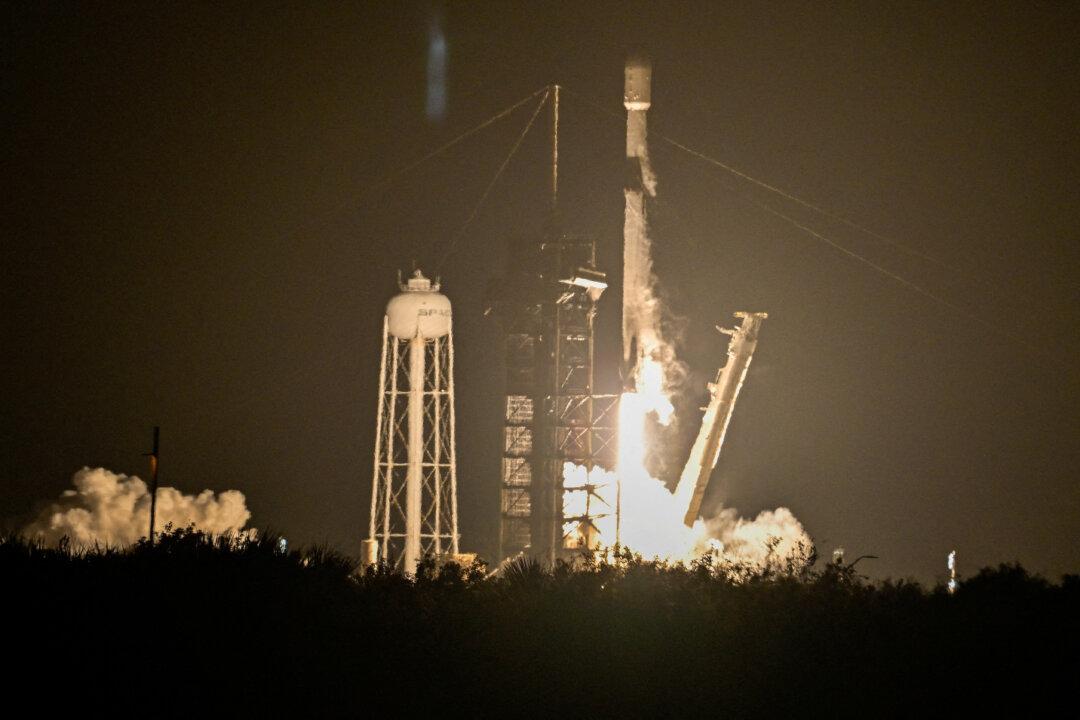
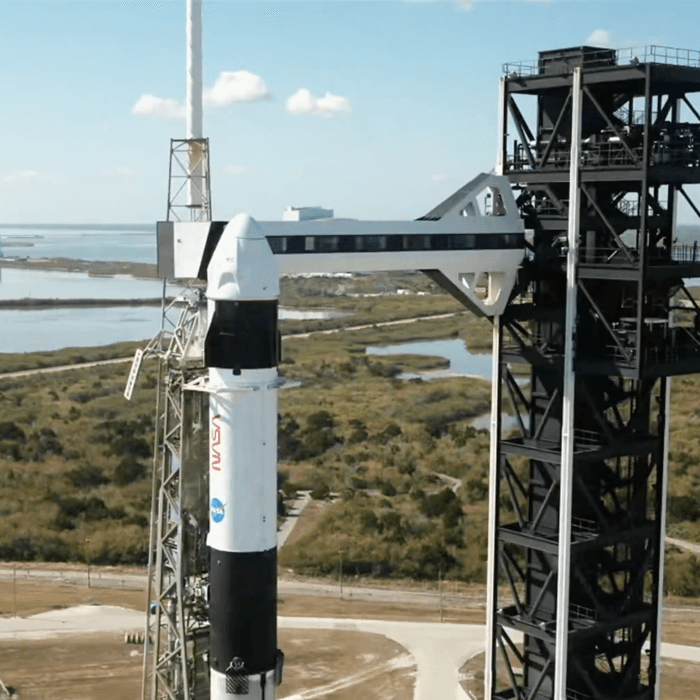
When French astronaut Sophie Adenot lifts off to the International Space Station with NASA’s SpaceX Crew-12 mission, she will continue the European Space Agency’s tradition of essentially hitching a ride to space.
Since its initial founding in 1975, the European Space Agency has continued to opt out of building and flying its own manned spacecraft.
Beginning with Denmark’s Ulf Merbold in 1983, all European astronauts have flown to low Earth orbit on either the Russian Soyuz, American Space Shuttle, or—most recently—the American-built SpaceX Crew Dragon capsule.
But when The Epoch Times asked Andreas Mogensen, the space agency’s Human Exploration Group Leader, if that status quo would ever change, he did not rule it out.
“It’s something that we are certainly looking at, and if everything goes according to plan, it’s a potential thing that we might bring to our member states,” he said during the Crew-12 pre-launch press conference on Feb. 9.
Europe’s space agency has grown to include 23 European member states, and they meet every three years in November to set European Space Policy and approve new projects.

The last one was held in 2025, which means they won’t meet again until 2028. But Mogensen suggested that it was already a talking point.
Mogensen acknowledged that the demand to become an astronaut across Europe was extremely high.
Adenot was one of five career European astronauts selected in 2022 out of more than 22,500 applications.
“It really shows the level of interest and fascination among young Europeans as well for what we do in space,” he said of those applications.
“ESA will boost Europe’s space access and mobility by 2040, making it a key player in space transportation,” the agency stated.
“Recognising that launch costs dictate competitiveness in space, the agency will reduce reliance on non-European entities and strengthen its own capabilities.”
In the meantime, though, Mogensen told the media that his space agency hopes to send astronauts on at least two more missions to the International Space Station before its decommissioning in 2030.He added he was confident that shorter-duration private astronaut missions, such as those operated by the company Axiom, would offer more opportunities for extra space station time.
The day before Mogensen shared this information, The Epoch Times had the chance to ask Adenot if she could see herself flying on a European-made manned spacecraft.
“I think we’re living in an era of space flight, which is very interesting and kind of hard to predict,” she said. “I think in the future, in 10 years from now, no one can predict what will happen, but what we can all say is that it’s evolving very fast and leaning towards more space programs all over the world.”
Adenot will become the first French woman to fly to space in 25 years, following in the footsteps of Claudie Haigneré, who took part in Soyuz missions to the Russian Mir Space Station in 1996 and the International Space Station in 2001.