The International Space Station has returned to its normal capacity with the arrival of NASA’s SpaceX Crew-12 mission.
NASA astronauts Jessica Meir and Jack Hathaway, European Space Agency astronaut Sophie Adenot, and Roscosmos Cosmonaut Alexey Fedyaev emerged from their Crew Dragon spacecraft at 5:31 p.m. EST on Feb. 14, embracing their fellow astronauts and cosmonauts who have been waiting for them to join the Expedition 74 mission.
What had been a team of three due to Crew-11’s early medically-triggered departure is now seven once again: three American astronauts, three Russian Cosmonauts, and one French astronaut.
“You look around the crew up here, and it’s really a testament to everything that we do,” Meir said during a welcome ceremony. “We have so many countries represented, so many backgrounds, so many disciplines, and we are so excited to be here and to get to work.”
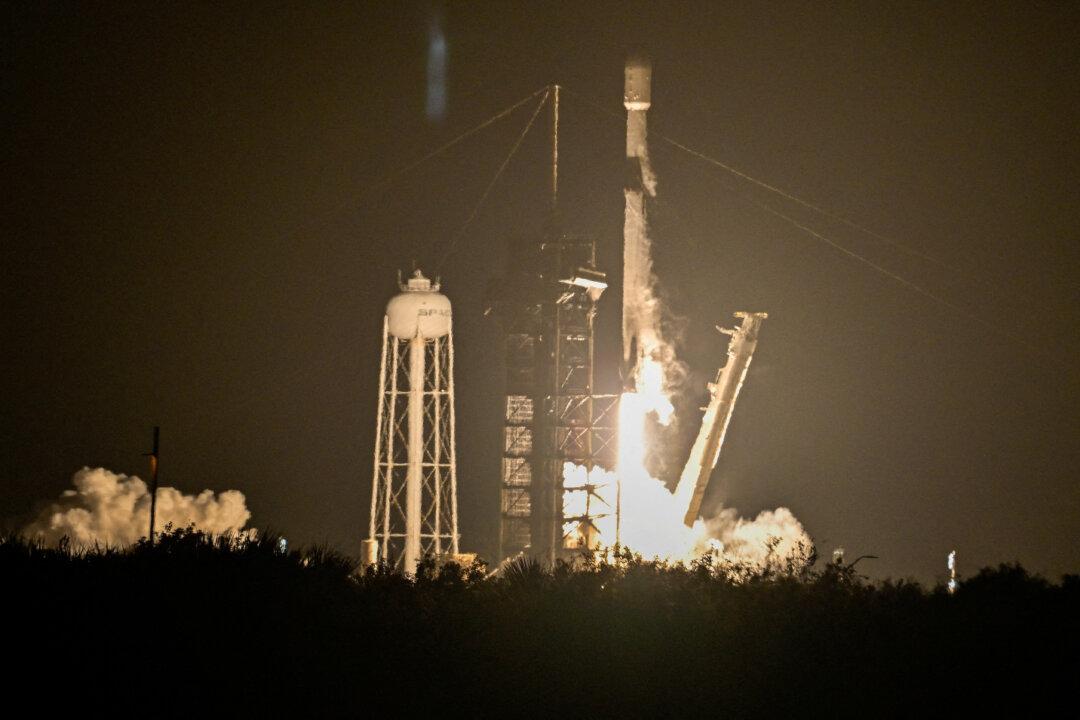
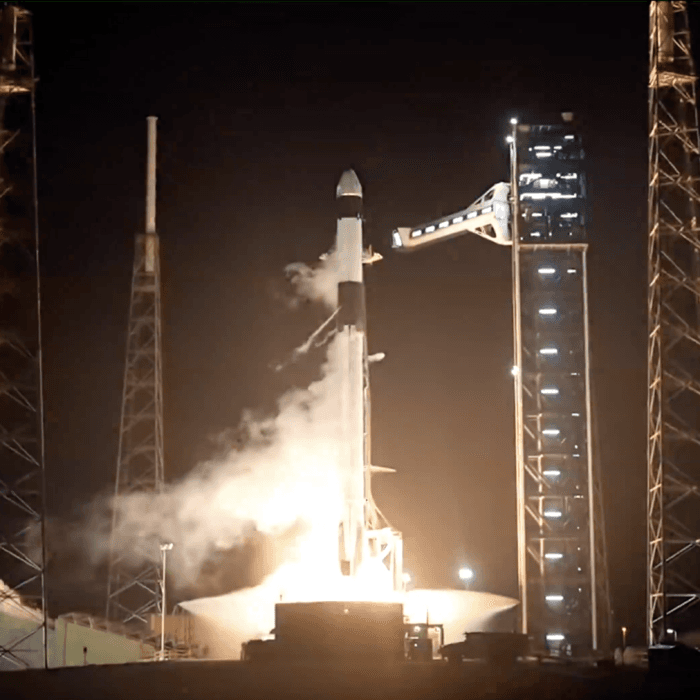
Crew-12’s arrival completes a more than 34-hour journey from Cape Canaveral Space Force Station in Florida, which featured five burns of the Draco thrusters to reach the space station’s speed and altitude—approximately 260 statute miles above the earth.
But the approach procedures took several hours on their own. NASA astronaut Chris Williams, already on board the station, caught a visual of the approaching spaceship just after 1 p.m. EST. Approaching procedures took a little more than two hours. Dragon Freedom made an initial approach from beneath the station before swinging up and above it to align with the assigned docking port and making its final approach.
Despite requesting a few private medical conferences with the ground and mitigating a suspected issue with one of the pressure suit gloves, Crew-12 continued on schedule.
Hard dock to the station was secured by 3:30 p.m. EST, and Williams began docking procedures on his end, such as opening the docking port for the spacecraft, pressurizing the crawl space between the station hatch and Crew Dragon hatch, and hooking up the spacecraft to the space station’s power. The space station’s newest residents handled procedures on their end, such as clearing waste accumulated during the flight and stowing their pressure suits and other gear, leading up to hatch equalization.
Dragon Freedom’s hatch opened at 5:14 p.m. EST, and after completing a few more procedures, the crew crossed the threshold at 5:31 p.m.
The welcome ceremony was immediately followed by a safety briefing.
Meir, Hathaway, Adenot, and Fedyaev will spend up to eight months aboard the space station, conducting a plethora of experiments, as well as testing equipment and procedures specifically related to upcoming lunar missions.
Their stay will feature multiple cargo ship arrivals and departures, as well as the departure of Williams in a Russian Soyuz spacecraft with Roscosmos Cosmonauts Sergey Kud-Sverchkov and Sergey Mikaev. They will be replaced by the arrival of another Soyuz crew, NASA astronaut Anil Menon and Roscosmos cosmonauts Pyotr Dubrov and Anna Kikina in June.
That Soyuz crew turnover will also mark the end of the 74th Expedition liveaboard mission and the start of the 75th. Dragon’s Draco engines will be used at some point during their stay to support the entire space station’s orbit.