
February proves a great time to step away from the protein shakes and render beef protein into a bowl of goodness. A simmering kettle warms up the house and nourishes the recipients.
Our local market offers a remarkable array of beef perfect for long, slow simmers—cuts such as beef shanks, cheeks, short ribs, and oxtails. Less expensive than beef steaks and much less tender, these cuts are packed with collagen, so the slow, moist environment of a covered pot rewards the cook with silky pan juices loaded with flavor.
Beef for braising or stewing should have ample fat and connective tissue that will break down as it cooks. Avoid packages labeled “stew meat,” because that doesn’t offer enough information. Stewing meat from a super lean cut, such as a rump roast or round, will have little flavor and will dry out during cooking. Therefore, it’s preferable to purchase a nicely marbled chuck roast and either ask the butcher to cut it into stew-sized pieces (2 inches) or do it yourself.
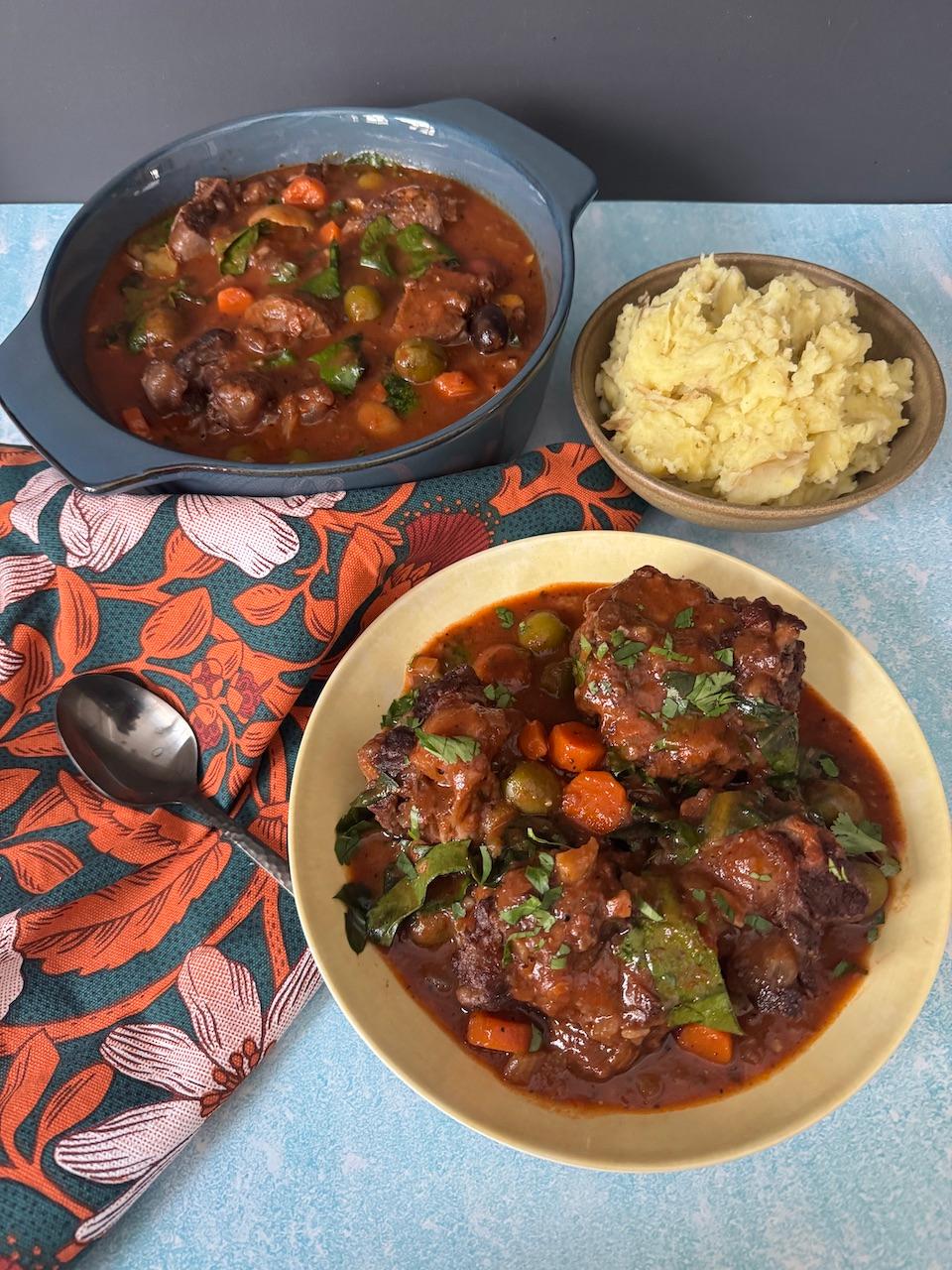
This winter, beef oxtails, alongside beef shank, have our household’s vote for a hearty braise. Both cuts take a bit longer to cook than beef chuck, but the taste is worth the wait. Look for oxtail pieces crosscut at least 2 inches thick. The larger the piece’s diameter, the more meat it contains and the easier it is to eat.
Slow-cooking offers the opportunity to squeeze a bunch of vegetables into the dish. Carrots, parsnips, celery, and fennel all benefit from the time and add flavor and a touch of sweetness to the pot. A couple handfuls of hearty greens, added just before serving, pop the color of the finished dish.
Like most stews and braises, flavor improves when the dish is cooked in advance. Refrigerate covered for up to three days. Remove any congealed fat from the surface if you wish. Reheat before serving, then stir in the greens.
In our family, not all eaters enjoy meat served on the bone. Let the stew cool and then use a paring knife to pull the meat from the bones. Cut the larger pieces into bite-sized bits to return to the pan juices.
If you choose to remove the meat from the bones, you can easily stir in cooked pasta, such as rigatoni, for a one-dish meal. Or serve the mixture over cooked egg noodles, rice, orzo, or mashed potatoes. The recipe for mashed potatoes that follows, seasoned with plenty of garlic, sage, and lemon, makes a great accompaniment to the braised beef. Make the potatoes shortly before serving so they stay creamy.