


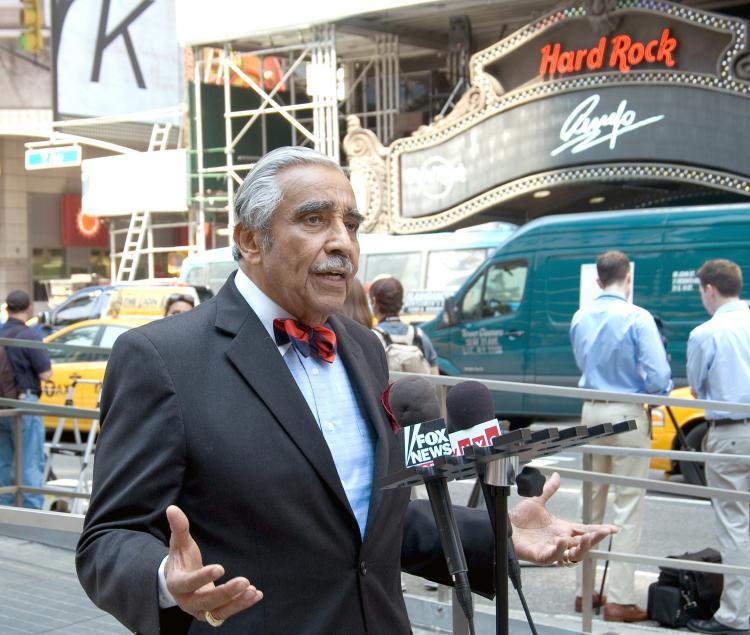
NEW YORK—Rep. Charles B. Rangel (D-N.Y.) set up a legal expense trust fund this week to ask for donations to help him pay off the legal fees incurred during a two-year investigation by the House Ethics Committee.
“The repeated filings of allegations, no matter how unsubstantiated, by the National Legal Policy Committee, a politically motivated right wing group dedicated to eviscerating civil rights and labor union protections, have led me to this action,” Rangel said in a statement.
The Federal Election Commission (FEC) is investigating Rangel’s use of more than $393,000 from his national leadership Political Action Committee (PAC) fund to pay lawyers’ fees from the investigation. Rangel maintains his innocence.
The National Legal and Policy Center (NLPC) filed a complaint against Rangel in November, sparking the FEC investigation. Ken Boehm, chairman of the NLPC, says Rangel was only legally permitted to use personal campaign dollars or funds from a legal expense trust—such as the one he established this week—to cover his legal costs.
“The ethics committee said on four occasions that he should set up a legal expense fund,” Boehm said.
According to Boehm, Rangel continued to use the PAC funds because the rules surrounding PAC contributions allowed him to raise more money.
The PAC fund allows for contributions of up to $5,000 a year and permits donations from registered lobbyists, whereas contributions to Rangel’s personal campaign fund, Rangel for Congress, are capped at $2,400 per year, explained Boehm. Corporations and unions are not permitted to donate to personal campaign funds, but may contribute to a national leadership PAC fund.
The newly established Charles B. Rangel Legal Expense Trust may accept contributions from corporations and unions, but not from registered lobbyists.
“Many of the supporters of [Rangel’s] national leadership PAC are registered lobbyists from his days as chairman of Ways and Means committee,” Boehm said.
The national leadership PAC fund allowed Rangel the most freedom to collect funds from his biggest supporters, Boehm noted.
CONSULTING THE COMMITTEE
The official summary from the House Ethics Manual states: “Before using campaign funds to pay any legal expenses, a Member should consult with the Standards Committee to ensure that the legal services are ones that the Member may properly pay with campaign funds. A Member should also consult with the Federal Election Commission (FEC) before using campaign funds for this purpose.”
Boehm says that Rangel did not consult the Standards Committee or the FEC before dipping into the PAC fund. An official in Rangel’s office indicated that the congressman only got approval for setting up his legal expense fund this week. Boehm, however, maintains that Rangel should have submitted a request to set up such a fund much earlier in the proceedings.
The congressman hired high-profile lawyers, including Lanny Davis who represented former President Bill Clinton in his impeachment trial, for his representation. These lawyers come with a hefty price tag, and Rangel has estimated his legal costs to be around $2 million, Boehm said.
Rangel stormed out of a hearing in front of the Ethics Committee in November, claiming that he could not afford the legal fees he had accumulated.
It is up to the FEC to decide whether Rangel committed any funding violations. In Boehm’s experience, this process could take several years. He remains hopeful, however, that the NLPC will hear from the commission early in 2011.
“The repeated filings of allegations, no matter how unsubstantiated, by the National Legal Policy Committee, a politically motivated right wing group dedicated to eviscerating civil rights and labor union protections, have led me to this action,” Rangel said in a statement.
The Federal Election Commission (FEC) is investigating Rangel’s use of more than $393,000 from his national leadership Political Action Committee (PAC) fund to pay lawyers’ fees from the investigation. Rangel maintains his innocence.
The National Legal and Policy Center (NLPC) filed a complaint against Rangel in November, sparking the FEC investigation. Ken Boehm, chairman of the NLPC, says Rangel was only legally permitted to use personal campaign dollars or funds from a legal expense trust—such as the one he established this week—to cover his legal costs.
“The ethics committee said on four occasions that he should set up a legal expense fund,” Boehm said.
According to Boehm, Rangel continued to use the PAC funds because the rules surrounding PAC contributions allowed him to raise more money.
The PAC fund allows for contributions of up to $5,000 a year and permits donations from registered lobbyists, whereas contributions to Rangel’s personal campaign fund, Rangel for Congress, are capped at $2,400 per year, explained Boehm. Corporations and unions are not permitted to donate to personal campaign funds, but may contribute to a national leadership PAC fund.
The newly established Charles B. Rangel Legal Expense Trust may accept contributions from corporations and unions, but not from registered lobbyists.
“Many of the supporters of [Rangel’s] national leadership PAC are registered lobbyists from his days as chairman of Ways and Means committee,” Boehm said.
The national leadership PAC fund allowed Rangel the most freedom to collect funds from his biggest supporters, Boehm noted.
CONSULTING THE COMMITTEE
The official summary from the House Ethics Manual states: “Before using campaign funds to pay any legal expenses, a Member should consult with the Standards Committee to ensure that the legal services are ones that the Member may properly pay with campaign funds. A Member should also consult with the Federal Election Commission (FEC) before using campaign funds for this purpose.”
Boehm says that Rangel did not consult the Standards Committee or the FEC before dipping into the PAC fund. An official in Rangel’s office indicated that the congressman only got approval for setting up his legal expense fund this week. Boehm, however, maintains that Rangel should have submitted a request to set up such a fund much earlier in the proceedings.
The congressman hired high-profile lawyers, including Lanny Davis who represented former President Bill Clinton in his impeachment trial, for his representation. These lawyers come with a hefty price tag, and Rangel has estimated his legal costs to be around $2 million, Boehm said.
Rangel stormed out of a hearing in front of the Ethics Committee in November, claiming that he could not afford the legal fees he had accumulated.
It is up to the FEC to decide whether Rangel committed any funding violations. In Boehm’s experience, this process could take several years. He remains hopeful, however, that the NLPC will hear from the commission early in 2011.


