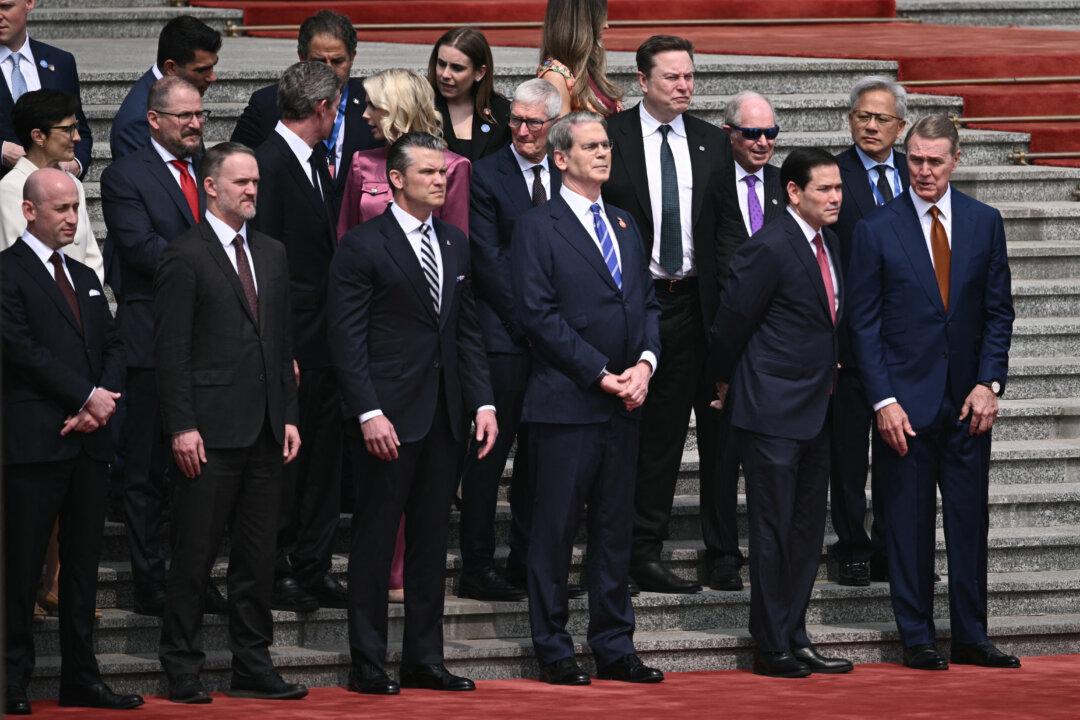
Within days of meeting U.S. President Donald Trump in Beijing, Chinese Communist Party leader Xi Jinping met with Russian President Vladimir Putin while signaling deeper coordination with Iran, North Korea, and other anti-Western states increasingly aligned against U.S. power.
The sequence was impossible to miss, and the optics were striking.
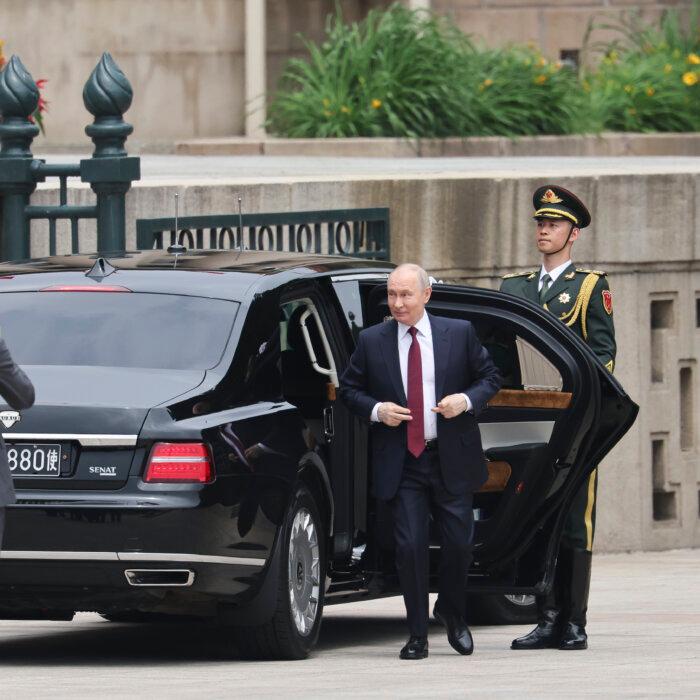
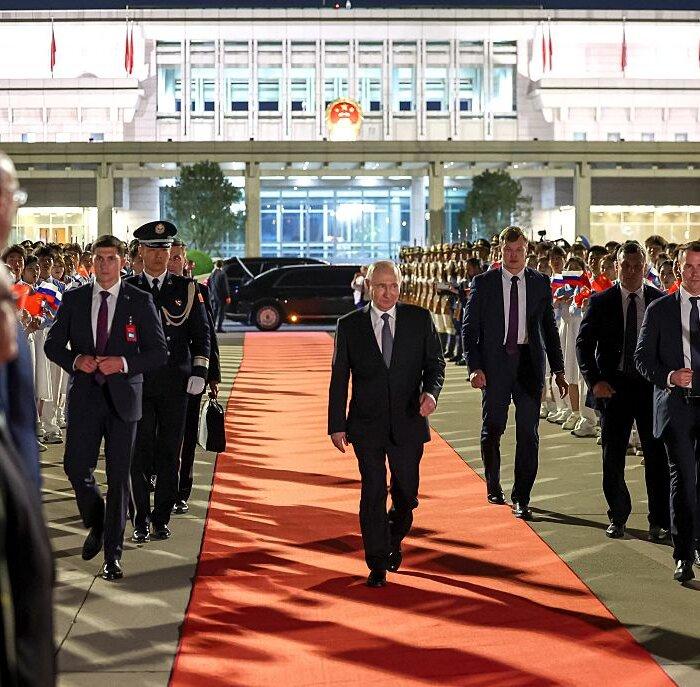
Almost immediately after an ambiguous Trump–Xi summit heavy on symbolism but light on concrete breakthroughs, Putin arrived in China for a highly publicized summit focused on “strategic partnership,” energy cooperation, and what both countries openly described as a “multipolar world.”
The timing was not accidental.
Analysts noted that Xi appeared eager to demonstrate that China would not be strategically isolated by renewed Trump-era pressure, tariffs, or confrontation. His first act was to deepen relations with those nations most willing and able to resist American influence.
Beijing’s Lifeline to Moscow
At the center of this deepening alignment sits Russia.Since Russia’s invasion of Ukraine in 2022, China has become Moscow’s economic lifeline. Beijing has dramatically increased its purchases of Russian oil and natural gas. Chinese purchases of Russian fossil fuels reportedly exceeded $367 billion after the war in Ukraine began.
Then, in October 2023, China signed a massive grain supply contract ($25.8 billion) with Russia. Both of these have helped cushion the Kremlin from Western sanctions while stabilizing Russia’s wartime economy.
Furthermore, at their recent Beijing summit, Xi and Putin signed more than 40 agreements involving trade, energy, technology, and media cooperation. This, of course, has deepened and expanded the Beijing–Moscow relationship.
Putin openly praised China’s support, emphasizing Russian energy exports to China as essential to Moscow’s economic resilience amid sanctions and geopolitical pressure. This relationship extends beyond trade into broader strategic alignment against what both governments call “hegemonic” American power.
Although Beijing officially claims neutrality regarding Ukraine, Western leaders increasingly argue that China has provided Russia with dual-use goods, industrial components, financial connectivity, and economic support crucial to sustaining Moscow’s war effort.

Iran and the Emerging Eurasian Bloc
Iran represents another critical pillar in Xi’s post-Trump diplomacy.China relies heavily on Middle Eastern oil, particularly energy moving through the Strait of Hormuz (again, a vulnerability). As conflict involving Iran intensified, Beijing became increasingly focused on protecting supply chains and stabilizing energy access. At the same time, China has deepened economic integration with Tehran over recent years through energy purchases, infrastructure projects, and transportation corridors linked to Beijing’s Belt and Road Initiative.
Reports have also highlighted concerns about Chinese military materiel reaching Iran via expanding Eurasian rail networks connecting China, Central Asia, and the Middle East. These routes increasingly reduce reliance on maritime shipping vulnerable to U.S. naval pressure.
Several overlapping interests now drive the strategic relationships between China, Russia, and Iran. Weakening U.S. global dominance is a top priority for all three. That includes reducing their individual and collective vulnerability to sanctions by challenging the dollar’s global supremacy. Their plan is to do so through alternative financial structures, a new reserve currency, and by leveraging alternative trade routes to resist U.S.-led trade and military alliances.
North Korea’s Role
Notably, North Korea also appears increasingly integrated into this emerging alignment.Reports have emerged that Xi, shortly after hosting Trump and Putin, may travel to North Korea for talks with North Korean leader Kim Jong Un.
Given the historically chilly relations between Beijing and Pyongyang, the possibility of deepening cooperation between them is highly significant—and perhaps revealing, as well.
North Korea is a convenient nuclear counterweight to U.S. forces in Asia, and specifically, in South Korea. What’s more, Pyongyang has already expanded military cooperation with Russia amid the Ukraine war, reportedly supplying artillery shells and military equipment to Moscow.
In the past, North Korea remained strategically useful to China, but it has proven difficult to control. Beijing has struggled to manage relations with North Korea over China’s massive influence in the region. It appears that Xi is making improved relations with Kim a priority.
The message is unmistakable. Beijing is consolidating relationships with nearly every major state actively opposing or resisting American strategic influence.
India and Brazil: Multipolar Balancing
India and Brazil pose more complicated challenges for Beijing because neither nation is formally anti-American. But both increasingly favor a “multipolar” global order less dominated by Washington.Regarding India, New Delhi remains strategically wary of Beijing, especially after numerous bloody border clashes over the past several decades. They’re also economic rivals, with India seeking to compete with China’s manufacturing and technological prowess.
Concurrently, India continues its balancing act between Washington and Beijing while purchasing Russian energy and participating in multilateral forums outside Western control.
The Real Strategic Message
Xi’s view is that the world is entering a prolonged era of fragmentation. Furthermore, he believes that even partial distancing from U.S.-led systems weakens American leverage globally.He is probably right in both instances. But there is more than one way to interpret both the summit and Xi’s post-summit behavior.
Did the United States intend to isolate China? If so, is it encouraging the consolidation of a more closely aligned Eurasian bloc centered around Beijing?
On the other hand, is Xi’s rapid coalition-building following the summit a sign of confidence or necessity?
Both may be correct. China needs food, energy, markets and BRICS participants. Russia needs China’s money. Iran needs China’s markets, North Korea needs China’s protection and subsidies, and Brazil and India seek alternatives to Western dominance.
Xi increasingly presents China as the central organizing force capable of connecting them all. If he’s successful, it may ultimately become the defining geopolitical story of the next decade.
Meanwhile, Trump wants to make deals with everybody.