It’s the time of year when we start thinking about Christmas gifts.
I’ve always been a fan of homemade gifts, and I know exactly where that began. I went to a Waldorf school, where making things with our hands wasn’t an occasional craft but part of daily life. We worked with real fibers. We learned to knit and crochet. We baked bread. We created gifts for our school’s holiday fair and for our families at home. Making things wasn’t framed as a hobby or a talent. It was simply part of being human.
That foundation never left me.
Every year, I try to come up with homemade gift ideas that hold value for the person receiving them and joy for the person making them—especially when it comes to the holiday gift fair we host at Sovereignty Ranch. But over the years, I’ve noticed something that quietly unsettles me.
The homemade vanilla. The jam. The hot sauce. The elderberry syrup. The echinacea tincture. The tea blends. The bath salts. Years later, I’ll spot them untouched in a cupboard or under a sink. And I find myself wondering: Do they not drink tea? Did they really not take a single bath for three years? Or is there something about homemade things that makes people uneasy?
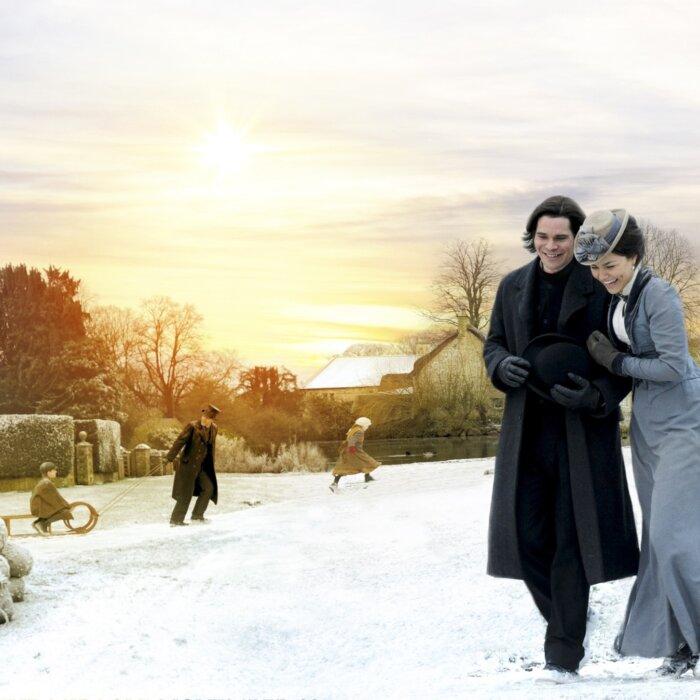
Interestingly, the wool blankets I make from secondhand sweaters with holes in them are different. I felt them, cut them, and stitch them back into something new. Those actually get used. I see them on couches and beds. They live in people’s homes. But the edible or practical homemade goods often don’t.
We live in such a deeply entrenched consumer culture that it sometimes feels as though people would rather receive socks from any given box store than something made by hand.
Historically, this would’ve been unthinkable.
For most of human history, Christmas gifts were handmade. Before industrialization and mass production, people exchanged food, clothing, tools, candles, preserves, and small crafted items because there was no alternative. Gift-giving was rooted in seasonality, skill, and necessity. The idea that Christmas gifts should be purchased—often in bulk—didn’t truly take hold until the early 20th century, when department stores, advertising, and mass manufacturing transformed Christmas into an economic engine.
Today, Americans spend close to a trillion dollars during the holiday season, with the vast majority of gifts purchased rather than made. Holiday shopping now accounts for roughly a quarter of annual retail sales. Convenience has replaced craftsmanship, and efficiency has replaced intention.
But something has been lost in that shift.
This is why, every year, I continue making gifts with my children.
This year, we’re harvesting heart-shaped leaves and stamping them onto organic cotton tote bags and zipper pouches. We’re hand-painting sets of gift cards using watercolors and watercolor paper. We’re making tea blends from herbs and fruit harvested and dried on the farm. We’re creating bath salts with essential oils, multiple kinds of salt, baking soda, and herbs we grew ourselves. We’re cutting and sewing felted wool sweaters into toys and small gifts.
None of it is perfect.
And that’s the point.
My children learn what it means to work on something and have it not turn out the way they imagined. They feel disappointed. They learn to manage that feeling. They try again. They build patience, persistence, creativity, and resilience. These are skills they’ll need far more than the ability to scroll, click, and check out.
When a child asks me to just put something in the cart for someone, I see how completely consumer culture has infiltrated even our most sacred traditions. Christmas has become a logistical exercise instead of a relational one.
And honestly, I fear for our culture and for our children’s future.
As I write this, I’m sitting next to my real Christmas tree, a beautiful fire burning nearby, my daughter in my lap, breastfeeding. As I look down at her tiny hands and her tiny body, I wonder about the world we’re leaving her. I think about the generations before me and how nostalgic they must’ve felt as their world modernized into what I experienced as normal. My heart aches when I consider how different the world she’ll grow up in will be from the one that shaped me.
How many ancestral skills are we passing on? What do we actually know how to do with our hands? What do we understand about materials, seasons, food, fiber, or tools? Why are we so obsessed with modernizing everything—making it faster and easier—without asking what we’re losing in the process?
I think it’s worth stepping back. Slowing down. Being thoughtful.
Recent surveys suggest a quiet undercurrent of resistance. About a quarter of people say they’re open to homemade or secondhand gifts, and many express a desire for more meaningful, less wasteful holidays. That tells me this instinct hasn’t disappeared. It’s simply been buried under years of marketing and habit.
I don’t make gifts because I think everyone will use them. I make them because I want my children to know what it is to create something from raw materials. To practice a skill. To fail. To improve. To give something that required effort, not money.
In a world that tells us speed and consumption equal success, choosing to bake, sew, knit, or crochet a gift is a quiet act of resistance. It reminds us that love isn’t something you add to a cart. It’s something you cultivate.
And that lesson—whether or not the jar of jam ever gets opened—is worth passing on.