In recent years, there’s been a noticeable trend of Chinese nationals, including single men and married couples, turning to California’s surrogacy industry to build large families. Surrogacy is illegal in China, but California’s laws are among the most permissive in the world. Agencies openly market to Chinese clients, and California courts routinely grant pre-birth parentage orders to foreign nationals.
In California—arguably the most regulated state in the nation—this is perfectly legal. Meanwhile, growing eggplants is subject to more scrutiny.
Let me explain.
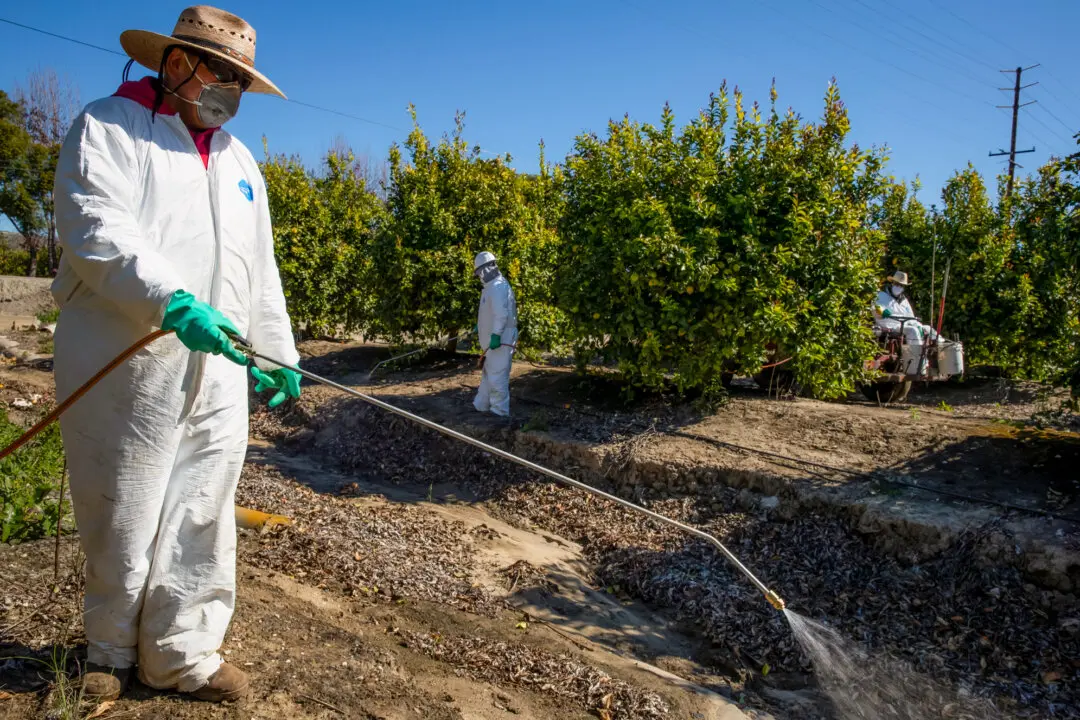
If you want to sell produce at a farmers market, you must first obtain a Certified Producer’s Certificate. If you’re caught selling a variety even slightly different from what’s listed on your certificate, you can be fined. I’ve been fined personally—once for selling purple cauliflower when I had only registered “cauliflower” and hadn’t specified the color. I’ve also been fined for including eucalyptus branches—from the eucalyptus trees growing on the hedges of my property—in my bouquets without registering “eucalyptus” as an agricultural product on my certificate.


Inspectors can—and have—come to my farm, measured my eggplants at the market, then measured the ones on my ranch to ensure that I’m not selling produce from another farm. They have the right to step foot on my property to verify what I grow.
If I want to provide housing for farmworkers, Ventura County regulations limit me to one dwelling for every 40 acres of active agriculture. Want to build a small farm stand? Prepare for years of permits and paperwork. I was $80,000 deep into permits for a prefab barn (just to store equipment) after my original barn burned down. After years of red tape and no progress, we scrapped the plan entirely.
And to make it more absurd, when the county started eviction proceedings against my farmworkers, they also informed me that if I disconnected their RVs or tiny homes from water, sanitation, and electricity and moved them onto the street, there was nothing they could do—because then my workers would be considered “unhoused.”
In other words, I cannot legally house them in safe, dignified conditions on my farm, but if I strip them of those essentials and make them homeless, suddenly the same government shrugs and says, “We can’t touch them.”
Meanwhile, in this same state—where you often cannot legally camp on your own land or live full-time in an RV—you can receive free glass pipes to smoke meth, free needles to shoot heroin, state-funded abortions, and virtually unlimited access to methadone clinics.
Only a handful of companies are allowed to sell raw milk to the public because of supposed health risks. But when it comes to creating human life? California’s legal framework offers one of the most lenient surrogacy environments in the country. In fact, there are likely more regulations on breeding dogs. Many counties require a special license to keep animals intact—otherwise, you’re required to spay or neuter.
We regulate animals more strictly than we regulate people—where they live, how they reproduce, and even how many you can own. Yet when it comes to children, California has created a loophole big enough to fit a fleet of surrogates through.
As a mother and as a human being who cares deeply about children, my question is this: What does someone need 21 children for, all at roughly the same age? What was the intended life outcome for these children? It’s obvious in some circumstances that these children are being used as a long-term strategy to obtain American citizenship, to establish American roots, or to build family ties on U.S. soil. And of course, some people genuinely want to grow their families through surrogacy. But in this case—and I suspect this is not the only case like this, just the only one we’ve caught—what are they really doing?
Why do they own two surrogacy companies? Why do they have more than five LLCs registered to the same address? What is really going on here? As someone who has paid taxes in this state for many, many years, this seems like something worth investigating—and regulating. The FBI says they’re looking into it, and I sincerely hope that they do.
At the heart of this isn’t just a legal loophole or a bizarre headline—it’s 21 children whose futures began as transactions, not intentions of love or belonging. Regulation should exist to protect them, not to enable this.
So here’s my question: In a state obsessed with regulation in every corner of life, how is it that the creation of human life—arguably the most sacred, impactful, and ethically complex endeavor we undertake—is treated with such laissez-faire legal oversight?
What exactly are we regulating for?
What is all this red tape supposed to be protecting—if not for children, the creation of human life, and the most innocent among us?
Because from where I stand—raising children, growing food, stewarding land—nothing is more sacred than life itself. And any society that forgets this is already sowing seeds of collapse.
Because from where I stand, it looks like growing an eggplant requires more accountability than growing a human being.
Just my humble opinion as a mother and a farmer.