Every scheme in human history designed to limit and contain power has faltered on one basic problem. It comes down to this: Who or what is the enforcement mechanism for keeping the state in check? The Founders hoped that a constitution with checks and balances would do what monarchy did not do: build in the limit. The problem was always that parchment has no enforcement power.
Let’s start from the beginning. What precisely is the function of government? In the old classical liberal vision, its main purpose is the enforcement of enumerated rights to life, liberty, and the pursuit of happiness. No one may trample on those lest they face the judgment of the law.
This vision of the government has been called “the nightwatchman state.” If everyone is behaving, the state does nothing. If there are disputes, the state adjudicates. If there is criminal wrongdoing, the state punishes. Otherwise, it does not try to guarantee income security, overall happiness, or otherwise police non-injurious personal choices.
That’s a very neat and clean vision, but it wholly leaves out one of the greatest problems in the history of humanity, namely that of the abuse of power. When the people in charge start to use their power in their own interest, engaging in activities that would be considered criminal if done by private agents, there still needs to be some mechanism in place to stop the practice and bring justice. In other words, someone or something needs to watch the nightwatchmen.
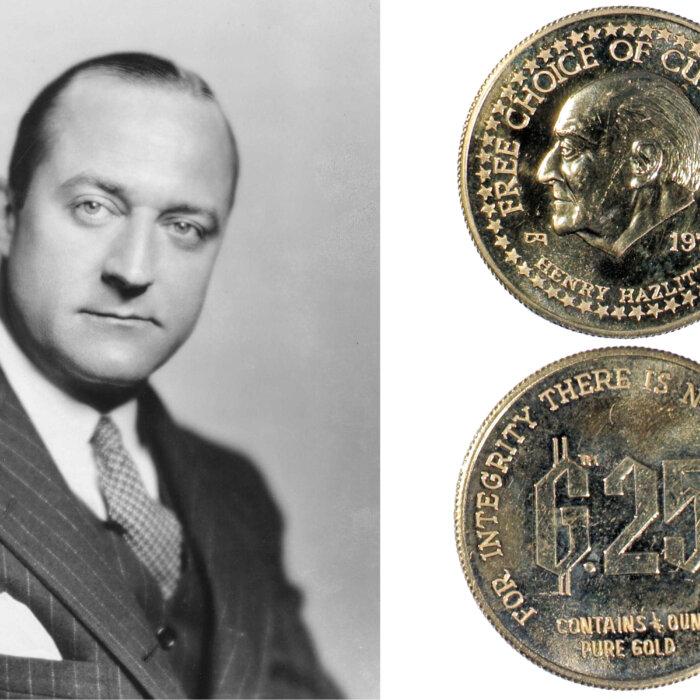

His basic principle is that when government engages in actions that would be considered a violation of rights if a citizen did it, government has gone beyond its proper role. It must be restrained by the citizens, who are the ultimate power in any just society. Of course, that is easier said than done, but Bastiat does the hard work of at least laying out the standard and the test.
In the 21st-century United States, we are overwhelmed by this problem of containing the government and finding mechanisms to repair wrongdoing. These past years have been overwhelming in terms of dark revelations that have deepened public cynicism.
We know now that the vaccine makers knew of dangers but collaborated with government officials to hide this knowledge. Trillions of dollars were spent and squandered in the form of stimulus payments. And the news of extensive fraud associated with all those payouts is overwhelming our social feeds. None of this takes place without some degree of collaboration from the people who we task with monitoring the functionality of the system itself.
There are ever more calls for real justice for these acts of malfeasance—not just statements, embarrassments, and denunciations but also perp walks, courts, and jails. Why are so many of the people involved in these scandals still giving press conferences, speaking at conventions, and writing op-eds in their own defense rather than facing the wheels of justice? This is a question that masses of people are asking.
Let’s return now to the U.S. founding. As brilliant as the architects of the constitutional order were, they did not really answer the great question concerning which branch of government would have the highest and most power in the event of a dispute between branches. The most important court decision that finally settled that issue was Marbury v. Madison (1803). This was the decision that plainly established the precedent of judicial review.
After this point, there was no longer any dispute. The judicial branch would be supreme. It was now in position to judge the actions of other branches. This changed the perception of the role of courts in U.S. public life. They would be the final arbiters of right and wrong, justice and injustice, constitutionality and unconstitutionality.
Sadly, they did not settle all issues but instead pushed the question in a different direction. After this point, the political biases and agendas of the justices themselves became an issue, and appointments to the court became something of a political football. As government grew more and more, especially in the 20th century, it fell to the courts to decide what other branches could and could not do. That’s where we stand today.
This answer does not really settle the question of who guards the guards, but it at least offers an answer with a plausible solution in most cases. Since Marbury, an exceedingly complex and hugely expensive network of courts has evolved at all levels. There are appeals, but they are costly and take an enormous amount of time. Nonetheless, no one in U.S. public life today doubts that the Supreme Court—right or wrong, whether dominated by liberals or conservatives—has the final word.
Several decisions are coming down in 2026 that could reverse a century of precedent in some critical areas, such as the president’s authority over the executive branch, the ability of states to impose injection mandates on their citizens, the independence of the central bank, and the constitutionality of liability indemnifications for industry, among other issues. Because of the makeup of the court today, we have an inkling of where these decisions are headed.
We can see, then, how the U.S. system has dealt with the core issue mentioned above. The final word belongs to the Supreme Court. If that falls into corruption or is otherwise marred by political gamesmanship, all trust in the system is lost, and all hope in restraining government according to the words on a piece of parchment is lost. This is why the stakes cannot be higher.
Is this a better system than the monarchies that the U.S. Constitution displaced? The argument goes in many directions. There are good monarchies and bad ones, just as there are good democracies and tyrannical ones. The issues explored were as unsettled in our time as they were in Aristotle’s, when his writings on politics first raised the issue.
Let’s conclude these reflections with an observation to which all sides can surely agree. Without a people and a culture dedicated to freedom and justice—and when a people lose trust in government for good reason—the prospects for the good society are dimmed.
“When plunder becomes a way of life for a group of men in a society,” Bastiat wrote, “over the course of time they create for themselves a legal system that authorizes it and a moral code that glorifies it.”
Who watches the nightwatchmen? You do. That is true regardless of the system of government.