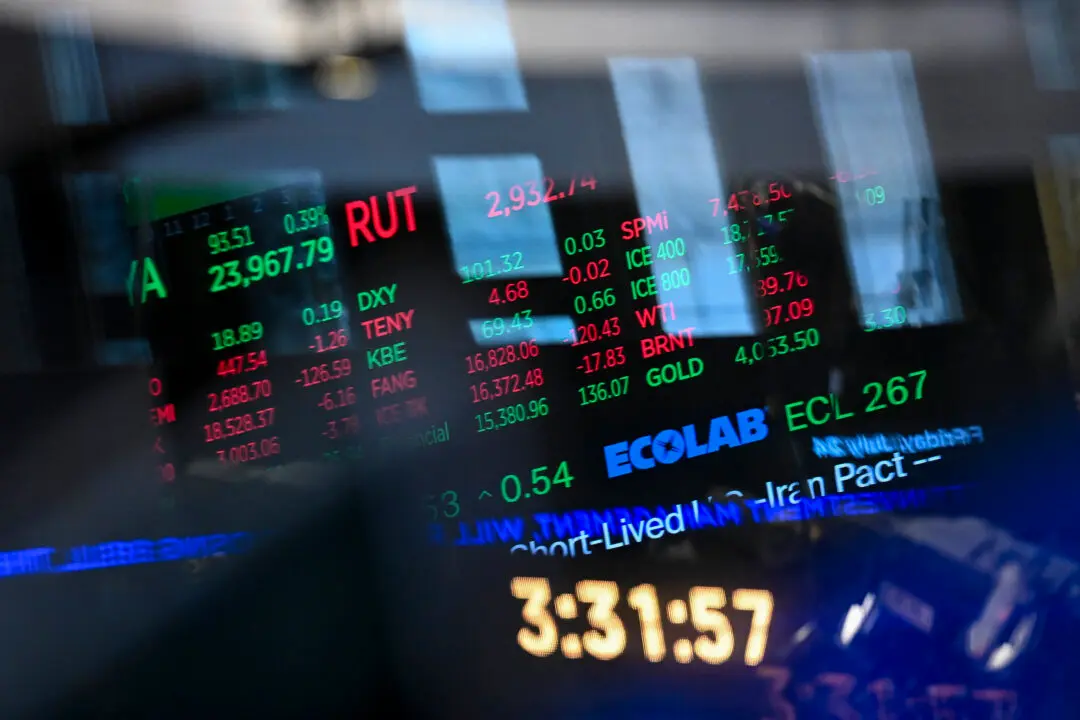
Just last Friday, Aug. 7, the S&P 500 closed at a record high, while the Dow Jones Industrial Average was also at record levels. Yet beneath those headline numbers, the market was telling a very different story. Some individual AI and semiconductor stocks had suffered corrections approaching 50 percent from their highs, a striking reminder that a record-setting index can hide enormous volatility underneath the surface.
That divergence should make every investor stop and think. The market can be making new highs while individual investors are experiencing very painful losses. A rising S&P 500 does not mean every stock is rising. In fact, the performance of the major indexes can sometimes conceal just how violently certain sectors and individual companies are moving.
For the super-conservative investor, this is precisely why position sizing, diversification, and rebalancing matter. You don’t have to predict which AI company will win. You don’t have to predict when semiconductor stocks will recover. And you certainly don’t want your financial future to depend on getting every quarterly earnings report right.
The South Korean Warning
Some South Korean retail investors found themselves caught in an extraordinary period of volatility in the country’s semiconductor-heavy stock market. The wild swings were amplified by leveraged exchange-traded products, prompting regulators to take action against some of the more aggressive leveraged ETF structures. The country’s Financial Services Commission announced measures including suspending new listings of single-stock leveraged ETFs and raising the minimum deposit requirement for certain products.The episode was a powerful reminder of what happens when leverage meets volatility. And it raises a question that every investor should ask before the next storm arrives: How much risk can you take and still sleep at night?

The 25-Year-Old AI Hedge Fund Manager
Leopold Aschenbrenner became one of the best-known young voices in artificial intelligence after working as a researcher at OpenAI and publishing his influential Situational Awareness essay. His central thesis was extraordinarily bullish on AI.Artificial intelligence would require enormous computing power. Computing power would require chips. Chips would require memory. AI data centers would require electricity, networking equipment, and massive infrastructure investment.
When Conviction Meets Leverage
The problem with leverage is that your investment thesis can remain intact while your position becomes unsustainable. That distinction is crucial. Imagine believing that AI will transform the world over the next decade. You may be completely right. But if your portfolio falls 30 percent this month and your lender demands additional collateral, your correct 10-year thesis may not matter.‘Eaten Alive’ by Citadel
Then came one of the most remarkable twists. Reuters reported that Citadel purchased most of Situational Awareness’s public stock holdings after the AI-related selloff. In colorful Wall Street language, one could say that the young AI investor was “eaten alive” by Citadel.Quarterly Earnings Make the Game Even Harder
High-flying AI and semiconductor stocks face another problem: expectations. A company can report outstanding earnings and still see its stock price fall. Suppose investors expect revenue growth of 30 percent. The company reports 25 percent. Twenty-five percent growth would be excellent under ordinary circumstances. But if the stock was priced for 30 percent, the market may interpret the result as disappointment.What Does a Super-Conservative Investor With $1 Million Do?
Now let’s consider a completely different investor. Suppose someone has $1 million, and that $1 million represents virtually their entire life savings. They are not running a hedge fund. They are not trying to beat the S&P 500 every quarter. They cannot afford a catastrophic loss.- 35 percent—Treasury bills and cash equivalents: $350,000
- 25 percent—High-quality Treasuries and investment-grade bonds: $250,000
- 20 percent—Broad U.S. equities: $200,000
- 10 percent—International diversified equities: $100,000
- 5 percent—Defensive/value equities: $50,000
- 2 percent—AI, semiconductor or individual-stock exposure: $20,000
- 3 percent—Hard assets such as gold: $30,000
Position Sizing Is the First Line of Defense
Suppose the investor puts 2 percent of the portfolio into semiconductor stocks. If that position falls 50 percent, the damage to the total portfolio is approximately 1 percent. That’s painful. But it’s survivable.Now suppose the investor puts 40 percent into semiconductors. The same 50 percent decline produces a 20 percent loss for the entire portfolio. The underlying stocks haven’t changed. The AI thesis hasn’t necessarily changed. The position size changed. This is why conservative investors ask a different question.
Cash Is Not Dead Money
During a bull market, cash can look like wasted opportunity. But cash provides something incredibly valuable: time.Treasury bills and other highly liquid assets allow an investor to meet expenses without selling stocks during a crash. They also provide dry powder. If the market falls sharply, the investor with liquidity can reassess and potentially buy. The leveraged investor may be doing the opposite since, he may be receiving a margin call.
The Calendar Is Changing
There is another reason to review risk as we move through August. Historically, August through October has tended to be a weaker and more volatile period for U.S. equities, with September having the weakest average performance among the major months.But the broader seasonal pattern is even more interesting. Historically, November through April has been the stronger six-month period for U.S. stocks. Long-term S&P 500 data show substantially stronger average performance during November–April than during May–October.
Fidelity Investments, the Boston-based financial-services and mutual-fund giant, has also highlighted this historical pattern in its long-term market research, noting that the S&P 500 has historically produced significantly stronger average returns during the November-through-April period than during May-through-October.
That does not mean investors should mechanically sell in May and buy on Nov. 1. Seasonality is a tendency, not a forecast. Interest rates, inflation, corporate earnings, geopolitics, and valuations can overwhelm seasonal patterns. But for the super-conservative investor, August and September can provide an excellent opportunity to do something very unexciting:
What Kind of Return Should We Expect?
A super-conservative portfolio is not designed to produce the spectacular returns of a concentrated AI portfolio during a bull market. A reasonable long-term nominal planning range might be around 4–6 percent annually, although actual returns can vary significantly from year to year.There is no guarantee. Some years could be negative. Other years could be considerably better. But consider the mathematics of losses.
A portfolio that falls 10 percent needs an 11.1 percent gain to recover. A portfolio that falls 20 percent needs a 25 percent gain. A portfolio that falls 30 percent needs approximately a 42.9 percent gain. A portfolio that falls 50 percent needs a 100 percent gain. This is why capital preservation matters.
The Storm Will Come
Nobody knows exactly when. It could come through inflation. A recession. Geopolitical conflict. A semiconductor glut. Disappointing AI earnings. A sudden change in interest rates. Or something nobody currently expects.The South Korean retail-investor episode demonstrates how leverage can magnify losses. The Situational Awareness episode demonstrates that even highly intelligent and sophisticated investors can be vulnerable when concentration and leverage collide with volatility.
And Citadel’s role demonstrates the other side of the equation. When someone is forced to sell, someone with liquidity can become the buyer, and at a distress-sale price. That is the ultimate advantage of a defensive portfolio. You don’t need to predict the storm. You don’t need to know which semiconductor company will win. You don’t need to know whether AI is a bubble. You simply need to make sure that when the storm arrives, you are not the person being forced to sell.
Because the objective of a super-conservative investor is not to win every market. It is to remain standing when the market has finished testing everyone. Survival is not a consolation prize. Survival is the strategy.