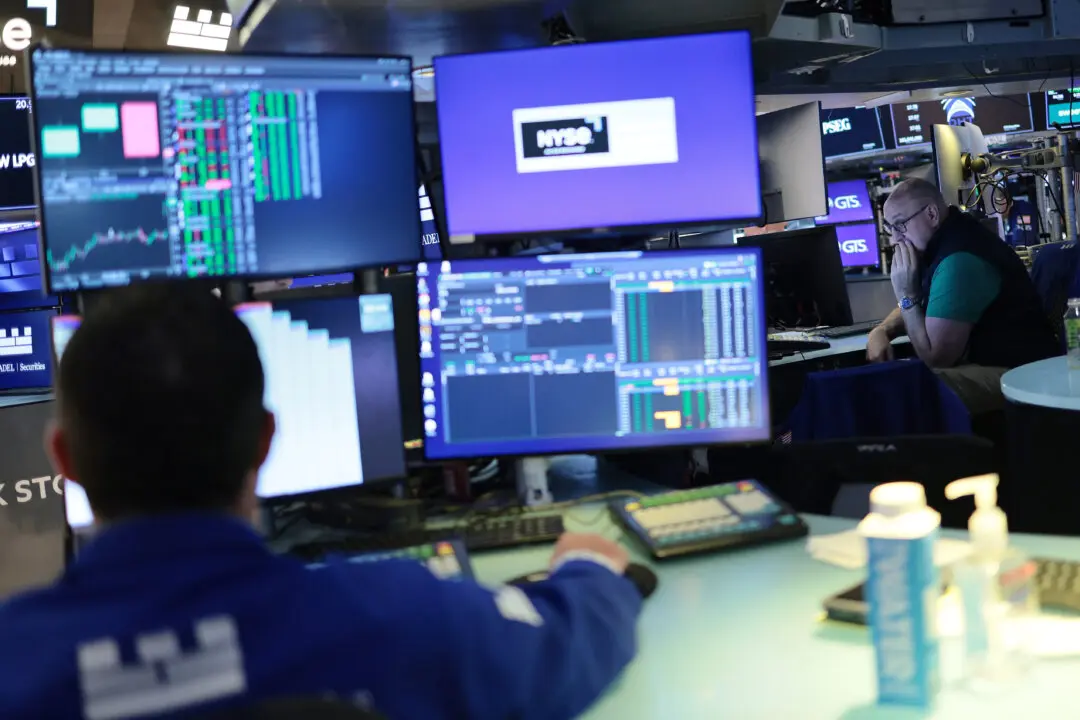
The stock market has a remarkable ability to humble even the smartest investors.
Over the years, I have met some exceptionally bright traders, portfolio managers, hedge fund managers, and analysts. Many possess degrees from top universities, sophisticated valuation models, and decades of market experience. Yet some of these same individuals have suffered devastating losses in markets that appeared irrational and disconnected from traditional valuation methods.
The events of 2026 provide a powerful reminder that intelligence alone is not enough to succeed in investing. When SpaceX (SPCX) launched what many have described as the largest initial public offering (IPO) in human history, the company priced its shares at $135 per share. On its first day of trading on Nasdaq on June 12, the stock opened at $150 and closed at $160.95, representing a gain of approximately 19.2 percent.
That closing price gave SpaceX an astonishing market capitalization of approximately $2.1 trillion. What made the performance even more remarkable was that U.S. regulators restricted participation by Hong Kong and mainland Chinese investors in the IPO. Despite the absence of these large pools of capital, investor demand remained extraordinarily strong.
A first-day gain approaching 20 percent is often viewed as a benchmark for a “hot” IPO. It reflects strong institutional demand and a market willing to pay a premium for future growth. At the same time, investors have witnessed one of the most spectacular stock market rallies in recent memory. Sandisk (SNDK), which was spun off from Western Digital Corp. (WDC) in 2025, traded at about $46 per share roughly one year ago. At the time of writing, the stock trades at more than $2,100.


That represents a gain of more than 40 times, or 4,000 percent, within a single year. Such gains are enough to make investors feel they are missing out on easy money.
Don’t Short the Market When Expectations Become Extreme
One of the most dangerous mistakes investors can make is to short-sell stocks simply because they appear overvalued. I know discretionary hedge fund traders (they make their own decisions) who have “lost it big” during powerful bull markets.The logic behind many short positions is understandable. Investors see stocks such as Sandisk, Micron Technology, and other technology companies trading at valuations that appear difficult to justify using conventional metrics. The temptation is to conclude that prices must eventually collapse. The problem is that markets often do not move in line with traditional valuation models in the short term.
A stock that looks expensive can become even more expensive. A stock that appears absurdly valued can become even more absurdly valued. Momentum, liquidity, investor enthusiasm, and the fear of missing out can overwhelm fundamentals for extended periods.
A good example occurred on June 18. Intel (INTC) stock soared by more than 10 percent after President Donald Trump posted on Truth Social that Apple (AAPL) had agreed to work with the chipmaker to manufacture its processors. The market immediately embraced the news.
For years, many investors had viewed Intel as a struggling legacy semiconductor company. Suddenly, the prospect of a strategic partnership with Apple dramatically changed investor sentiment. Short sellers who were betting against Intel found themselves caught on the wrong side of a powerful rally.
However, investors should also remember another important market principle: Buy the rumor, sell the news.
Sometimes a stock rallies sharply before an announcement because expectations have already been built into the share price. When the actual news arrives, investors who bought earlier may take profits, resulting in a decline despite seemingly positive developments. Markets often react not to the news itself but to whether the news exceeds expectations. This is why timing matters in certain trading strategies.
Ride the Trend, but Understand the Fundamentals
While blindly shorting a market can be dangerous, blindly chasing momentum can be equally hazardous. The best investors understand both the trend and the underlying business fundamentals.SpaceX provides a fascinating example. At its current valuation, some analysts argue that portions of the company effectively trade at an “infinite P/E ratio.” In practical terms, it could take investors a very long time to recover their investment through current earnings unless revenue and profitability increase dramatically.
To understand whether SpaceX deserves its valuation, investors should examine its three major business units. The first is its space division. This segment includes launch services, reusable rocket technology, government contracts, satellite deployment, and long-term ambitions involving lunar and Mars exploration. Investors are effectively betting that SpaceX could become the dominant transportation and logistics platform for the space economy.
The second division is Starlink. Starlink has already established itself as a global satellite internet provider. The business enjoys recurring subscription revenue and has significant expansion opportunities worldwide. If Starlink continues growing, it could eventually become one of the world’s most valuable telecommunications networks.
The third division is artificial intelligence (AI). This includes Grok, X, and large-scale GPU computing infrastructure. Investors are assigning tremendous value to the possibility that these assets become major participants in the global AI ecosystem.
Whether these businesses ultimately justify today’s valuation remains an open question. Investors should remember that after the lock-up period expires and the excitement surrounding the IPO fades, markets often return to focusing on fundamentals: revenue growth, profit margins, cash flow, earnings, competitive advantages, etc. These factors ultimately determine long-term shareholder returns.
Before making SpaceX a major portfolio holding, investors should conduct their own due diligence and determine whether it belongs as a core position or merely a speculative position representing less than 0.5 percent of total assets. History offers many cautionary examples.
Consider Virgin Galactic (SPCE), the space tourism company founded by billionaire entrepreneur Richard Branson. A few years ago, commercial space tourism captured the imagination of investors worldwide. Enthusiasm was enormous, and many investors purchased shares based on exciting headlines and futuristic visions. Today, the stock has lost approximately 92 percent of its value from its peak. Many retail investors who bought near the top saw years of savings evaporate.
For Most Investors, Index Funds Remain the Best Approach
Despite all the excitement surrounding individual stocks, the evidence remains overwhelmingly clear. For most investors, broad-based index funds continue to be the best approach.The reason is simple. Very few investors consistently outperform the market over long periods. Even professional fund managers struggle to beat major indices after accounting for fees, taxes, trading costs, and emotional decision-making. Index investing removes many of these problems. Instead of trying to identify the next Sandisk or the next SpaceX, investors gain exposure to hundreds or thousands of companies simultaneously.
Some holdings will fail. Some will underperform. A few may become the next generation of market leaders. The investor benefits from overall economic growth without having to predict individual winners.
Asset Allocation Is More Important Than Stock Picking
Many investors spend enormous amounts of time searching for the perfect stock. In reality, asset allocation often matters far more than stock selection. As investors approach retirement, capital preservation becomes increasingly important. This is not the stage of life to “bet the farm” on a handful of technology stocks.Unfortunately, many individual traders lack a disciplined risk-management framework. They become overly concentrated in one sector. They use excessive leverage. They chase performance after a rally has already occurred. They ignore position sizing. When markets reverse, losses can become devastating.
A well-designed portfolio should reflect an investor’s age, financial objectives, income needs, and risk tolerance. That may include a combination of equities, bonds, cash, real estate, and alternative investments. The objective is not to maximize returns at all costs.
The objective is to achieve sustainable long-term returns while protecting capital during inevitable market downturns. The stock market will always produce exciting stories. There will always be another SpaceX. Another Sandisk. Another revolutionary technology. Another seemingly unstoppable rally.
The challenge is not finding opportunities. The challenge is managing risk. The smartest investor sometimes loses it big in trading—not because they lack intelligence, but because they underestimate the power of market psychology, concentration risk, and poor risk management.
Successful investing is not about getting rich quickly. It is about staying in the game long enough to let compounding work in your favor. And sometimes, preserving capital is the smartest investment decision of all.