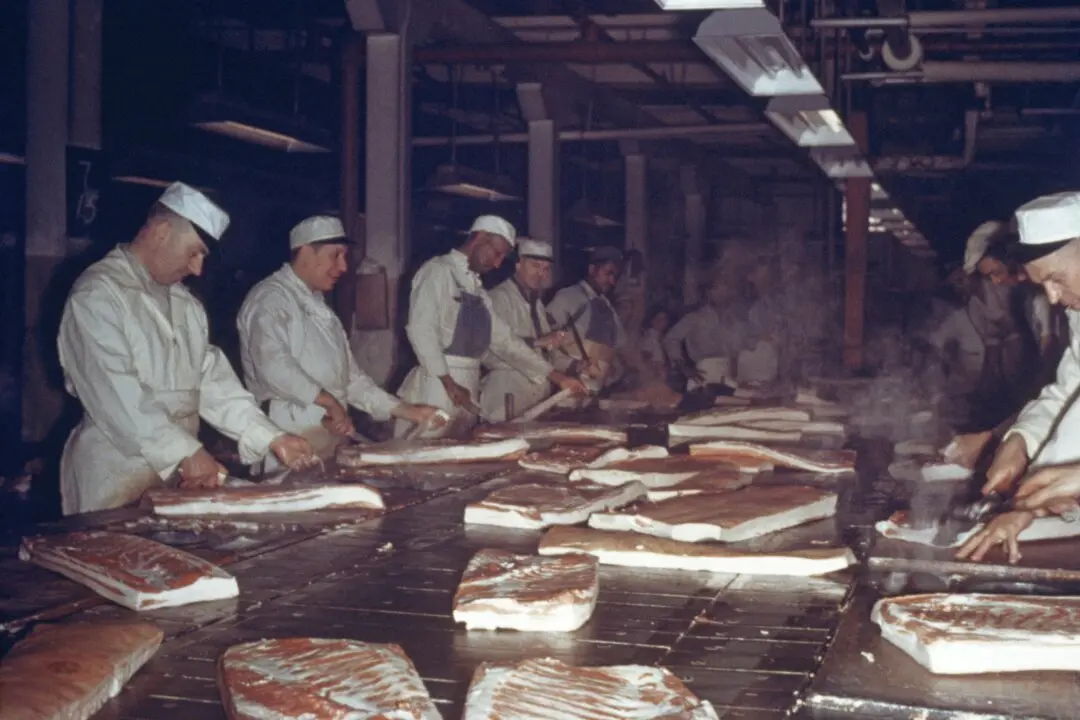
You have likely heard this expression: “You are what you eat.” I never understood it until my first three-day fast. That taught me that it is true. I’m more careful than ever about what goes into the piehole and more aware than ever about the grave problems with the U.S. food supply, which is heavily processed, genetically modified, and inclusive of ingredients never known before in the whole of human history.
Once you see and understand this, it’s hard to go back. The problem is actually fixable, as a drive around any rural area of New England and many other places reveals. We find tremendous small farms everywhere, selling the latest crops and offering a wonderful collection of meats that are closer to nature than almost anything you can get from the supermarket.
Plus, it is a wonderful experience just talking with real farmers and their families. You learn about the troubles, the joys, the finances, and the histories of these wonderful people. Life could be made so much easier for them simply by cutting the tethers that stop them from accessing more markets for their products. Obviously the big corporations oppose this, which is the barrier to change.
However, my topic here is not food but clothing. What if you are what you wear, too? That’s an odd formulation. But it’s what I’m thinking right now because of my new pair of pants.
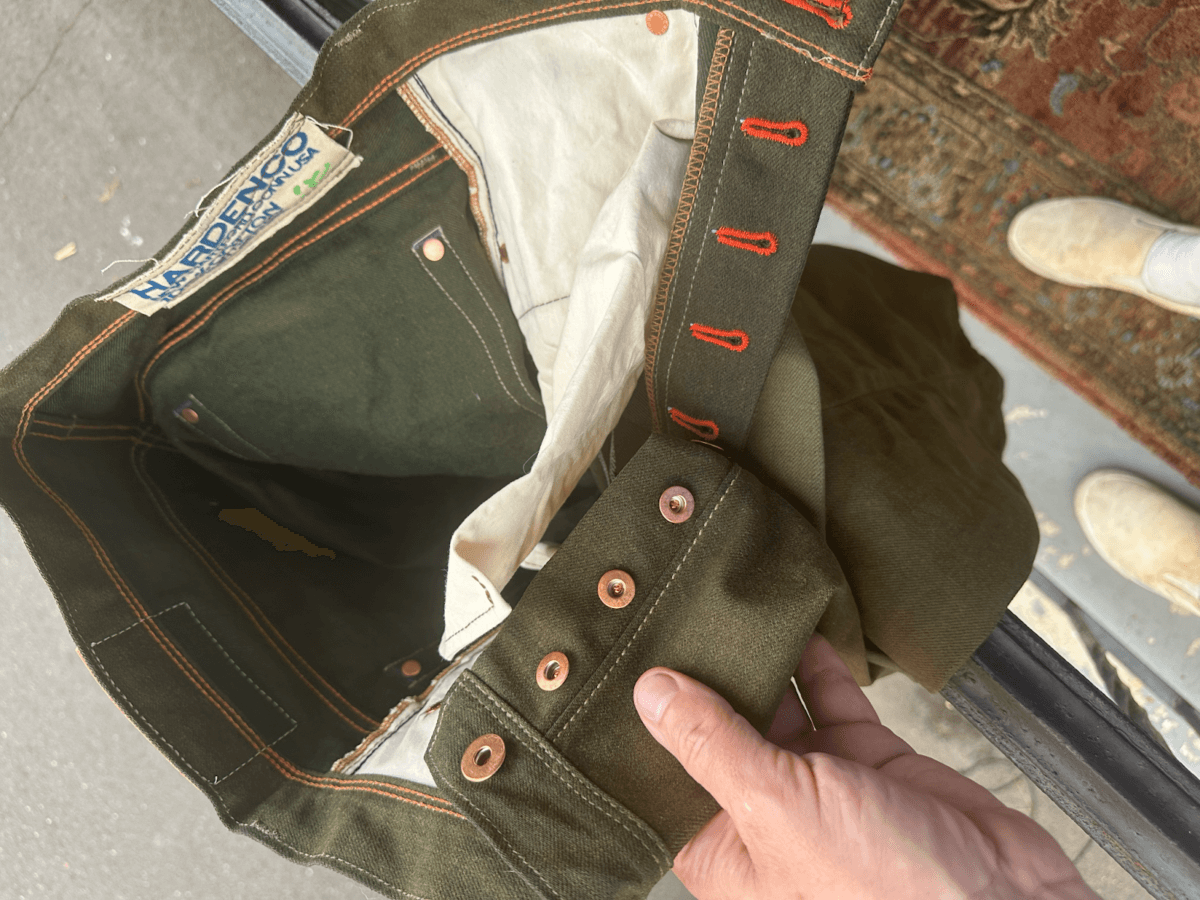
How can a pair of pants achieve the sense that you are living a more authentic life? I’ll try my best to explain. These are jeans, denim, of the classic American sort but with a big difference. They are made in America, cut on a table by hand, and sewn with machines from 1880–1920 with the same kind of threads as the original denim jean. The fabric is sturdy, and the cut is full and looks traditional—like that seen in old family photographs.

These recreations reveal the difference. They have a high waist like trousers from the old days. The fly is not a zipper but buttons. The fabric seems two or three times as thick as any I’ve seen. The inseam was fitted to my legs at the retail shop itself.
The original American denim jean was invented in the 1870s and marketed to miners, cowboys, and railroad workers as lifetime clothing for workers. These jeans incorporated all sorts of innovations for durability. The styles and fabrics and construction of these originals are all gone today, and what we see now are phony versions. They are shoddy, minimalist, and fall apart quickly.
The feeling of wearing my new pair of jeans is security with zero awkwardness. The look is fabulous. I cannot resist thinking that this is precisely how men’s pants are supposed to be. As it turns out, these pants are a rare recreation of 19th-century denim jeans, put together by a man who is a fanatic for American-made clothing of maximum authenticity.
And by the way, they do not look or feel like a costume or a recreation. They feel like they are supposed to feel. And despite the thickness of the fabric, they are not hot. I get why a person would aspire to wear these daily. The company is so certain of its quality that it guarantees repairs for life, if you can believe it.
It’s his singular passion. Fanaticism might be a better word. He can talk about jeans and denim for hours and even days. I watched as he cut and hemmed my pants and observed his virtuosity in operating these 100-year-old machines. Amazing. Yes, he could sell out to the venture capitalists and follow the usual route—indebtedness, loss of equity, decline in quality, mass marketing—and go straight into the gutter with the rest of them. Instead, this tiny business has chosen integrity over riches.
The contrast with anything you can find at any normal store is obvious. Decades ago, the United States lost nearly the whole of its market share in textiles and apparel. Nearly all of it is outsourced today. The reason is, of course, the cost of labor and materials. It simply doesn’t make sense to manufacture things here anymore.
However, the cost is huge. Prices of clothing and shoes have defied inflation for decades now, having fallen in price in real terms. The problem is quality. You have to look hard for natural fabrics: cotton, linen, wool, and silk. If you find them, there is another problem with the construction and fabric quality itself. Then your problems really begin.
I worked in the clothing business as a salesman and buyer for several high-end menswear companies, not chains but the local type that are increasingly rare. This was at the tail-end of the golden years of men’s clothing, just before or as the industry itself came to be outsourced to places hither and beyond. It’s been tragic to watch the downfall.
With the collapse in the quality of men’s clothing has come a loss of generational knowledge on the basics of how to dress. It’s astonishing how little men know about what to wear, how to assess quality, where to get it, or why it matters. Men don’t even know how clothes are supposed to fit.
I loved the clothing business because I felt like I was helping people. I loved selling clothing because I knew for certain that I was making an improvement in people’s lives.
This impulse has never left me. As a result, when I shop in the Goodwill or some other thrift store, I cannot resist the impulse of fitting the men in the store with good clothing. I will take on one customer at a time and work on putting together sharp outfits at a fraction of the price you would pay in retail. Often the quality is far above what you could ever get at a retail store.
I’ve done the same with buying from eBay for friends. Sizing up a person is easy if you have experience in the industry, and so far I’ve never missed on snagging an excellent suit of clothing for a friend at very low prices.
That said, the experience of the denim jeans from Hardenco has introduced me to a new world, namely that of casual clothing, about which I never had any interest. Now I see why. The stuff you get at the store is frankly not worth owning. It looks terrible. The fabrics are shabby. The construction is hideous. It’s good for one season, maybe, and then you throw it away.
And by the way, yes, these jeans are casual by traditional standards. But I can wear them with a white shirt, tie, and blazer and look just great. So in the classic American way, these can be dressed up or down.
To be sure, one can make an argument that the collapse of American clothing is all fine. Maybe people prefer disposable clothing and shoes. In weaker moments, I’ve picked up a pair of shoes at an airport store and watched as they look ever worse with each wear. Then you have to throw them out after a year or so.
It’s the same with my new denim jeans. They prove that it is possible to make and buy quality clothing. The effect on the wearer is oddly indescribable. One afternoon in these pants and you cannot go back to others.
To be sure, you can criticize such items as only available to the elite. Who else pays $450 for a pair of jeans? I get that critique but a couple of points: 1) I’m not sure that they are really that expensive when you consider that you will own them for life, and 2) this is the cost of genuine American-made, high-quality clothing. Just knowing this is a reality check.
How can the system be changed to encourage more of such boutique businesses? The costs of doing business in general need to fall dramatically in the form of compliance, regulations, taxes, and more. End the plot against small businesses by disabling the capacity of the big corporations to rig the game in their favor. This applies to clothing as much as it does to farming, medicine, and every other industry.
In the meantime, there is something we all can do. We can decline to participate in the degradation of everything by being careful about what we buy. Yes, you will pay more, at least at first, and the search costs of finding the right food, clothing, and medicine can be high. Think of it as an adventure. Once you embark upon it, you will see the point, and never go back.