Regulations by government agencies may often be well-intended. A few may even be essential for maintaining safety standards, maintaining environmental quality, and reducing fraud. But the rapid growth of the administrative state interferes with our liberties and hampers our economy.
- Slower economic growth
- Lower per capita income
- Higher prices
- Suppressed job and wage growth
- Proportionately higher compliance costs for smaller businesses
History of Chevron Doctrine
The Chevron doctrine, established in the 1984 Supreme Court case Chevron USA, Inc v. Natural Resources Defense Council, Inc., mandated judicial deference to agency interpretations of ambiguous statutes when those interpretations are “reasonable.” Writing for the majority, Justice John Paul Stevens opined: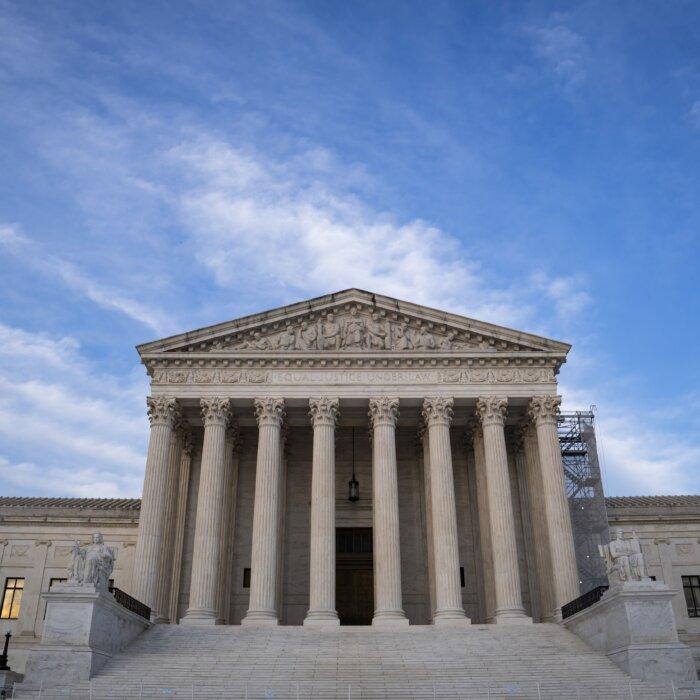
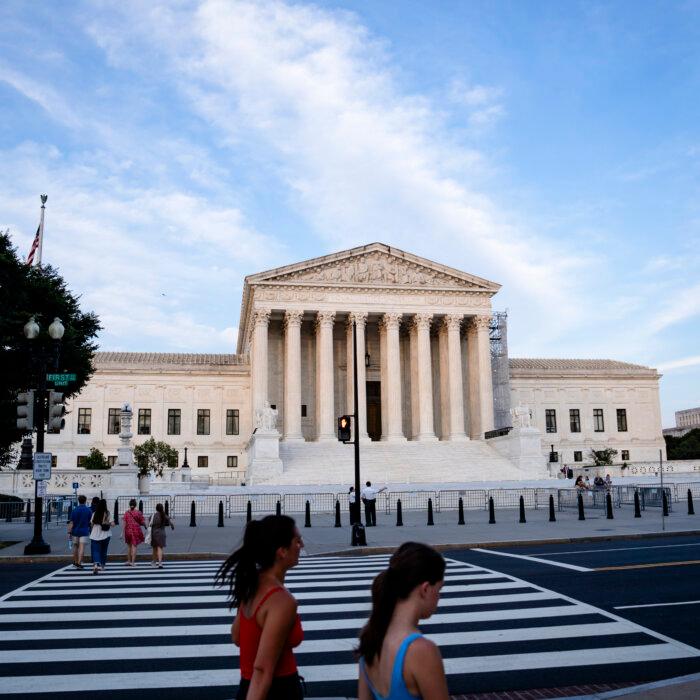
“If the statute is silent or ambiguous with respect to the specific issue, the question for the court is whether the agency’s answer is based on a permissible construction of the statute.”
The intention was to respect agency expertise and to promote consistent application of complex regulations. In practice, that deference severely limited courts’ ability to keep agencies’ rulemaking in check.
The original Chevron decision was decided in a 6–3 split. In the majority were Stevens, Chief Justice Warren Burger, and Justices William Brennan Jr., Byron White, Harry Blackmun, and Lewis Powell Jr. In the dissent were Justices Thurgood Marshall, William Rehnquist, and Sandra Day O’Connor. After Chevron, agencies were able to exercise both executive and quasi-judicial power in enforcing and in interpreting their own rules, often with their own courts.
- Securities and Exchange Commission
- Department of Health and Human Services
- Environmental Protection Agency
- National Labor Relations Board
- Social Security Administration
- Department of Justice
The Loper Decision
Exactly 40 years later (June 2024), in another 6–3 decision, the Supreme Court overturned the Chevron doctrine in Loper Bright Enterprises v. Raimondo, with Chief Justice John Roberts writing the majority opinion. The balance of power between courts and administrative agencies was restored, with courts being granted greater authority and independence to interpret statutes. The justices’ alignment in this case was: Roberts and Justices Clarence Thomas, Neil Gorsuch, Brett Kavanaugh, Amy Coney Barrett, and Samuel Alito in the majority, and Justices Elena Kagan, Sonia Sotomayor, and Ketanji Brown Jackson in the dissent.The main legal question involves the meaning of “ambiguity” in congressional statutes. Although courts could still defer to executive agencies on occasion, the court system was presumed to have “special competence” interpreting what the law requires when congressional statutes are ambiguous.
The Loper decision stemmed from a challenge by herring fishermen against a National Marine Fisheries Service (NMFS) rule requiring industry-funded monitoring under the Magnuson-Stevens Act. The fishermen argued that the statute did not explicitly authorize NMFS to impose this specific regulatory burden, estimated at about $700 per day for Loper Bright Enterprises. The Supreme Court’s ruling established that courts can now independently interpret ambiguous statutes, potentially limiting agencies’ ability to impose regulations without clear congressional authorization. Invalidating regulatory overreach and discouraging future tenuous regulations would reduce arbitrary rules and compliance costs, starting with $700 per day, per fishing boat.
- Recordkeeping, monitoring, and reporting systems
- Compliance officers and staff hours to manage reporting obligations
- Audits and inspections
- Equipment and software required to monitor, log, and report regulated activities
- Salaries for lawyers, or retainers and man-hours, to interpret, navigate, or challenge regulations
- Consulting fees for environmental impact studies, tax evaluation, and other mandatory assessments
- Licensing and permit application fees, registration, and certification costs
- Changes to equipment (OSHA, emissions), product design/labeling (FDA, FTC), launch/service delays, recalls, and adjustments due to regulatory review.
- Insurance premiums for regulatory liability coverage and bonds for fines or penalties
- Opportunity costs: forgone growth, expanded overhead costs
Economic Implications
While precise cost-saving estimates are hard to come by, Loper will lead to increased litigation that will gradually reduce regulatory burdens. Pending cases include Corner Post, Inc. v. United States Postal Service, which concerns time limits on challenging agency actions, and Securities and Exchange Commission v. Jarkesy, which addresses the SEC’s authority to adjudicate cases internally. In its own administrative court, before an administrative law judge, the SEC wins approximately 90 percent of its cases, compared with only about 69 percent in federal court.Loper may reduce costs for health care companies regulated by the FDA or HHS, because rules on laboratory-developed tests or drug exclusivity currently cost companies millions in compliance or litigation costs. Loper challenges against the IRS or Department of Housing and Urban Development regulations could simplify compliance for affordable housing or renewable energy projects, encouraging those to flourish rather than be strangled by legal and administrative red tape.
Conclusion
Deregulation has been an important pillar of pro-growth economic agendas. But there are limits to how much a presidential administration can deregulate from inside the executive branch. The end of Chevron opened a whole new front in the fight against administrative overreach. Regulated businesses and advocacy groups can now challenge regulations that overstep Congress’s initial intent, even for small issues such as herring boat inspection, which may never be on the administration’s radar.One can hope that Loper will return more power to the people, who can then hold their elected representatives accountable for the content—and the clarity—of the laws they pass.
Courts now have the opportunity to evaluate whether agency rules align with their congressional mandates. Given that there are tens of thousands of regulations on the books, the process of reevaluating regulations will take a long time. Just a year after the Chevron doctrine was overturned, it is still unclear how much the regulatory landscape will shift. But now that courts can revisit and strike down the most abusive and costly regulations promulgated by the administrative state, the economic outlook in the United States looks more favorable toward growth, productivity, and wealth creation.