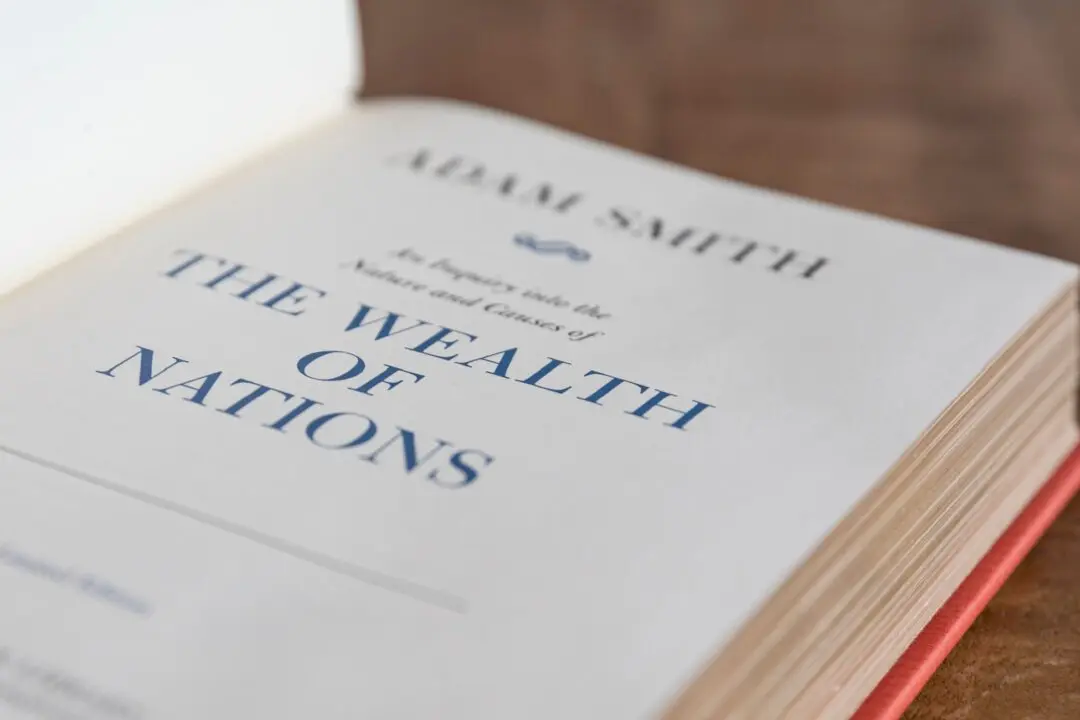
In chapter 10 of “The Wealth of Nations,” Adam Smith dissected the symbiotic relationship between economic inequality and political intervention in the economy. While unhindered competition typically drives markets toward equilibrium—balancing supply and demand to yield maximum efficiency—Smith never indulged in utopian fantasies. He acknowledged that wages diverge from perfect equilibrium because inherent occupational traits dictate labor dynamics:
“... the agreeableness or disagreeableness ... the easiness and cheapness, or the difficulty and expense of learning ... the constancy or inconstancy of employment ... the small or great trust which must be reposed ... [and] the probability or improbability of success in them.”
“Such are the inequalities in the whole of the advantages and disadvantages of the different employments of labor and stock, which the defect of any of the three requisites above-mentioned must occasion, even where there is the most perfect liberty. But the policy of Europe, by not leaving things at perfect liberty, occasions other inequalities of much greater importance.

“It does this chiefly in the three following ways. First, by restraining the competition in some employments to a smaller number than would otherwise be disposed to enter into them; secondly, by increasing it in others beyond what it naturally would be; and, thirdly, by obstructing the free circulation of labor and stock, both from employment to employment and from place to place.”
The institutional failures Smith excoriated—supply restrictions, state-sponsored overproduction, and laws penalizing poor workers—remain rampant today. Modern government intervention sabotages efficiency through the exact same three channels.
As Smith observed, the state triggers massive inequalities by “restraining the competition in some employments to a smaller number than might otherwise be disposed to enter into them.”
“The property which every man has in his own labor, as it is the original foundation of all other property, so it is the most sacred and inviolable. The patrimony of a poor man lies in the strength and dexterity of his hands; and to hinder him from employing this strength and dexterity in what manner he thinks proper without injury to his neighbor, is a plain violation of this most sacred property. It is a manifest encroachment upon the just liberty both of the workman, and of those who might be disposed to employ him. As it hinders the one from working at what he thinks proper, so it hinders the others from employing whom they think proper. To judge whether he is fit to be employed, may surely be trusted to the discretion of the employers whose interest it so much concerns. The affected anxiety of the law-giver lest they should employ an improper person, is evidently as impertinent as it is oppressive.”
In case after case, these aspiring central planners worsen conditions for ordinary people while lining the pockets of politically connected corporations. Modern state interventions are not merely economically paralyzing—they are flagrantly unjust. State actors violate the basic rights of poor laborers, earning the deep moral disapprobation that Smith leveled against the state over two centuries ago.
Misguided policy interventions consistently shackle liberty, distort market signals, and enrich vocal special interests at the expense of the public good. Smith fiercely condemned the overweening conceit of politicians who believe they can manipulate society the way a hand directs pieces on a chessboard.
Two and a half centuries later, Smith’s insights remain a vital diagnostic tool for modern economic malpractice.