Many well-meaning people in our country have confused patriotism with self-congratulation. We tell ourselves that Canada is reasonable, moral, peaceful, respected, and somehow immune from hard realities shaping the world. That may feel patriotic, but in a dangerous era it is becoming a strategic liability.
Real patriotism requires self-awareness. It requires a country to understand its strengths, admit its weaknesses, identify its adversaries, protect its allies, and defend its interests. Canada increasingly struggles with all five.
Ukraine itself should be the lesson. Ukraine wanted closer ties with NATO and the European Union. It received sympathy, funding, weapons, training, and diplomatic support. What it did not receive was direct collective defence. It has still had to fight Russia on Ukrainian soil, largely with Ukrainian blood. Allied support has been essential, but Ukraine proves a hard point Canadians prefer to avoid: partnerships matter, but no country can outsource its own survival.
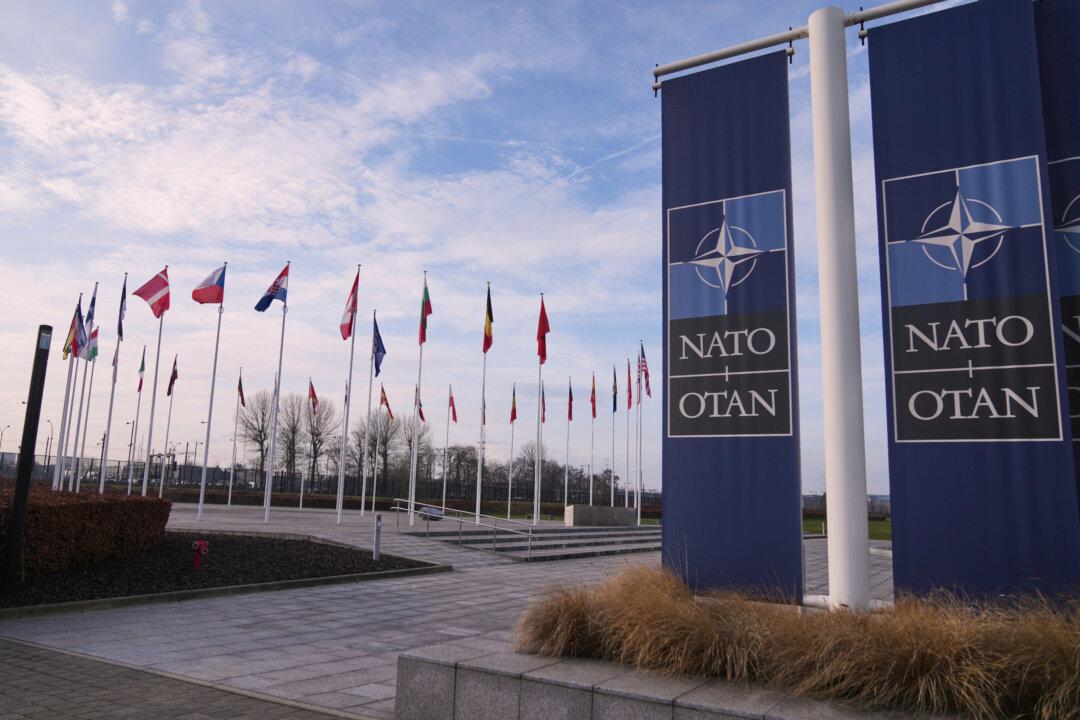
Canada has not absorbed that lesson. We indulge the fantasy that if Canada ever faced a serious defensive crisis, the United Kingdom or Europe would rush to our rescue. This is immature. Europe is struggling to defend Europe. The United Kingdom is rebuilding its own defence posture. NATO matters, but NATO is not a substitute for national capacity.

The United States is not a perfect ally. Washington can be difficult, transactional, aggressive, and self-interested. Tariffs, threats, and hardball negotiations should be answered firmly. But treating the United States as the principal threat to Canadian sovereignty is irresponsible when measured against the world as it actually exists.
The United States is Canada’s indispensable security, intelligence, defence, and trade partner—our continental shield. Canada should seek greater independence. But independence is not achieved by insulting the one ally whose geography, military power, intelligence architecture, and market access reinforce Canadian security. Independence is achieved by building strength.
This is where Canadian ego gets in the way of self-awareness. We want to feel morally superior to the United States while remaining dependent on it. We want to diversify away from the U.S. market while selling Canada as a gateway into that same market. We want to posture as sovereign while failing to defend the systems sovereignty requires.
Even worse, Canada sometimes treats adversarial states as strategic opportunities while treating allied pressure as a strategic embarrassment.
The issue is not engagement. Canada must engage with difficult states. The issue is strategic blindness. A country can trade with China without pretending Beijing is simply another normal partner. A country can communicate with Chinese officials without signing opaque arrangements that raise sovereignty, intelligence, and diaspora-safety concerns. A country can diversify trade without creating new dependencies on a state already identified as a foreign-interference and cyber threat.
That matters because Canada’s weakness is not only Canada’s problem. It is a continental problem. If hostile states or criminal networks exploit Canadian ports, borders, companies, universities, political networks, or financial systems, they are exploiting North America.
Misplaced patriotism tells Canadians that criticism of Canadian weakness is unpatriotic, that American concern is bullying, that talking about foreign interference risks racism, that talking about fentanyl risks moral panic, that talking about defence spending risks militarism, and that talking about economic security risks protectionism.
A serious Canada would understand that defending sovereignty requires more than speeches. It requires military capacity, border integrity, Arctic infrastructure, intelligence reform, foreign-agent transparency, beneficial-ownership enforcement, anti-money-laundering prosecutions, cyber resilience, port security, research security, and consequences for hostile activity.
Canada does not need to become American. It does not need to surrender its independence. It does not need to abandon trade diversification or diplomacy. But it does need to stop confusing reflexive anti-Americanism with strategic maturity. It needs to stop treating authoritarian states as commercial solutions while treating allied pressure as an insult.
Real patriotism is not the refusal to criticize Canada, it is the courage to tell Canadians the truth: we are exposed and complacent, and prevented by ego from seeing both.
Canada is worth defending. But it will not be defended by nostalgia, moral vanity, or slogans. Sovereignty is not something we possess automatically. It is something we must earn, protect, and exercise.