What is the state, from whence does it come, and who controls it? One might suppose that these questions have obvious answers. In reality, the answer is elusive, not easily identified even by those who are part of the system.
Trump learned this in his first term. He naturally assumed that the president would be in charge, at least as regards the executive branch. He found out otherwise when the agencies worked closely with the media to undermine him at every step. After a four-year hiatus, he came back with a real determination to be the president.
It’s easier said than done. Cabinet-level appointees frequently complain in private that they face intractable bureaucracies with all of the institutional knowledge. They often feel like stand-ins or mannequins. Trump is the unusual president who has even attempted to be in charge. Most are just happy for the emoluments of office and the plaudits that come with it.
In any case, anyone who reaches the heights in any state apparatus discovers that it is something different from anything described in the textbooks.

Locke was the author of the template of what later became the Declaration of Independence. Here we find the view that the state is the “necessary evil,” a perspective largely accepted as true by America’s Founding Fathers.
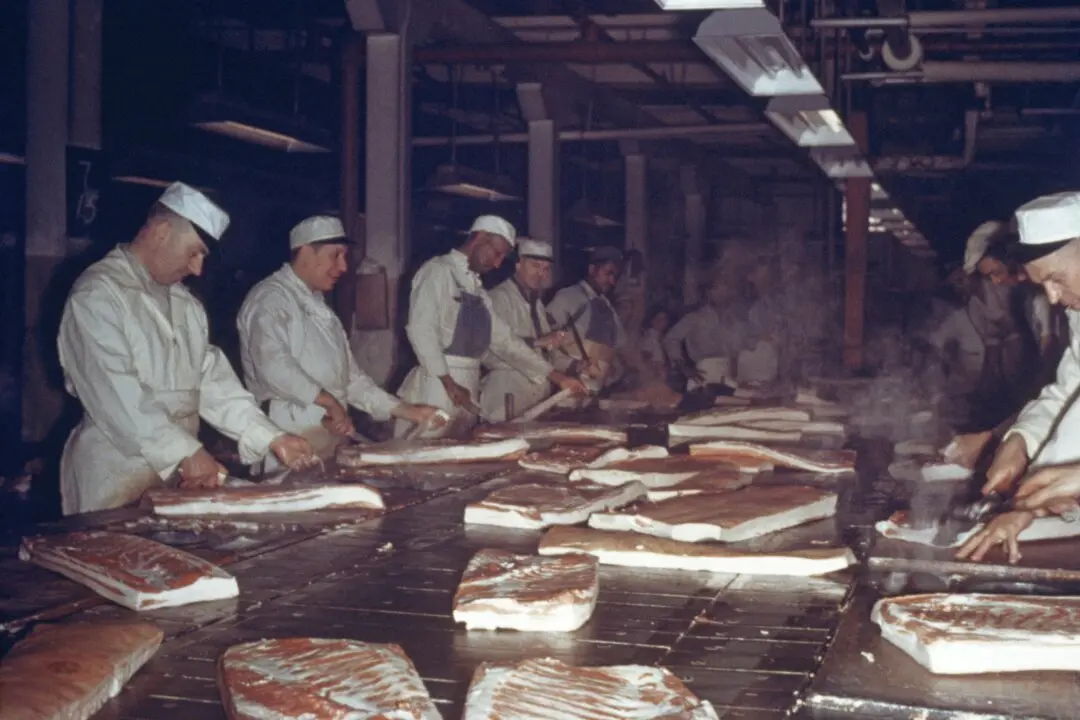
In his view, it’s not just any elites that form the drive of state policy, but industrial elites in particular. Taking the history of modern industrialism, he found dominant industries at the heart of every agency. The Safe Food and Drug Act of 1906 was formed by industry seeking partnership with power to throttle market competition. The Federal Reserve is a cartel of banks. The Commerce Department is a product of industrial organizing, too, as is the Department of Labor.
From this literature, we gain a picture of the state that we have inherited in our time. Indeed, no living person has known any other. All slogans of democracy and freedom aside, the state as we know it consists of an aspirational cartel of dominant industrial interests in every sector that are engaged in ongoing conspiracies against a free and competitive marketplace. We don’t normally think of the state as this, but this seems like the most realistic conception of what it actually is and does.
Consider the Food and Drug Administration. Its driving force is industry, which pays half of its bills and shares in intellectual property rights with industry itself and its sister and parent agencies of the National Institutes of Health, Centers for Disease Control and Prevention, and Department of Health and Human Services. Pharma is by far the biggest influence in the operation of these agencies, which is why Robert F. Kennedy Jr., a sworn enemy of pharma, has such enormous trouble in managing them and redirecting their priorities. This should not be shocking considering that this was its very origin: industry seeking legitimacy and protection from the wiles of consumer sovereignty.
That same drama affects all attempts of reform at the Federal Reserve (banks), Department of Agriculture (Big Ag), Housing and Urban Development (housing developers), the Department of Education (teachers’ unions), the Department of Transportation (trains and autos), and the Department of Defense/War (munitions manufacturers). Everywhere you look in Washington today, you find the hand of mighty industrial players. It’s this way in most parts of the world.
If this is the state in our own times, what about the past? Does the model pertain? Perhaps if we speak of the Catholic Church as an industry, we can see the same forces at work in the Middle Ages. If we think of military establishments as industries, we gain a different outlook on what drove ancient states in Rome and Athens, as well.
How does this tactile and slightly dark outlook at the genesis and functioning of the state fit with older theories? It puts to rest the idealism of Plato and Hegel, brings an element of realism of Hobbes and Locke, adds substance to Marx and Rothbard, and puts some flesh on the bones of theories of de Jouvenel and Hoppe.
So far as we can tell, it’s actually the most accurate description of the reality of modern statism available. And this further underscores the enormous challenge of any temporary managers who purport to be draining the swamp, eliminating agency capture, or otherwise curbing corruption. The trouble is that the whole of the state apparatus is in fact the swamp. Capture is of the essence. Corruption is baked into state operations.
None of this means that reform is not worth trying. But it’s crucial to understand that none of the machinery of state is set up to be adaptable to reformers and democratic pressure. All momentum is in the opposite direction. Already what has happened in Trump 2.0, even with the limited successes we’ve seen, is the anomaly. It will take a miracle to make further dents, but it can happen.
Hume wrote: “Nothing appears more surprising to those, who consider human affairs with a philosophical eye, than the easiness with which the many are governed by the few; and the implicit submission, with which men resign their own sentiments and passions to those of their rulers. When we enquire by what means this wonder is effected, we shall find, that, as Force is always on the side of the governed, the governors have nothing to support them but opinion. It is therefore, on opinion only that government is founded; and this maxim extends to the most despotic and most military governments, as well as to the most free and most popular.”
Changing the public mind: This is the essential task.