The past five years have afforded vast time and opportunity to stream movies and shows at home. It’s a luxury but also can be frustrating, even depressing. Many shows of our times have a manipulative feel—not all, but it is hard to know in advance what you will get. We all have our favorites and our loathings, but at some point, we run out of options.
I’m not sure about you, but I’ve come to assume that anything new is not worth watching. The studios are overrun with political rules and biases, diversity mandates, messaging requirements, and hidden and not-so-hidden agendas. They tend to valorize the features of contemporary culture that I find sickening and seem to be prodding viewers into participating in making everything worse.
I would rather read an old book.
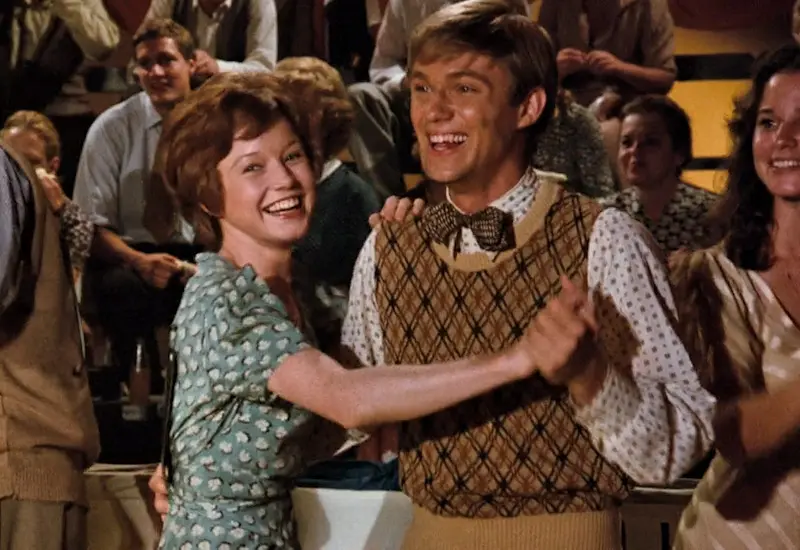
That persistent weariness has changed now that I’ve rediscovered a show I vaguely remember from childhood. It’s called “The Waltons.” It ran from 1972 to 1981. It recreates the life of a large family living in the Blue Ridge Mountains of Virginia during the Great Depression. It is Mom and Dad and his two parents, plus seven children, dealing with economic privation, changing times, and the normal ebb and flow of life from joy to tragedy and back again.
My own memories of the show were that it had become a central moment in the week for my family, Saturday evening, as I recall. My memory is of a very serious and very adult show that my parents let me watch for whatever reason, probably because it seemed to portray the right values. Still, it struck this young child as quite profound, even if I did not understand it very well.
Yes, it is fiction, but there is something incredibly real about the show. Well, maybe not entirely: I suspect that raising seven kids would present challenges beyond those that the show reveals. For example, every kid is more or less well adjusted, earnest, and tacking toward wanting to be good and wholesome people. What are the odds of that today? Plus, the house always seems to be neat and tidy. How plausible is that?
Regardless, what we have here can be described as good-old-fashioned Americana, a presentation of one extended family dealing with the gritty and granular while keeping high ideals of the old-world sort. That is, the show extols personal responsibility, frugality, sacrifice for others, charity, compassion, discipline, hard work, and the attitude of keeping one’s chin up regardless of how difficult life can be.
It seems nearly hard to believe that such a show was ever made. It is not overtly religious, but Bible reading was just part of life. That said, you don’t really get sermons here or didactic lessons in how to be. We are just presented with fascinating stories of what seems to be a realistic look at the times.
There are economics lessons throughout. The No. 1 lesson is tradeoffs. The kids want to go to the carnival that is traveling through town, but Grandma broke her glasses and cannot see to do her crochet. The kids decide to forgo the carnival and put together the money to get her glasses, while the other kids in the town make fun of them because they weren’t there.
The payoff is doing the right thing, plus when some circus performers are abandoned by their racketeering manager, they show up at the Walton home to do a private performance. The charity and sacrifice pays off, even as Grandma gets her glasses.
In another episode, the axle on the truck breaks and will cost $9 to fix, so the father has to sell his newborn calf to a neighbor. The heifer is sad to have her son taken away and cries all night, upsetting the children. They put together enough money to buy the calf back, but only after selling a quilt that Mom spent all summer making. Still, it’s not enough money, so the kids agree to work at the owners’ farm every day following school to make up the difference.
This constant back and forth between getting what you want and having the resources is something we all face daily but rarely put on display in such a vivid way. The family is certainly very poor, but they live very well, made rich by family, community, good values, frugality, hard work, and life aspirations that are centered on doing the right thing when it matters most.
Thinking back on my first experience watching this when I was very young, my major impression was that these people are very poor but happy. I recall thinking how much nicer the home in which I was raised was and how much more food we had than they had. The clothing issue was a big deal when I was a kid, with everyone judging everyone else. But the Waltons lived entirely on hand-me-downs and handmade clothes. As for shoes, they were lucky to find a pair in the pile that fit.
What viewers are shown here is poverty by any standard, but there is not a hint of victimology about it, much less a class consciousness driving some political agenda. The response of the Waltons to hard economic times is simply never to waste anything, save as much as you can, and do without for the most part. Still, they were very happy because they had each other.
The series was made at a time of rich nostalgia leading to the Bicentennial in 1976. This was following a rough decade of assassinations, civic unrest, antiwar riots, and demographic upheaval. People had a longing to know what the core of America was all about. This series showed that exactly in ways are indeed uniquely American.
Why does this matter? T.S. Elliot’s “Notes Toward a Definition of Culture” presents a top-down model of social norms, manners, and aspirations as defined by elites in society, royals in particular. It’s a pyramid structure with language and values defined, presented, and guarded by a stable source from the top. That model perhaps works in old Europe as a purely descriptive matter.
In the United States, it was different. Our cultural ethos has been mainly informed from the middle out, the experience of the people in their regular lives, a reality that Alexis de Tocqueville found astonishing and described in great detail. Not even the barons of the Gilded Age truly disturbed this core of the American character. It’s something truly unique in world history, a distinctly American contribution.
“The Waltons” came to prominence in television history following what has been called the “rural purge” of 1970, when the programming had made a dramatic shift from centering on small town life to urban environments and the new values of a new time. This programming shift produced a huge backlash.
“The Waltons” filled the gap and proved to a generation of television producers that they had likely made a huge error in their progressivist shift. Its success then gave a green light for “Little House on the Prairie,” which started airing in 1974 and ran for nine seasons.
Watching this today—a half-century later—is actually rather startling. I cannot believe it was ever made, much less that it was the No. 1 hit on television for all those years, much less that television ever aired anything this wholesome, truth-telling, aspirational, and overly virtuous at all. Because the show is set in the 1930s, although made in the 1970s, it doesn’t seem to have aged at all beyond production techniques typical of the times.
Here we are in the semiquincentennial asking the same questions again: What is America really about? This show seems to be the perfect answer: The goodness of this country comes down to the vibrancy of its families and homelife.
And one final note: When I was very young, the show was interrupted every 15 minutes by awful advertisements that took you out of the ethos of the show and straight into the muck of modern commercial life. It is vastly better now that we can watch the entire thing without any commercials. This show is a wonderful treat and a fantastic reminder of what we were and can be again.