The second quarter 2025 gross domestic product (GDP) report arrived in a blaze of glory. The economy grew at an annualized 3 percent, which is pretty fantastic, especially considering all the gloom and doom over tariffs. The number was widely interpreted as a bounce and a bullish sign for the future.
But then people started digging through the data in their particulars. The main driver was a loss of imports, which affects the GDP because it is supposed to register domestic production. The presumption is that imports are not contributory. But if that is true, what can we say about last quarter’s down report? That reported decline reflected a huge rush to import ahead of tariffs.
How much of this is real? There is also vast evidence that a recession-like environment was pervasive during the whole of 2021 through 2024, from which we might only now be recovering. The jobs data were unreliable. The inflation data from government agencies contradicted all private reporting. Once you make adjustments, it is easy to see the past four years or even five as a long period of downturn.
“The doughty U.S. consumer was less affected [by tariffs], contributing 0.98 percent to GDP—decent if hardly bullish. But it’s notable that final sales to private domestic purchasers, a key measure of demand, rose only 1.2 percent. That’s the lowest since the fourth quarter of 2022.”


At this point, most observers just throw up their hands. Do economists really know anything at all?
It so happens that new graduates with doctoral degrees in economics are having a hard time finding jobs. There are only three main spots. Private industry requires actual industry-specific credentials; they have stopped taking doctoral degrees seriously. Government isn’t hiring. Academia is in chaos and not particularly open to anything right now.
So you have all these economists floating around wondering if they should learn to code, but it’s not a good time for that either, with AI replacing them. It’s too soon to say that the entire discipline is discredited along with so much else, but the trajectory doesn’t look good.
This GDP report only adds to the confusion. No one can seem to agree if it is bad news or good news. This is reflected in the headlines too, which range from exuberant to despairing. What possibly could it mean to have the most important single statistical indicator of economic activity that somehow fails to reveal the only thing it is supposed to reveal?
Imagine that you have a thermometer in your home that is supposed to tell the temperature, but it says it is hot when it is cold, cold when it is hot, and mostly otherwise bounces around, seemingly randomly. At some point, you conclude that it is unreliable and get a new one.
The way we assemble GDP has been broken for nearly 100 years, but its failures were only sporadic in war and economic crisis, so we could overlook them. Otherwise, the methodology we use has not changed much since the 1930s. Same with the way we index prices. We just keep doing the same thing but with ever less revealing results.
The methodology is unchanged, but the circumstances of time and place do change, which means that the impact on the overall numbers varies. In 2020, with lockdowns, everything went haywire. The data registered a brief recession and then a recovery that consisted entirely of government spending. It was fake then and fake now.
It was a very similar situation during World War II. The GDP registered economic growth, but it was far from true. Everything was being rationed, and young men were being drafted. This was not prosperity. But government data said it was. It was not until a generation or two later that economists revealed the secret: This was all a statistical artifact.
This is the problem with large models that attempt to capture the whole. If one piece of the model is blown up by real-world events, it can produce wild distortions. This is what has happened this year with trade: There have been crazy things going on. It is the major contributor to data distortions both on the downside and the upside.
We have such data dating back to 1947. Sure enough, when you flow it according to the annualized percentage change per quarter, it turns out to be a very good forecaster of recessions as measured by GDP. This is telling. We can see the pattern dating all the way back.
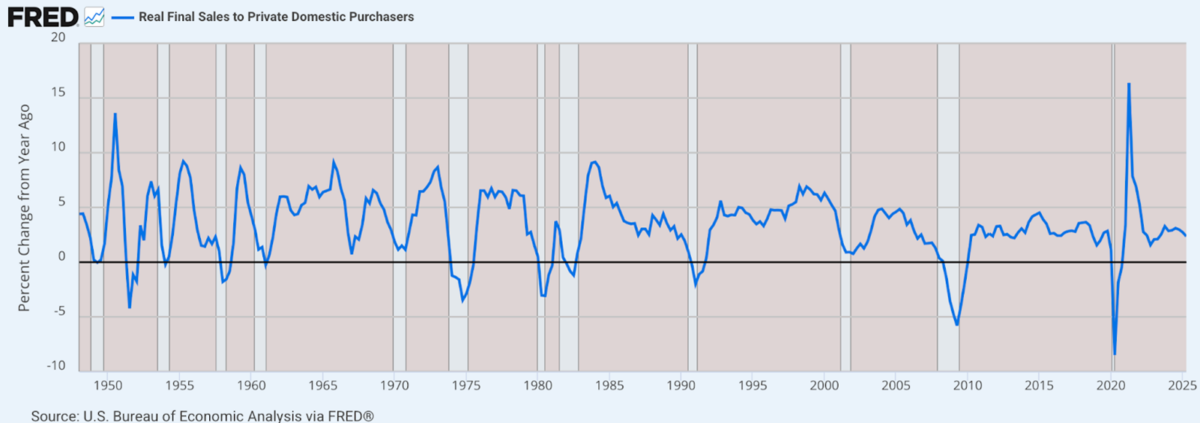
If we just look at recent years, even with the chaos, we can detect a pattern. Sadly, it shows an overall weakening. It is not alarming yet, but it is notable and certainly not healthy, especially when you consider recent data with historical data. The U.S. economy seems to be stagnating relative to the past. This could turn around, of course, but it is worth noting.
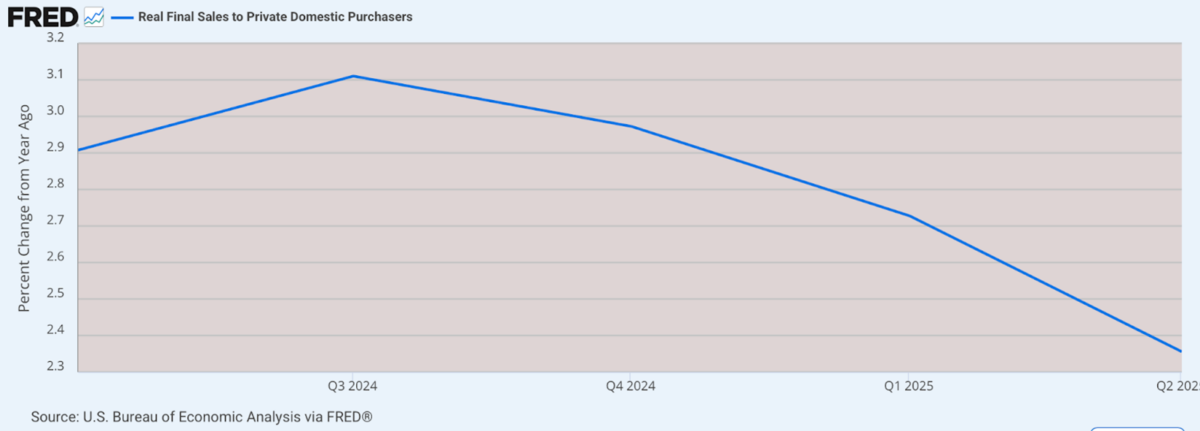
To be sure, these data are adjusted by the consumer price index to represent inflation, which they certainly do not. And yet it is all we have. Official inflation data are running a bit hot right now, more than they should, and real-time inflation numbers from Truflation show some upward trends since April.
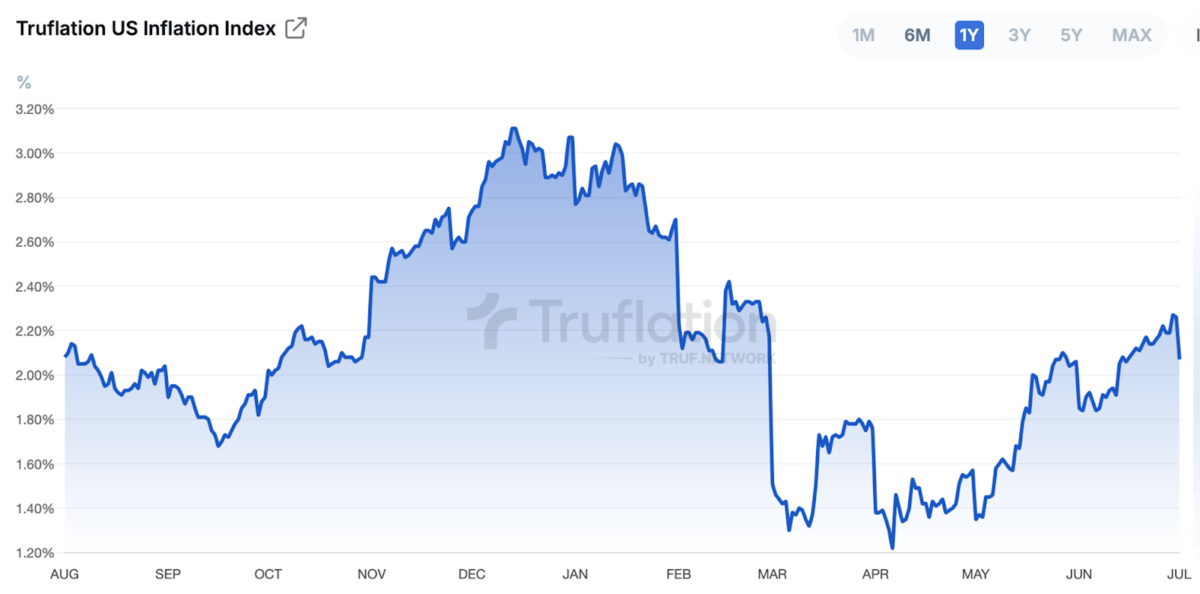
I’m very aware of how sketchy all this must sound, especially when you consider that we are only seeking to answer a simple question: Is the economy healthy or not? There is no clear answer to that.
What I would like to see is a serious presidential commission on all government data and a major revision to all of it, dating as far back in time as possible. As it is right now, we don’t know cold from hot and are largely flying blind.
There are bigger philosophical issues raised by this idea of GDP. It was invented as a way of putting a number on prosperity, which has been generally seen as a proxy for wealth and happiness. I’m not sure that model is sustainable anymore.
If you had to choose, what would you rather have: a higher statistical measure of GDP or more freedom and a better cultural environment in which families can thrive? I would choose the latter. So would most people. The age of believing that the scientists can measure—must less bring—human happiness might be ending.