National security itself is not confined to the military. It encompasses intelligence services, border and immigration services, critical infrastructure protection, police services, emergency management organizations, the judiciary, alliances and partnerships, and military forces. From the U.S. perspective, the strategy lays out these elements plainly and connects them directly to national interests.

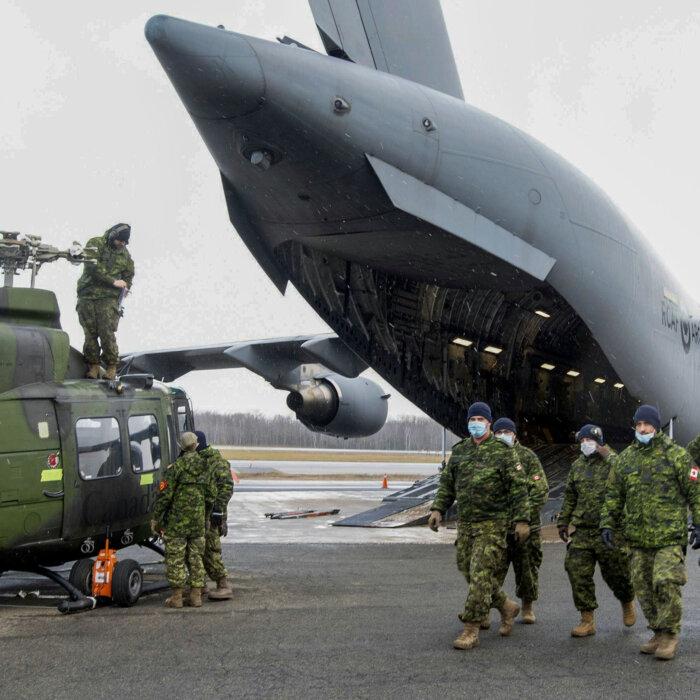
Canada, however, has taken its relationship with its southern neighbour for granted and often appears to revel in a sense of moral or strategic superiority. The Liberal Party’s recent “elbows up” re-election strategy reflects a belief that Canada can assert independence without cost. Over the past decade, all six of Canada’s national interests have eroded significantly. The new U.S. national security strategy recognizes this erosion with unmistakable clarity.
A review of the strategy shows that the current U.S. administration demands explicit links between all six national interests and every element of national security. This is laid out in Part II of the document. The opening section defines what the United States “wants”: unity, protection of democratic institutions and way of life, border security and immigration control, critical infrastructure protection, strong emergency management and intelligence capabilities, a vibrant economy, a dominant military and military-industrial base, nuclear dominance, and the “restoration and reinvigoration of American spiritual and cultural health.”
The remainder of the document explains how these objectives will be achieved, in direct and explicit terms.
The administration does not accept the status quo. It sees the United States using its dominant military and economic power to reinvigorate the Monroe Doctrine and expects the Western Hemisphere to reassert its place in the world, either through its own actions or under strong U.S. pressure. This approach includes stability in the Middle East and U.S. dominance in the Americas. The strategy states plainly that these are “the United States’ core, vital national interests.” The intent is unambiguous.
The document then outlines its principles and priorities in plain language. The principles—focused definition of the national interest, peace through strength, predisposition to non-interventionism, flexible realism, primacy of nations, sovereignty and respect, balance of power, pro-American worker, fairness, and competence and merit—leave no doubt about the administration’s break from globalism, the U.N., DEI, and the World Economic Forum’s agenda.
The priorities are equally explicit: the end of mass migration, protection of core rights and liberties, burden-sharing and burden-shifting, realignment through peace, and economic security. Together, they make clear that this administration intends to implement its national security vision within three years.
The world should read this document closely. No nation, however, has more reason to do so than Canada. In its introduction, the strategy emphasizes the “essential connection between ends and means.” This is not rhetorical positioning. It is a statement of intended action. The administration is uninterested in platitudes, promises, symbolic meetings, or altruism. It is focused on U.S. national interests and on concrete outcomes.
Against this backdrop, for a single Canadian minister—heading a ministry the United States knows has failed to deliver credible national defence—to say in a brief press conference that he merely “noted” a strategy personally signed by the president reveals a Canada that is oblivious to U.S. intent.
Canadians must demand an immediate and serious discussion of the six national interests that define the country. They must insist that their government produce a coherent, non-rhetoric-based strategy grounded in ends and means, with a clear vision for Canada’s future.
We know U.S. intent for the next three years. The question is whether Canada will still exist as a serious, sovereign actor when those three years are over.