The United States is once again becoming engaged with Ethiopia, a key hub in controlling the world’s most significant sea lane, the Suez Canal–Red Sea route, just as international energy distribution patterns are evolving to reduce the centrality of the Strait of Hormuz chokepoint linking the Persian Gulf with the Indian Ocean.
Washington had emerged as the major ally of Ethiopia from 1945 until it essentially abandoned Emperor Haile Selassie in the early 1970s.
Ethiopia, thereafter, became a significant ally of the USSR through the Cold War. Now, apart from covert relations between the United States and Ethiopia during the administration of President Barack Obama, the United States is queuing up behind China, Russia, Türkiye, Saudi Arabia, the United Arab Emirates, and others.
In all of this, Ethiopia is still very much in turmoil internally.
Ethiopia’s so-called civil war is very much a proxy war which is poised to transform the strategic balance in the greater Middle East, reducing the power of Egypt and the Suez Canal, Saudi Arabia, Iran, and the Persian Gulf’s Hormuz choke-point.


It is moving to the point where it favors “the Turkish solution” in the world’s critical oil and gas transportation network. This is not unrelated to the fact that a senior U.S. delegation, led by a U.S. Air Force general, visited Addis Ababa at the end of July 2026. This almost certainly included discussions of the new hub airport being built by Ethiopia at Bisheftu, outside Addis Ababa.
The reality is that Ethiopia is also now the center of competition between Russia, China, and Türkiye, with side competition in some respects from Saudi Arabia, Egypt, and the United Arab Emirates.
None of this international competition for domination over Ethiopia, however, supports the restoration of the Ethiopian state as it was under Emperor Haile Selassie I: a significant, pro-Western state with a dominant position on the Red Sea and Horn of Africa, with a stabilizing influence over the Blue Nile.
For Prime Minister Dr. Abiy Ahmed Ali, his courtship of foreign support is more concerned with his retention of power rather than the restoration of Ethiopian historical significance.
The security situation in Ethiopia—to the extent that it can be called that, and not a civil war—continues to worsen, not just in the fighting between government forces and nationalist Amhara fighters, but it is also taking on religious as well as ethnic factors. It already has a regional, multi-national aspect.
The situation is compounded by the fact that there are few serious international correspondents on the ground in Ethiopia, Somalia, or Eritrea, or even Djibouti, to report on the war. And, in any event, wars in Africa gain little attention in the non-African media, regardless of the fact that there are serious consequences, globally, in such events.
Often, as in the case of the West African ongoing conflicts between nomadic Fulani herders and fixed non-Fulani farmers, the conflicts have been portrayed in the Western press as wars between Muslims (the Fulani) and Christian farmers, even though the farmers are often, themselves, Muslims. It is conflict between farmers and fences, on the one hand, and the free-range movement of cattle on the other.
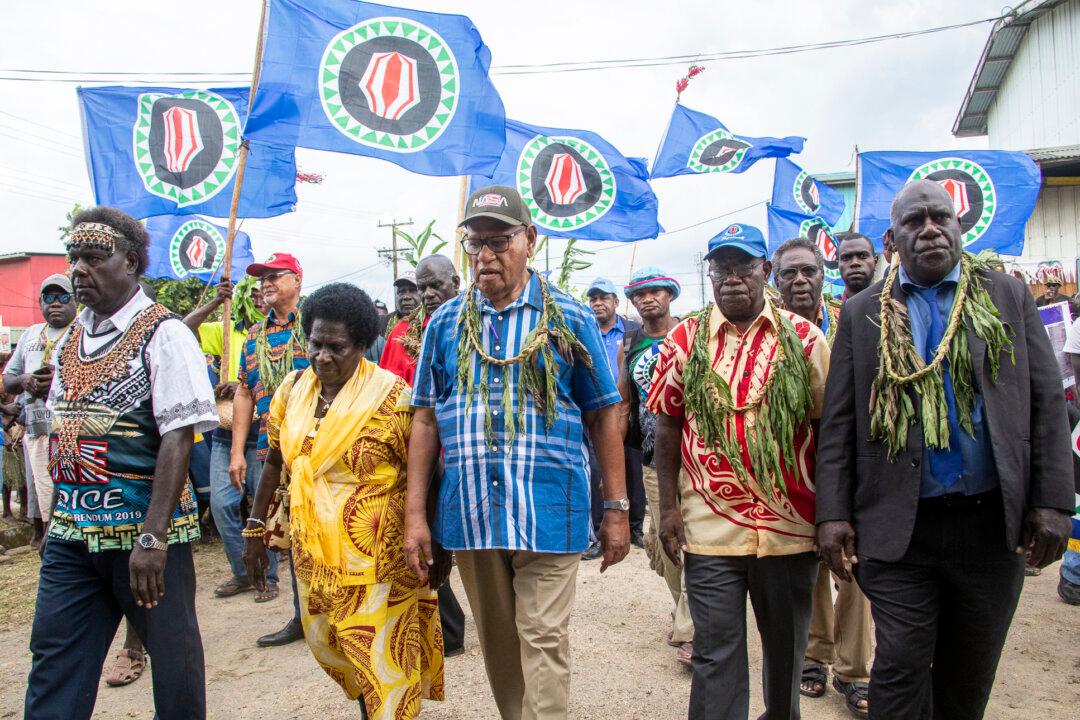
In the case of Ethiopia, however, there are genuine religious aspects to the conflicts. The current conflict shows a federal government under Abiy, waging a war against Orthodox Christians, despite the fact that Abiy is himself nominally Christian.
However, the war is, from the prime minister’s viewpoint, against the traditional Christianity of Ethiopia—the Ethiopian Orthodox Tewahedo Church—and against the Amhara and Tigrean ethnic groups in favor of his chosen branch of Christianity, Pentecostalism, as well as on behalf of his ethnic power-base, the Oromo peoples.
There is more to it than that, including the ambiguity of Abiy’s own identity. He had an Oromo Muslim father and an Amhara Christian mother, and has at times said that he was Muslim. Significantly, however, generals close to him have said that he has been increasingly ignoring advice and following his own instincts.
The events of July 22, however, seem to show that the federal government forces—the Ethiopian National Defense Forces—pointedly attacked Orthodox churches and seminaries, killing significant numbers of priests, nuns, and adherents at prayer.
In a pastoral message issued on July 25, the Patriarch expressed “deep sorrow” over the July 22 drone strikes on the Ghion Abay Gadam-e Asketes Saint Arsema, Abune Aregawi, and Saint Kirikos Fathers and Mothers Unity Monastery in Borena Woreda, South Wollo Zone of the Amhara Region, with loss of life, buildings, and religious artefacts.
Abiy, meanwhile, has been playing on religious differences in Ethiopia—between Christian sects as well as between Muslim sects—to continue the process of “divide and rule,” emphasizing regional ethnic governance instead of a restoration of unity among the 80 or so major component groups in the old Ethiopian empire.
Significantly, the traditional Ethiopian Muslim community, which rallies under the Sultan of the Afar, allies itself with the Ethiopian Orthodox Tewahedo Church and the Solomonic Crown of Ethiopia, so the conflict is not Christian-Muslim in nature as a simple portrayal.
At the same time, the governments of Saudi Arabia and Türkiye have been supporting new mosque construction in Ethiopia, with each of these governments vying for dominance.
Türkiye, however, is allied strongly with the neighboring government of Somalia, placing it at odds in many respects with Ethiopia on the question of borders, and against Ethiopia’s support for the Republic of Somaliland (former British Somaliland), which is independent of Somalia, despite several years of union between the two Somali main countries. Somalia is now firmly under the sway of Ankara.
Significantly, Ethiopia also has to accommodate the traditional engagement of other Somali ethnic entities within the greater Ethiopian empire, including Djibouti (the territory of the Somali Afar and Issa peoples) and some of the Ethiopian littoral territory on the Red Sea now part of Eritrea.
For Türkiye, the question of the Horn of Africa is about finding strategic leverage to contain the Arabian Peninsula (including the Levant of Lebanon, Syria, Israel, and Jordan), and finding a position to control Egypt and the Suez Canal.
This, in large part, mirrors the old Ottoman Empire’s reach and ambitions, solidly the basis of the strategic vision of Turkish Pres. Recep Tayyip Erdogan, who has been moving rapidly, with the support apparently of U.S. President Donald Trump, to consolidate the Turkish position in the broader region.
Of primary importance in this is the Turkish-proposed pipeline links from the Persian Gulf, through Iraq and Türkiye to markets in Europe and westward through the Mediterranean.
This would significantly undercut the maritime route for oil and gas exports by ship through the Persian Gulf and the Strait of Hormuz into the Indian Ocean. It would also seriously undercut traffic by sea from the Persian Gulf to the Indian Ocean and then the Red Sea/Suez Canal link controlled by Egypt.