What, then, are the likely paths in the Caribbean and the Americas in a post-communist Cuba? Is Washington ready for the required years of reprogramming the Caribbean?
From the U.S. viewpoint, the question is whether to apply the extra pressure before or after the mid-term U.S. Congressional elections in November 2026. The more solid the position of the Republican Party of President Donald Trump, the more likely he may be to allow events to take their course in Cuba, delaying firm action until after those elections.
The Cuban leadership seems to have signaled that it would “dig in and wait out the U.S.” as the Iranian Revolutionary Guard leadership has done (or was attempting to do). Cuban leader Díaz-Canel said in an interview with Sky News of the UK on July 2, 2026, that his country was prepared to resist any U.S. military intervention, warning that Cubans would defend their sovereignty “to the very last drop of blood.” But to which Cubans did he refer who would expend their last drop of blood to defend Cuban sovereignty?

Cuba, however, is not Iran, but the combined experiences of Venezuela and Iran have induced an element of caution and planning into the U.S. approach to finally resolving the standoff between Cuba and the United States which has existed since the Castro revolution in 1959. It is possible that the United States could propose the transformation of Cuba in ways that actually restore sovereignty to the Cuban society, and sideline the prospect—offered by Díaz-Canel—that Cuba would become merely a U.S. colony.
The importance of Cuba to the United States is essentially because it is to Cuba that China owes its dominance of the Caribbean basin, with subordinate operations running through the Commonwealth of Dominica. But China is presently poorly placed to assist in saving the Cuban regime, or the government of Dominica. If President Trump is as determined as he appears to be in accusing China of interference in U.S. elections, then Chinese operations in the Caribbean have to be at the center of his concerns.
The state visit by China and Chinese Communist Party leader Xi Jinping to the United States on Sept. 24, 2026, is a significant factor in determining whether the United States will act against Cuba early, or wait until the visit has passed. A sudden move against Cuba before or during the Xi visit to the United States—at the time of the United Nations General Assembly—could be critical in determining whether Xi’s embattled position in the Chinese communist leadership is more or less secure.
The question for the United States, then, also remains one of whether to “complete” the Cuba take-down before there is any resolution of the Iranian conflict. But Mr. Trump may not have the luxury of waiting for a resolution in Iran, given that the Cuba crisis has become a critical element in U.S. influence in the entire Western Hemisphere, the U.S.’s home ground.
Internally, the Cuban regime is visibly collapsing day-by-day.
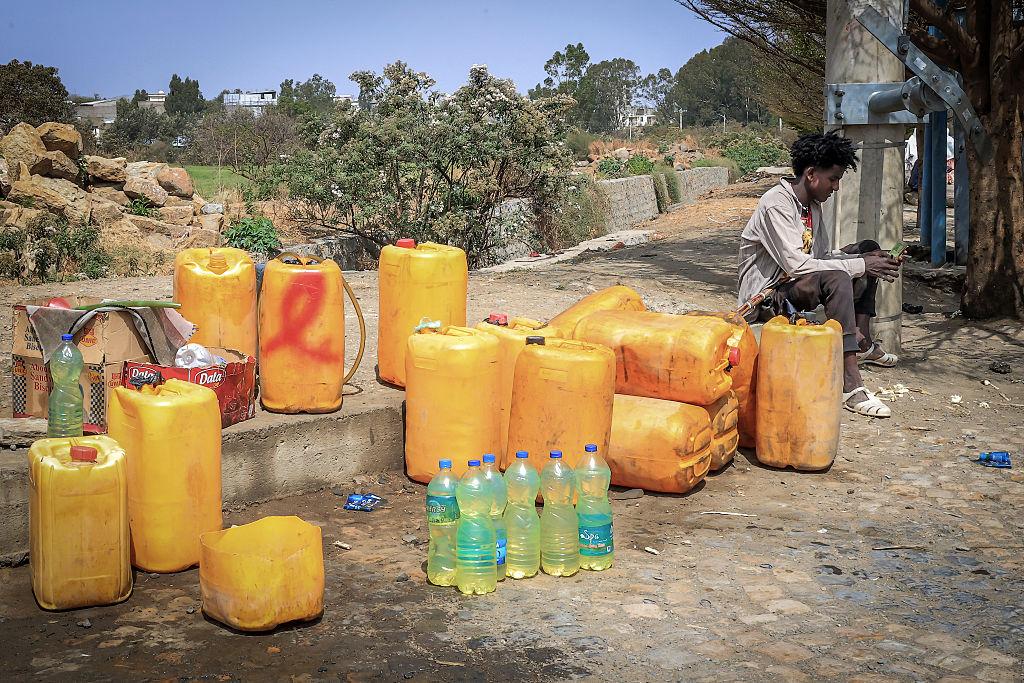
Within recent weeks, some 85 foreign-owned major hotels in Cuba are reported to have closed down almost concurrently, given that tourism has gone from some 4.7-million visitors in 2018, to only 360,000 in the first five months of 2026. Water has run out to the point where Cuban regime tanker trucks have gone to villages to supply basic survival amounts of water, and, even then, it is not distributed to the people; it is being sold to them. The small amounts of U.S. humanitarian aid—too small to make a serious impact on the crisis—are being distributed via the Catholic Church in Cuba, to ensure that at least it reaches deserving people.
One of the fundamental questions being asked, then, is whether humanitarian and political purposes would be served best, as far as Washington is concerned, with a quick decapitation raid on the regime, or a slower, organic meltdown. The latter option, however, would be facilitated by offering the leadership a way out; a safe haven, rather than arrest by the United States on charges that they had violated U.S. laws through narco-trafficking and a variety of other interferences in U.S. society.
The question now, however, is about the timing of the collapse of Cuban communism. So what happens with the collapse of the present Cuban regime?
The United States does not want to immediately absorb the economic burden of saving the Cuban society from its present condition of starvation. It cannot afford to re-open U.S. borders to all Cubans who wish to join their families already in the United States. Washington would have to offload some of the responsibility for re-investment in Cuba to other states. The Europeans are poorly placed at present to invest massively in a Cuban recovery.
Cuban sources within the U.S. Cuban expatriate population, developed over the past 67 years, have indicated that most of the immediate funds which would be invested in Cuban reconstruction would, or could, come from the expatriate Cuban private sector. It is already a rich community. But it would need a stable transitional administration to ensure that there would be security of tenure on properties, and social stability and security. Most Cubans alive today in Cuba have never experienced a market economy, and an initial social problem would be how this could be introduced without shock. Russian emigrés to Israel in the 1980s and 1990s often faced a similar dilemma; their response was to sit and wait to be told what to do.
It would not be a five-minute fix.
Canada, historically, has had an oversized influence in the Caribbean since the 1700s, and would almost certainly be at the forefront of a Cuban economic revival. But does Washington want that? Canada had, since 2025, been moving toward a far more independent strategic policy from the United States than Washington had anticipated.
But what is clear to regional observers, particularly in the Western Hemisphere, is the doctrine of “you broke it; you own it.” This is partly why Washington refrained in making Venezuela over in the U.S. image when it removed Maduro as head-of-state. What is unclear is whether the United States has a “second tier” of Cuban potential leadership in mind, or in preparation, to take office after the collapse of the Communist Party of Cuba. This must be at the forefront of U.S. thinking as the pressure has been escalated against the present Cuban leadership.
The impact on the region of a Cuban full collapse cannot be underestimated. Mexico, in particular, should be expected to take a major interest in a post-communist Cuba, and remains wary of a revival of unfettered U.S. operations in the Caribbean. The United Kingdom, too, should be expected to take a position, although its present internal challenges would limit the rôle of London or the Commonwealth.
It should be expected that the downfall of the Cuban regime, which would imply a curtailment of much of China’s dominant influence in the Caribbean Basin, would undermine the government of Roosevelt Skerrit in Dominica, and the UK could be expected—along with the large Dominican expatriate community which has prospered in the United States and UK—to attempt to fill the gap there.
There is as yet no clarity in viewing the post-communist era in the Caribbean. But can the United States shrink from this major task, despite its commitments to the Iran war and resolving its issues in Europe?