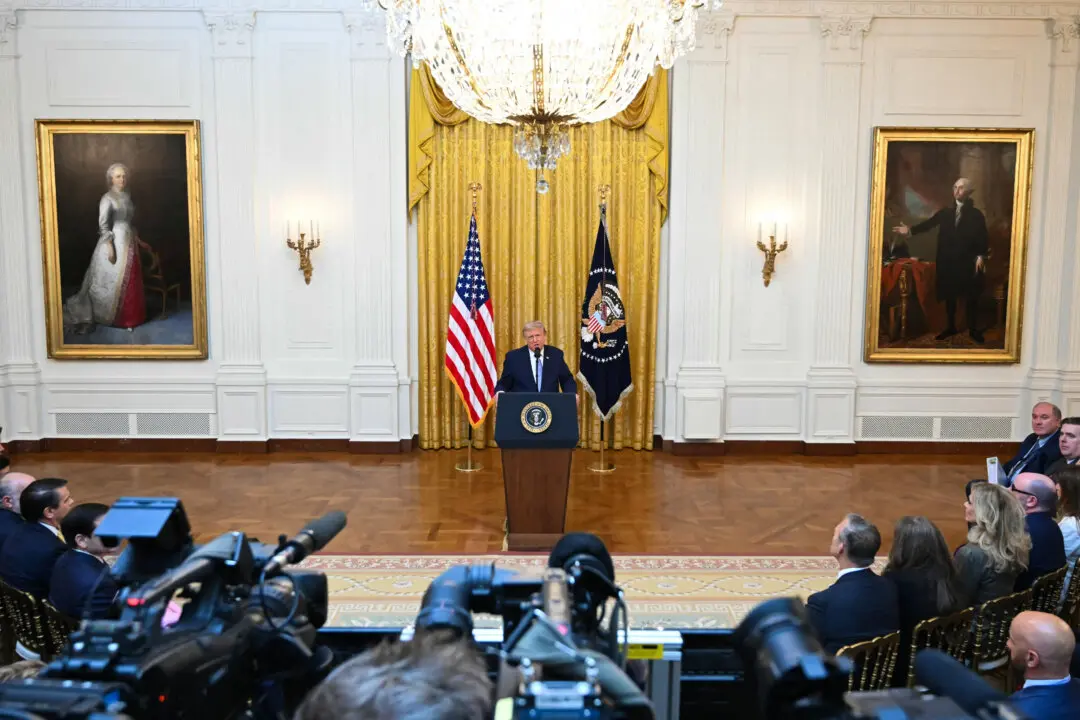
In the wake of the U.S. president’s 2026 State of the Union address and the forthcoming 250th anniversary of America’s Declaration of Independence, it is crucial that everyone in the free world understand the important link between nationalism and democracy.
It is critical to point out that America’s Founding Fathers did not issue a philosophical edict addressed to an abstract “humanity.” They spoke in the name of “one people,” asserting the right of a distinct political community to assume “among the powers of the earth” a separate and equal station.
Universal claims about equality and natural rights were joined to a particular claim about sovereignty. That fusion—universal moral principle embodied in national self-government—defined the American experiment.
The Contemporary Suspicion of Nationhood
Today, the very idea of the nation-state is under suspicion. Among progressive elites, nationalism is regarded as exclusionary and morally parochial. Among corporate globalists, it is treated as an obstacle to economic integration. Both dispositions, though animated by different motives, weaken the authority of the nation-state.The progressive critique of the nation-state begins with a presumptuous ethical assessment. Nations, it is argued, are socially constructed narratives that mask relations of power. National identity privileges insiders and marginalizes outsiders. Borders are morally arbitrary in a world where all people should possess equal dignity.

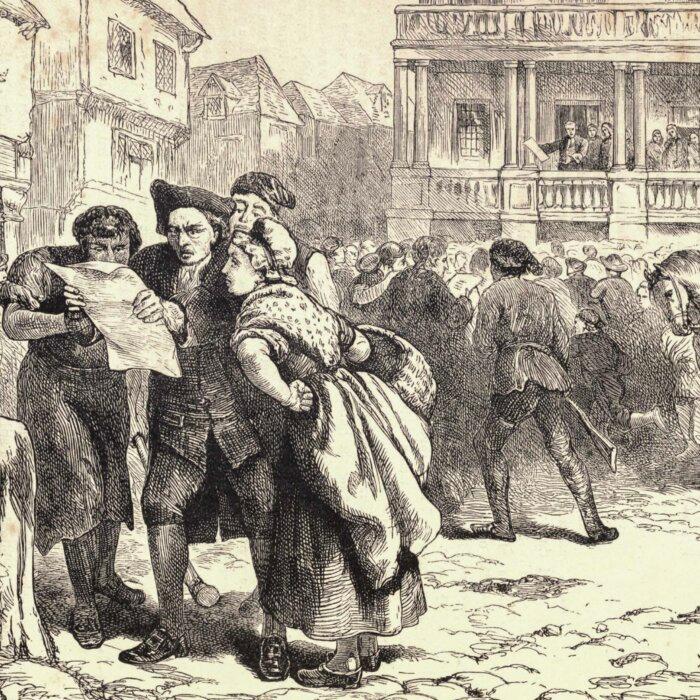
If justice is universal, progressives assert, why should political loyalty stop at the water’s edge? From this perspective, supranational courts, global human rights regimes, and transnational governance structures promise a more diverse and inclusive world order.
Corporate leaders come to a similar conclusion from a different angle. They argue that the modern economy operates through global supply chains, mobile capital, and digital exchange. National regulations and tariffs create friction. Borders impede efficiency. Economic growth and innovation flourish when barriers are eliminated. In this framework, sovereignty is seen as a constraint that must be overcome by institutions such as the World Economic Forum.
Why Democracy Requires a People
Democracy is not simply a procedure; it is self-rule by a particular people. But “the people” is not a natural category. It must be defined. Political authority presupposes jurisdiction. Elections presuppose citizenship. Law presupposes boundaries. Solidarity presupposes unity.A borderless democracy is a contradiction. Without well-defined membership and secure borders, accountability diffuses into abstraction. Citizens cannot meaningfully govern if the locus of decision-making resides in institutions that are insulated from their consent. When sovereignty migrates upward, public participation becomes more symbolic than real.
Democracy requires trust. Citizens must be able to trust the results of elections, obey laws they opposed, and recognize political opponents as fellow members of a national community. These habits are not generated by procedural rules alone. They grow out of the conditions of a union with a shared language, a common historical memory, and a sense of mutual obligation.
Sovereignty and Pluralism: Yoram Hazony
In his 2018 book “The Virtue of Nationalism,” Israeli author Yoram Hazony contends that the nation-state is not the enemy of freedom but its guardian.His central claim is that a world of independent nations preserves political pluralism. Distinct peoples are free to govern themselves according to their own traditions and judgments. Authority remains accountable because it remains close to home.
Hazony contrasts this with empire. Empires—whether territorial or ideological—impose uniform norms across diverse populations. They subordinate local self-determination to centralized authority. Contemporary supranational institutions, he argues, risk reproducing this dynamic under the banner of universal world governance.
Moral Cohesion and Inherited Capital: R.R. Reno
While Hazony focuses on sovereignty, American Catholic scholar R.R. Reno underscores the importance of moral cohesion. In a recent essay titled “The Case for Christian Nationalism,” Reno argues that democratic institutions depend upon pre-political bonds rooted in a shared moral and religious inheritance.Liberal democracies cannot sustain themselves in a moral vacuum. Historically, Western nations drew upon Christian conceptions of human dignity, moral equality, and restraint. These ideas formed the ethical soil in which liberal institutions grew. Reno’s point is not merely theological; it is structural. A society requires a shared moral grammar if its members are to deliberate and compromise.
Civilizational Confidence: Collin May
Writing in C2C Journal, Canadian human rights attorney Collin May recently warned that Western societies risk losing confidence in their unique civilizational narratives. In an essay titled “Hearts of Darkness,” he asserts that when national history is reduced exclusively to injustice and oppression, citizens may cease to identify with their own institutions. Multiculturalism without integration, he suggests, can weaken the shared identity necessary for political stability.Democratic reform requires critical honesty about past wrongs. But reform also depends on attachment. A people unwilling to affirm any positive continuity with its past will struggle to sustain the sacrifices self-government demands. Civic pride and civic responsibility are intertwined.
Combined Insight
Hazony, Reno, and May differ in emphasis—sovereignty, moral tradition, civilizational confidence—but they converge on the shared insight that democratic governance relies on national cohesion. A nation must recognize its existence before it can govern itself well.Liberal democracy aspires to universal justice. Yet its mechanisms operate best within the bounds of a national community. Erode sovereignty, and accountability weakens. Erode shared identity, and solidarity melts away. Erode moral inheritance, and trust fractures.
Honoring the Spirit of 1776
Thus, the approaching 250th anniversary of the United States Declaration of Independence is deeply significant. The Declaration united universal principles with national self-assertion. It proclaimed human equality while grounding political authority in a particular people. Its genius lay in recognizing that universal ideals require a political container. If the nation-state is dismissed as morally suspect or economically obsolete, the democratic substance of the American republic may erode along with it.A workable representative democracy requires a sovereign people capable of shared deliberation and mutual obligation. The future of the United States depends not on transcending the nation, but on renewing it—cultivating civic trust, reaffirming legitimate borders, and sustaining the moral inheritance that makes freedom intelligible.
As the United States marks two and a half centuries since declaring itself a people among peoples, we would do well to remember that freedom is not sustained by abstractions alone. It lives within institutions, and institutions live within nations. To preserve self-government, the nation-state must be understood not as the chauvinistic relic of a xenophobic past, but as an indispensable framework for well-ordered liberty.