Within hours of President Donald Trump’s July 16 address to the nation, most media outlets had reached a verdict. Commentators dismissed his remarks as a rehash of “debunked” election claims—just another attempt to destroy public confidence in democratic institutions.
Some of the president’s claims may prove hard to verify, but the speed at which journalists and political commentators dismissed the entire subject raises an important question: Have Americans become so accustomed to hearing the phrase “no evidence” that they no longer think legitimate concerns about election integrity deserve their attention?
This issue is not about the political fortunes of Trump. He will not be standing for another election. It is also more than a hangover from the 2020 outcome and January 6. At stake is public confidence in the process by which Americans choose their leaders.
In a previous article, I questioned the claim that there is “zero evidence” of election fraud in the United States. That phrase has become a political slogan rather than a factual description. The Heritage Foundation’s Election Fraud Database contains hundreds of criminal convictions, civil penalties, and other documented cases accumulated over several decades. While these cases may not conclusively prove widespread cheating, they do demonstrate that election fraud exists and that election safeguards matter.
The real question has never been whether or not fraud occurs. It does. The real question is whether existing election systems are sufficiently secure, transparent, and trustworthy to maintain public confidence. Trump’s July 16 speech did not create these concerns. It reminded Americans that they have been around for years.
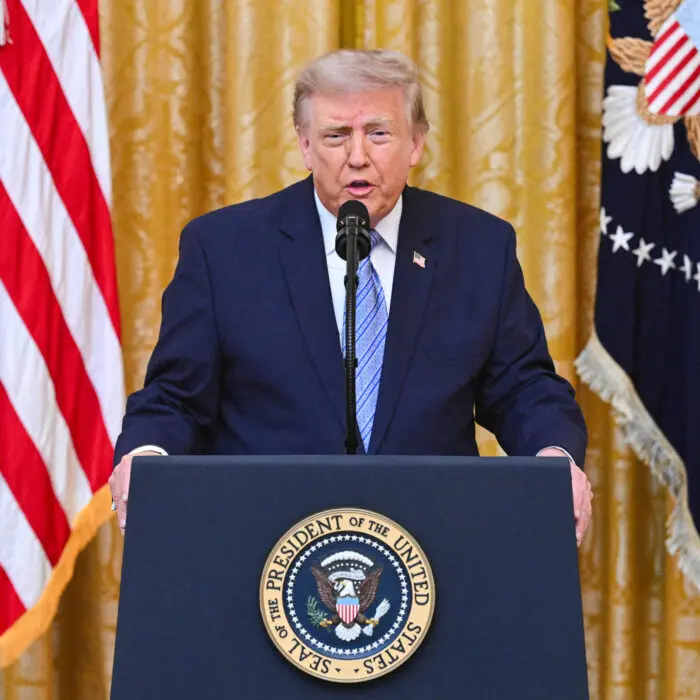
Among the concerns highlighted in the president’s address were that the administration of elections, non-citizen voter registration, vulnerabilities in voter databases, and allegations that foreign actors—particularly China—have acquired large amounts of American voter information. Whether one agrees with Trump’s conclusions or not, these subjects deserve serious examination rather than casual dismissal.
Consider the question of voter registration. Honest election officials acknowledge that voter rolls require regular maintenance. People move, die, or become ineligible to vote. Maintaining accurate voter rolls is not voter suppression; it is basic administrative housekeeping. Instances in which non-citizens are discovered on voter rolls do not automatically prove illegal voting, but they do raise serious questions about the effectiveness of existing safeguards.
The same principle applies to investigations of improper voter registration. Even where authorities contend that fraudulent registrations did not result in fraudulent ballots being cast, such incidents still expose weaknesses in the system. Banks do not wait until money is stolen before correcting security flaws. Election officials should not wait until public confidence collapses before addressing vulnerabilities.
The debate over election integrity also includes concerns about voting technology and cybersecurity. These concerns are hardly the invention of Donald Trump. For years, election experts, cybersecurity specialists, and bipartisan commissions have warned that modern election systems must be continually protected against intrusion, manipulation, and technical failure. Americans routinely expect rigorous security standards for financial institutions, government databases, and critical infrastructure. Elections deserve no less.
One of the most intriguing aspects of Trump’s speech involved allegations that Chinese entities have been acquiring and exploiting American voter data. If true, this issue extends far beyond election administration and enters the realm of national security.
The Chinese Communist Party (CCP) has extraordinary methods for gathering information, conducting cyber operations, and influencing foreign public opinion. In recent years, Western governments have raised concerns about Chinese cyber espionage, intellectual property theft, and efforts to shape public discourse in foreign nations. Against that backdrop, reports that Chinese-linked actors may be collecting extensive voter information deserve careful investigation.
Acquiring personal data may not allow the CCP to directly alter American votes. But political adversaries don’t just seek to corrupt ballot counting. Detailed voter information can be used to target propaganda, identify vulnerable populations, amplify social divisions, and conduct highly specific influence campaigns. In an age of artificial intelligence, social media manipulation, and sophisticated data analytics, such possibilities cannot be underestimated. Trump demonstrated that he has the courage to confront CCP manipulation head-on.
Whether the president’s allegations are ultimately validated or not, his broader concern remains legitimate. Americans have every right to know whether foreign powers possess sensitive information that could be used to influence public opinion or undermine confidence in democratic institutions.
None of these concerns are new. They echo arguments made years ago by journalists and investigators who questioned the conduct of the 2016 and 2020 elections and the public responses that followed. In “Rigged,” Mollie Hemingway argued that the controversy surrounding the 2020 election extended far beyond allegations of ballot fraud. Her focus was on the cumulative impact of last-minute rule changes, unprecedented private funding of election administration, selective media coverage, and the growing role of major technology companies in controlling the flow of political information. Whether one agrees with every aspect of her analysis or not, Hemingway’s central argument was that many Americans felt the rules of the game were altered during the game itself.
Similarly, American attorney Christina Bobb’s “Stealing Your Vote” explored procedural concerns surrounding mail-in voting, ballot handling, chain-of-custody issues, election observation, and the difficulties involved in investigating allegations once an election has concluded. Her argument was not simply that fraud had occurred on a massive scale. She asserted that systems lacking transparency inevitably generate suspicion, particularly when citizens believe that meaningful investigation has been discouraged or obstructed.
The election integrity debate is often presented as a choice between two extremes: Either massive fraud occurred, or there is absolutely nothing to worry about. In reality, a sensible majority of Americans occupy a reasonable middle ground. They simply want elections that are secure, transparent, and worthy of public trust.
Trust is created by transparency, accountability, and verification. Resolving this issue does not require endless partisan conflict, nor should all opposing concerns be dismissed as misinformation. The solution is to strengthen public confidence through practical reforms that command broad support.
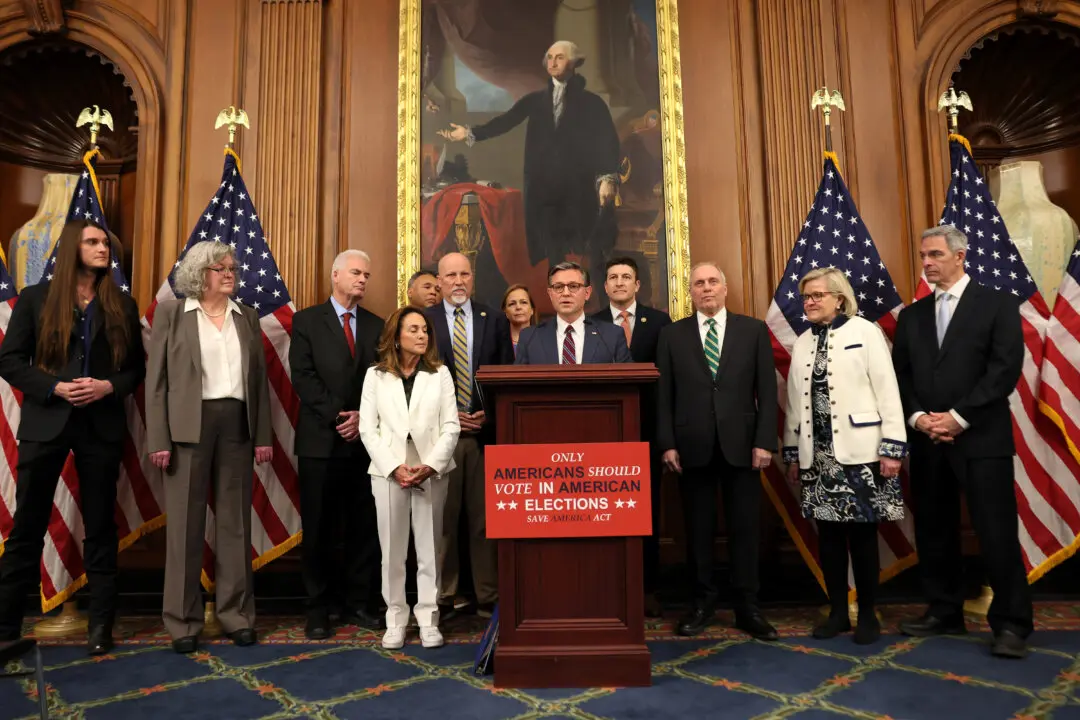
Reforms might include reliable voter identification requirements, single-day in-person voting, regular voter-roll maintenance, paper audit trails, transparent recount procedures, strong chain-of-custody protections, bipartisan observation of ballot counting, and prompt investigation of credible complaints. The stalled SAVE Act is part of the solution. None of its measures should be controversial. Most are standard practice in democracies around the world.
Ultimately, election integrity should not be a partisan issue. It is an American issue. Every legitimate voter, regardless of political affiliation, benefits from a system that is both accessible and secure. Citizens should be able to cast their ballots with the confidence that every lawful vote will be counted and that unlawful votes will not dilute their voice.
The issues surrounding election integrity refuse to go away because they are grounded in something fundamental: the legitimacy of self-government itself. Americans insure their homes without assuming all their neighbors are thieves. Businesses conduct audits without assuming every employee is dishonest. Banks maintain security systems without assuming every customer is a criminal. These precautions are not signs of paranoia; they are signs of prudence. Trust but verify!
Representative democracies and constitutional republics all operate on the same important principle: election safeguards should not have to be postponed until fraud is conclusively proven. Public confidence in election outcomes is too precious to remain uncertain.
Until the United States fully restores confidence in election integrity, questions will continue to be asked, and they should.