In the years before 1763, the British Empire—although in theory a unified entity—was really a federation. The central government in London controlled foreign affairs and the imperial post office. It also regulated trade with foreign countries and among units of the empire.
But otherwise, the 13 future American states were largely self-governing. In each, the elected lower house in the colony’s legislature controlled taxes and spending. That body, in conjunction with a governor and upper house, regulated most aspects of colonial life. The colonies also controlled their own militias, which fought alongside British troops in the conflict known in Europe as the Seven Years’ War (1756–1763) and in America as the French and Indian War.
In response to colonial outrage and petitions from English merchants who relied on the colonial trade, Parliament repealed the Stamp Act. But at about the same time, it also adopted the law known to history as the Declaratory Act (6 Geo. iii, c. 12).
In other words, the British government claimed absolute supremacy over its American Colonies. But Americans knew of the long struggle for liberty waged against the crown by their British ancestors. Absolute submission to a government in which they had no representation was not a condition they were prepared to accept.
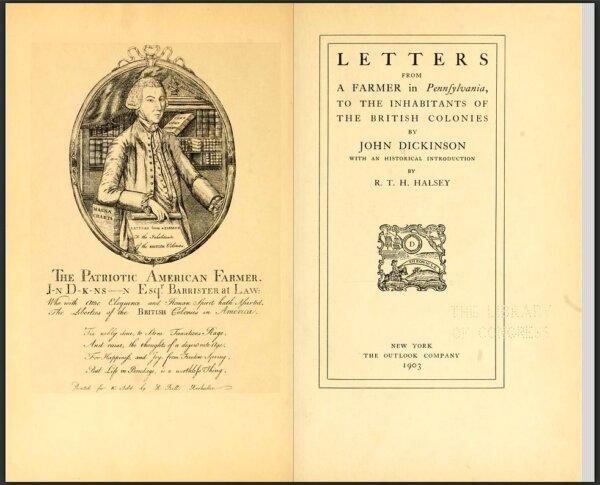
In 1767, in furtherance of its declaration of supremacy, Parliament imposed further taxes on America: the Townshend Duties. These exactions provoked renewed colonial resistance. A series of essayists, most of them distinguished American lawyers, laid out the American case and pleaded for peaceful resistance. Their publications drew what their authors considered to be the proper lines between colonial and imperial prerogatives, and in doing so, they foreshadowed the Constitution’s division between state and federal powers.
Parliament eventually repealed all of the Townshend Duties except the tax on tea. But it continued to insist on absolute British power over America. British intransigence was answered with similar intransigence on the colonial side, particularly in Massachusetts, where much of the unrest was provoked by Samuel Adams, an accomplished grassroots agitator.
The British government, therefore, sent troops into Boston, and on March 5, 1770, the inevitable occurred: A local mob taunted British troops, who, in panic, fired back. Five Americans lost their lives in this altercation, which Adams and his allies dubbed the Boston Massacre. The first to die was Crispus Attucks, a sailor of African and American Indian extraction—about whom, by the way, I wrote my college senior honors thesis more than 50 years ago.
The agitation continued, notably with the Boston Tea Party (1773), in which a group of citizens, dressed as Indians, protested the tax on tea by boarding a ship and tossing its cargo of tea into the harbor. Many Americans were incensed by this unlawful act, and the British even more so. In 1774, Parliament adopted four laws designed to punish Massachusetts: the Coercive Acts.
Even those Americans outraged by the conduct of the Boston “Indians” thought the British response to be far out of proportion to the transgression. Representatives of the colonies again met in convention—this time in Philadelphia—to plan further peaceful resistance and to petition the king. But the British remained unmoved by the efforts of this First Continental Congress.
Colonial unrest continued, and in February 1775, the king declared Massachusetts to be in a state of rebellion. Two months later, British troops moved to confiscate the arms of the Massachusetts militia. This provoked the April 19 hostilities at Concord and Lexington that marked the first battles of the American Revolution.
By the rude bridge that arched the flood, Their flag to April’s breeze unfurled, Here once the embattled farmers stood, And fired the shot heard round the world.
In May, the colonies again convened in Philadelphia. This Second Continental Congress became a de facto treaty organization and the agency by which Americans prosecuted the war. It was also the entity that produced the Declaration of Independence.