The Supreme Court has agreed to review yet another Colorado case in which the state is charged with violating the Constitution’s First Amendment by discriminating against traditional religions and their adherents.
The Facts
One consequence of Colorado’s lurch to the political left has been the adoption of massive new state and regulatory programs. (This has led, predictably enough, to large budget deficits and neglect of core government services). Among the new programs is one that enables residents, including undocumented immigrants, to send children to pre-kindergarten schools at taxpayer expense.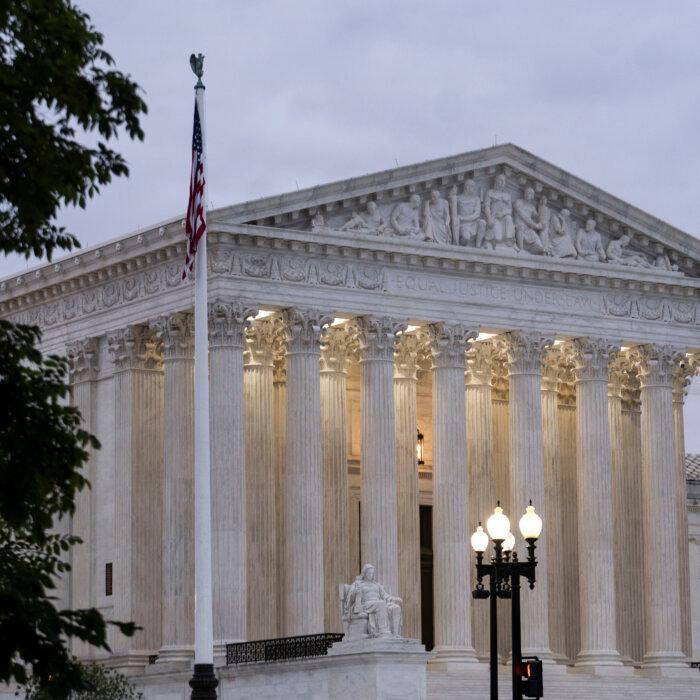
However, Roman Catholic pre-K schools found themselves excluded from participating because the law mandated that “each preschool provider provide … an equal opportunity to enroll and receive preschool services regardless of … sexual orientation [or] gender identity.”
Of course, requiring acceptance of non-binary gender ideology directly contradicts most traditional religious teachings, including Catholic doctrine. Moreover, at the pre-school level, one might suspect that gender dysphoria is more likely the product of adult mismanagement than the child’s real proclivities.
As if this were not enough, the Colorado Department of Early Childhood, which administers the pre-school program, adopted regulations permitting schools to discriminate in ways favored by “woke” ideology. For example, they are permitted to give preferential treatment to certain racial groups and, in the phrase of the program director, “the LGBTQ community.” The program director justified this by saying that the beneficiaries of this treatment were groups that, in America, historically faced discrimination.
Governing Law
The principal governing Supreme Court precedent is Employment Division v. Smith (1990). In that case, the court ruled that state regulations restricting religious practice are presumptively valid if they are “neutral and generally applicable.”“Neutral” means they are not targeted at particular religions. “Generally applicable” means they apply to almost everyone and are not riddled with exceptions.
If a rule is targeted specifically at a religion or kind of religion—or if it is narrow or subject to exceptions—then it is subject to “strict scrutiny” and presumed void.
Colorado’s Conduct
Colorado officials claim their law and regulations are not targeted at religion and that they are broadly applied. The regulators point out that they have gone out of their way to encourage faith-based providers to participate in the pre-K program. And, indeed, they have.But the problem is not that they are hostile to religion per se. The problem is that in their zeal to enforce ill-informed ideas about sex and sexuality, they are using state power to favor some religions over others. To see why this is true, consider the following illustration:
The State of X has a large minority of Orthodox Jews and a large minority of Reform (liberal) Jews. The rest of the population is mostly Christian or unaffiliated. State X adopts a program of educational scholarships, which students may use at public or private schools.
Although state officials welcome liberal religions, they have a history of opposition to the conservative practices and beliefs of Orthodox Judaism. The officials rule that—“for sanitary reasons”—schools may participate only if they require students to remove head coverings indoors.
Christian and unaffiliated students and institutions would have no problem with the regulation against indoor hats, nor would most Reform Jews. But Orthodox Jews wear yarmulkas both indoors and outdoors as a mark of respect for God.
Conclusion
Colorado’s law, regulations, and recent history render it obvious that the state’s refusal to grant a religious exemption to the Catholic Church is part of the jihad being conducted by the state’s governing class against traditional values and the religions that espouse those values. To their protest that they acted for innocent reasons, the Supreme Court should again respond, “Just whom are you trying to fool?”Of course, in their private lives, “woke” officials may pursue their cause in all lawful ways. But under the U.S. Constitution, they may not use state power as their weapon.