A nation born in agronomy should never interfere with the rights of farmers to process and sell their own meat. New Hampshire is now presented with the opportunity to reinforce that right for the first time in a century.
The new industry organized, facing a threat to its profits, to get the federal government to declare their products safe with new inspections. Added benefit: inspections were expensive so only the biggest players could afford them, hence squeezing out the little guys. Mainly, it was an attempt to subvert the instincts of the people. The cost: the rights of those who raise the animals to slaughter and process them were practically abolished.
Now there is a chance for the veto to be overridden.

The bill seeks to allow limited on-farm or non-USDA-certified processing of cattle, swine, sheep, and goats for in-state sale. It permits the slaughter and process of 3 cattle, 5 swine, or 10 sheep/goats in a month. It insists on humane slaughter methods and carcasses to be refrigerated at or below 41°F within 12 hours.
The product must be clearly labeled. But then it can be sold directly from the farm, at farm stands or farmers’ markets, or to licensed restaurants and retailers (with record-keeping and menu/product labeling requirements). It’s not full freedom but it is a crucial step in the right direction. It could save many family farms, and promote health as well.
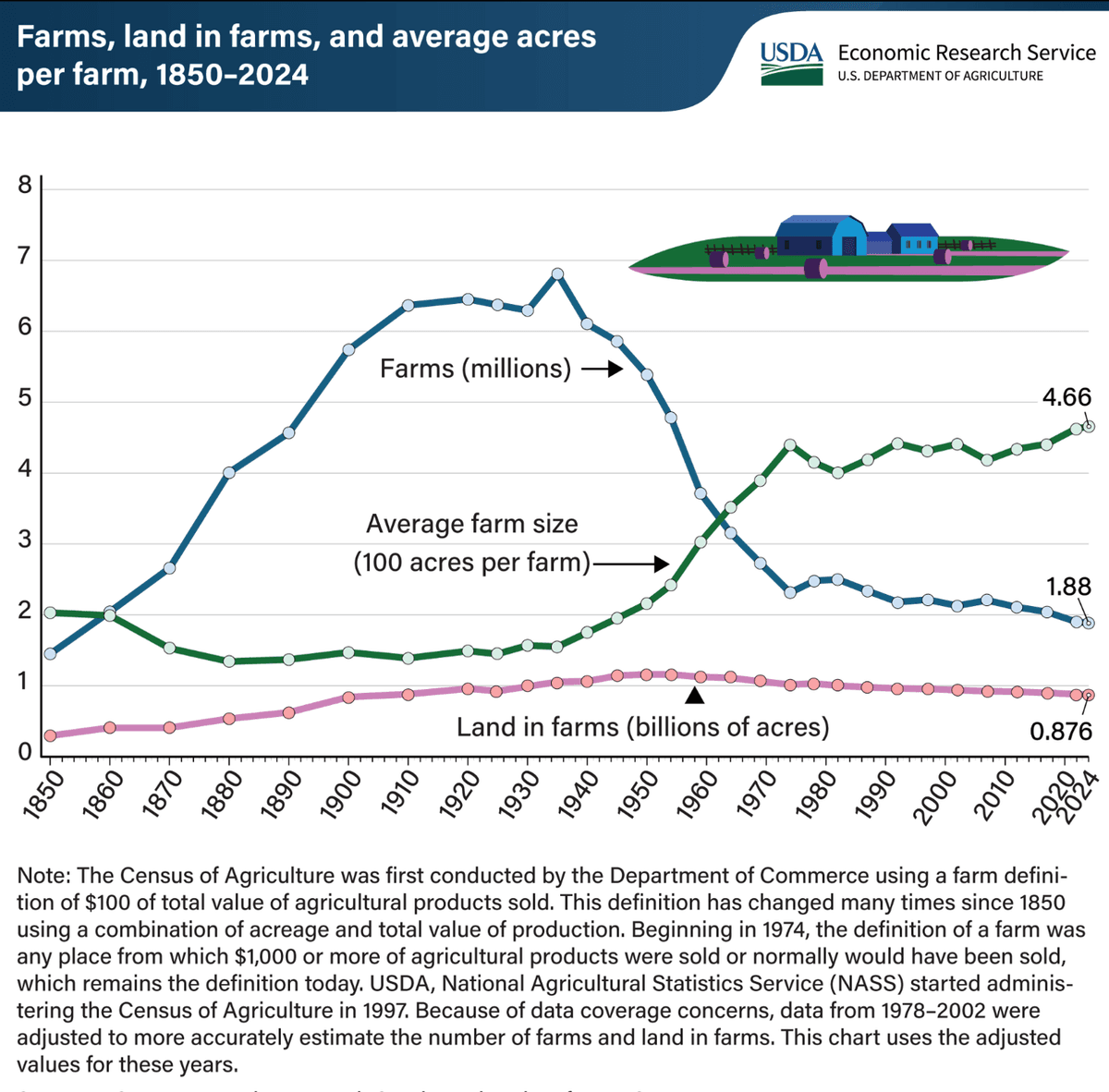
It addresses a serious crisis. In 1940 the United States had 6.9 million farms. Today there are only 1.9 million. The U.S. cattle herd is at its lowest level since 1951. U.S. farmers are faced with a meat-processing bottleneck, the result of 4 companies controlling 85 percent of U.S. beef and 67 percent of pork processing. Meanwhile, the U.S. imports 16–18 percent of the beef it consumes.
The bill permits farmers to circumvent slaughterhouse bottlenecks, and encourage farmers to increase their herds, reducing prices. It will allow consumers to choose where their meat comes from. It will improve profitability for livestock farmers. It will challenge the cartelization of meat processing that currently exists. It will breathe new life into custom slaughterhouses, most of which shut down in recent decades.
There is only one reason for the resistance to this common-sense reform: the power of big industry that wants to maintain its monopoly and keep prices high. In any legislative battle these days, the great challenge is to overcome such lobbying efforts and grant more freedom to the people.
The main challenge here from an economic standpoint is to allow the farmer to capture a greater share of the profit from making food. In 1970, 70 percent of what you paid for meat at the grocery store went to the rancher. In 2025, only about 30 percent got back to the rancher. The rest goes to Big Ag and Big Food, due to consolidation and monopolization in food industries.
This bill helps bust up the monopoly in at least one state. The need is reaching the desperation point. Big Ag owns ever more and the small farmer and rancher ever less. This is in major part due to restrictions on the ability to process meat on the farm itself. This government-induced monopoly imposes enormous costs that only Big Agriculture can afford.
Keep in mind that on-site processing was the normal way of doing things for all of human history, including in American history. That changed with the growth of off-site meat processing in the late 19th century. There was nothing wrong with the idea. No one minds a new industrial innovation. The industry grew and grew, along with other industrial innovations at the time.
The problem came with growing sloppiness in the industry and the consumer revolt that ensued. Instead of just doing a better job, the dominant firms in the new industry came running to government for help. They lobbied for what became the Food and Drug Act of 1906.
Government promised to guarantee the quality of processed meat while restricting on-site processing. It never actually did that. In fact, after government inspectors took over, the meat became less safe due to primitive methods that farmers had long avoided. This time, sloppy methods and less safety came with a government guarantee of quality.
This was at the very beginning of the so-called Progressive Era, which was not progress toward anything but industrial technocracy. The single most urgent industrial reform we can take in this country is to reverse that unfortunate trend with one simple method: allow freedom like the Founding generation wanted.
Overriding the governor’s veto would be a magnificent victory for the rights of owners and the thriving of farms in an area of the country where it is essential. It’s not enough but it is a step in the right direction. As it is, the wait times and travel costs of commercial processing are intolerable. This bill would encourage the flourishing of local meat raised and processed by our friends and neighbors, just like it used to be.
New Hampshire is the place for the revolution to begin. Of all state legislatures, it is the one that is most connected to the people. It has fully 400 members with Republicans in the majority. We need a two-thirds majority in the House and Senate to override, and can only get there with a bipartisan vote. Democrats who are not paid off by industry have every reason to support a veto as a strong statement of the rights of property and the will of the people.
Should the veto be overridden, it will be a moment of great celebration for food freedom and the restoration of local agriculture. It could also save the livelihoods of small farmers. It’s a beginning, not enough, but a good place to start.